
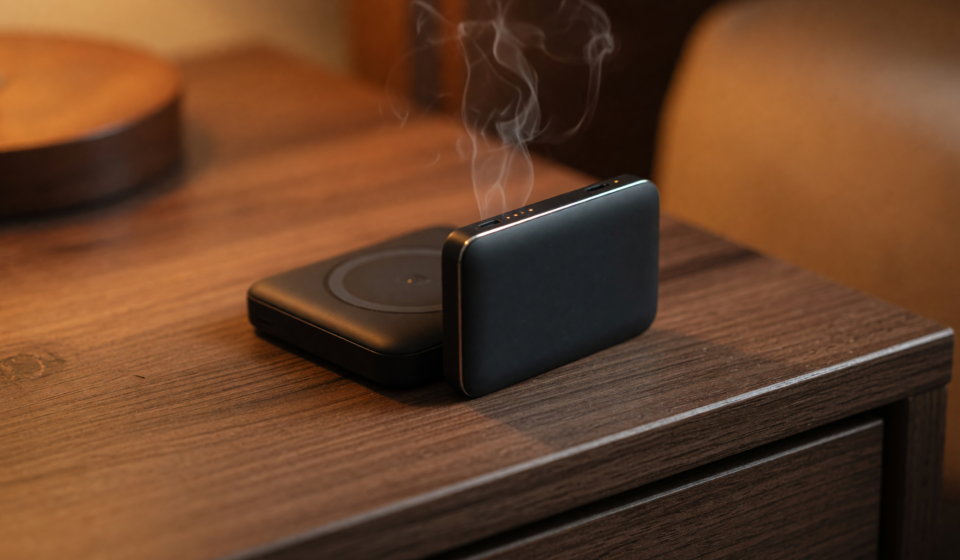
Magnetic Power Banks Recalled Over Lithium-Ion Fire Hazard
A popular pocket-sized charger is the subject of a fresh power bank recall: on September 3, 2026, the U.S. Consumer Product Safety Commission (CPSC) and Truststone Group announced the recall of about 32,400 XO Poppy Power Trip Magnetic Wireless Power Banks because their lithium-ion battery can overheat and ignite. The chargers were sold exclusively at TJX and Marshalls stores nationwide from April 2025 through March 2026 for about $15, and consumers are being told to stop using them right away.
What happened
According to the CPSC recall notice (recall number 26-740), the lithium-ion battery inside the XO Poppy Power Trip Magnetic Wireless Power Bank can overheat and ignite, posing fire and burn hazards. The recall covers model PYPBK5M in three styles: a cream version (PY-PBK5M-CR2), a cream version with a pink bow (PY-PBK5M-BW8), and a black version with a teddy bear print (PY-PBK5M-TB2). The compact chargers were designed to snap magnetically onto the back of a phone for wireless charging on the go.
The good news is that no fires or injuries had been reported to the CPSC or Truststone Group at the time of the announcement. Recalls issued before anyone is hurt are exactly how the system is supposed to work: a manufacturer and the agency act on the known hazard rather than waiting for a string of incidents. But “none reported” is not the same as “no risk,” and the remedy here depends on owners actually finding the charger, setting it aside, and following up.
Why it matters for safety
Lithium-ion batteries pack a lot of energy into a small space, which is what makes them so convenient — and what makes a failure so serious. When a cell is damaged, defective, or poorly made, it can enter thermal runaway, a self-feeding chemical reaction that drives the battery’s temperature up fast and can lead to smoke, fire, or an explosive rupture. Unlike a wood or paper fire, a lithium-ion battery fire can reignite even after it appears to be out, and it can happen while the device sits unattended on a nightstand or charges overnight.
This particular power bank recall is not an isolated event. Federal regulators and major retailers have pulled well over a million portable chargers from the market in the past couple of years over the same basic failure mode, and airlines have tightened their rules on carrying power banks in the cabin, keeping them out of checked baggage and, on many carriers, out of overhead bins. The pattern is a reminder that a cheap, everyday gadget can carry a genuine fire risk if the cell inside it is flawed.
What to do. If you have an XO Poppy Power Trip Magnetic Wireless Power Bank, stop using it now. Do not toss it in the household trash or a curbside recycling bin, where a damaged cell can spark a fire in a truck or facility. Contact Truststone Group for a refund and ask about safe disposal or drop-off at a battery recycling location.
What you should do
Owners of the recalled charger should take a few concrete steps to protect their households:
- Stop using it immediately. Unplug the power bank, disconnect it from any phone, and stop charging it.
- Store it safely in the meantime. Keep the unit away from anything flammable and away from heat until you can dispose of it. A cool, dry spot on a hard, non-combustible surface is best.
- Contact Truststone Group for your refund. Call 833-820-0888 from 8:30 a.m. to 6 p.m. ET Monday through Friday, email xopowerbank@realtimeresults.net, or visit the recall page online. Eligible owners receive a full refund as a virtual gift card usable anywhere Mastercard is accepted.
- Do not throw it in the trash or curbside recycling. Lithium-ion batteries should go to a dedicated battery-recycling drop-off. Many hardware and electronics stores accept them, and your local household hazardous waste program can point you to a site.
- Register your other electronics. Recall notices reach registered owners first, so filling out product registration cards or online forms means you hear about the next hazard sooner.
Context and what’s next
Because the XO Poppy chargers were sold only at TJX and Marshalls stores, there is no online purchase history to fall back on for many buyers — a lot of these were cash-and-carry impulse purchases near the register. That makes word of mouth important. If you bought a small magnetic wireless charger with a cream, pink-bow, or teddy-bear design at one of those stores in the past year and a half, check the model number on the label against model PYPBK5M before you keep using it.
More broadly, the safest habits with any portable charger are the same ones that would have limited the damage from a defect like this one. Charge lithium-ion devices on a hard surface rather than on a bed or couch, avoid leaving them charging unattended overnight, keep them out of direct sun and hot cars, and stop using any battery that becomes swollen, hot to the touch, or gives off an odd smell. If a battery does catch fire, get away and call 911; these fires can grow quickly and put off toxic smoke.
The CPSC continues to post new recalls and safety warnings daily, and lithium-ion power banks have been a recurring theme. Owners who act on this notice — set the charger aside, claim the refund, and recycle the unit properly — close out the hazard cleanly, and pick up habits that carry over to every other rechargeable device in the house.
Disclaimer: This article is for general safety information only and is not legal, medical, or professional advice. Recall details, remedies, and contact information can change; always confirm the latest guidance with the CPSC and the manufacturer before acting.
Sources: U.S. Consumer Product Safety Commission — XO Poppy Power Trip power bank recall (26-740); CPSC Recalls & Product Safety Warnings.