
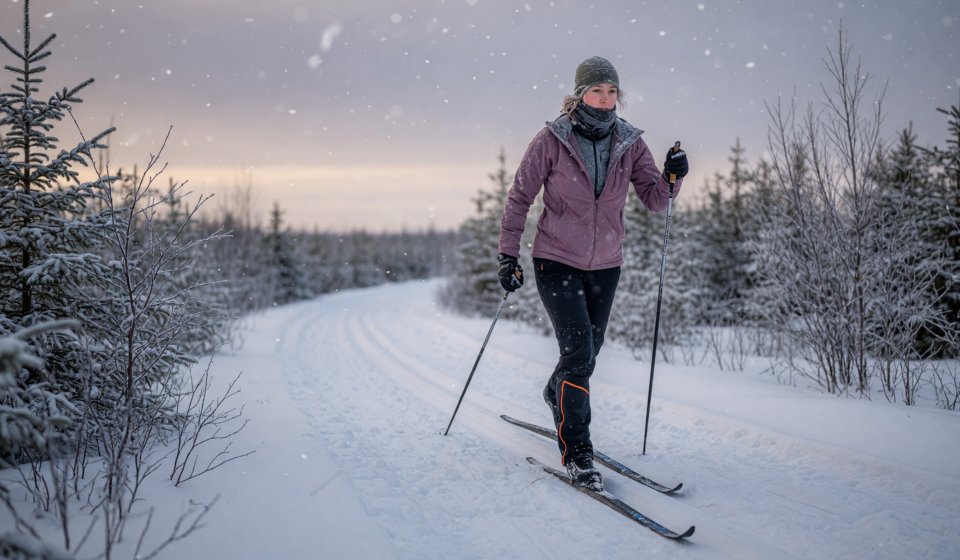
Cross-Country Ski Layering: Avoiding Sweat and Hypothermia
Ten minutes into a classic kick-and-glide, you are sweating. Twenty minutes later you stop to check the map, the wind picks up across an open meadow, and that same sweat turns into a cold, clammy chill that goes straight to the bone. That whiplash between overheating and freezing is the defining challenge of the sport, and it is exactly why smart cross-country ski layering matters more here than in almost any other winter activity. The Centers for Disease Control and Prevention warns that hypothermia can set in even at cool temperatures above 40 degrees Fahrenheit when a person becomes chilled from rain, sweat, or submersion. On a Nordic trail, sweat is the threat you carry with you.
This guide covers how to build a layering system that actually works for the high-output, stop-and-go reality of Nordic skiing. We will explain the job of each layer, why moisture-wicking base layers beat cotton every time, how the insulating mid-layer and windproof shell fit together, and how to read your own body so you vent before you soak through. Along the way we will lean on guidance from the CDC, the Occupational Safety and Health Administration (OSHA), and the National Weather Service (NWS) so you understand the why behind every recommendation, not just the what.
Why Sweat Is the Real Enemy on Nordic Trails
Downhill skiers ride lifts and stand in lines, so their main problem is staying warm enough. Cross-country skiing flips that equation. You are the engine, generating serious body heat with every stride and pole plant, which means your first enemy is often too much heat, followed immediately by the dampness it leaves behind. OSHA puts it plainly: wetness or dampness, even from body sweat, facilitates heat loss from the body. Water pulls heat away from your skin far faster than dry air does, so a base layer soaked in perspiration becomes a refrigerant the moment you slow down.
The danger compounds when you stop moving. While you are working hard, your metabolism outruns the heat loss. But pause at a trail junction, fix a binding, or coast a long downhill, and your heat output drops while the evaporating sweat keeps chilling you. This is the mechanism behind the CDC’s warning that hypothermia does not require Arctic cold, only a chilled, wet body and enough time. The whole point of a layering system is to keep that sweat moving away from your skin and to let you shed or add insulation fast enough to match your effort.
The Three-Layer System, Explained
The classic outdoor layering model has three parts, and each has one clear job. Think of them as a team, not a stack of random garments. When they work together, moisture travels outward from your skin, warmth is trapped where you need it, and wind and precipitation stay on the outside.
- Base layer: Sits against your skin and manages moisture by wicking sweat away so it can evaporate instead of pooling.
- Mid-layer: Traps warm air to insulate you, and for high-output skiing it should be light and breathable rather than bulky.
- Shell: Blocks wind and repels light snow or rain while still letting water vapor escape so you do not steam up from the inside.
The magic is not in owning the most expensive version of each. It is in matching the weight and breathability of each layer to how hard you plan to work and how cold and windy it is. A brisk skate session on a calm, 25-degree morning might call for just a base layer and a light wind vest, while a slow, scenic tour in a biting wind demands all three plus extra insulation for your stops.
Base Layers: Why Cotton Kills and Wicking Wins
Among winter athletes there is an old saying, “cotton kills,” and it is rooted in physics. Cotton is highly absorbent and holds water against your skin, drying slowly and losing nearly all of its insulating value when wet. On a stop-and-go Nordic outing, a cotton T-shirt turns into a cold compress. This is why a proper moisture-wicking base layer, in merino wool or a technical synthetic, is the single most important piece of gear for staying safe.
- Merino wool: Wicks moisture, resists odor, and retains warmth even when damp, which makes it forgiving on long tours with variable effort.
- Synthetics: Polyester and polypropylene blends dry very quickly and move sweat efficiently, a good match for high-intensity skate skiing.
- Fit matters: A snug, next-to-skin fit lets the fabric actually pull moisture off your body; a loose base layer cannot wick what it does not touch.
- Skip cotton entirely: That includes cotton underwear and socks, which trap sweat at exactly the spots you want to keep dry.
Choosing the right weight is a balancing act. Go too heavy and you overheat and soak through; go too light and you have nothing to fall back on when you stop. For most conditions, a lightweight to midweight base layer is the sweet spot for cross-country skiing.
👉 Shop merino wool or synthetic moisture-wicking base layer top on Amazon (Ad — as an Amazon Associate, we earn from qualifying purchases.)
The Mid-Layer: Insulation That Breathes
Your mid-layer’s job is to trap a pocket of warm air, but for Nordic skiing it must do that without turning you into a sauna. This is where cross-country skiers diverge sharply from downhill skiers. A thick puffy jacket that is perfect for standing at a lift line will cook you within minutes of a steady climb. Instead, reach for a breathable grid fleece, a light merino midweight, or a thin active-insulation piece designed to dump heat as you work.
- Grid fleece: The waffle-textured interior traps warmth while channeling sweat vapor outward, a favorite for aerobic winter sports.
- Active insulation: Newer synthetic pieces are engineered to breathe during hard efforts, reducing the sweat-and-chill cycle.
- Keep a spare for stops: A packable insulated jacket that lives in your pack is ideal to throw on the instant you stop moving, then strip off before you start again.
The stop-time insulated layer is a safety tool as much as a comfort one. Because your heat output plummets the moment you stand still, having a warm layer ready to deploy is the difference between a pleasant snack break and a shivering scramble to warm back up.
👉 Shop breathable grid fleece or active-insulation mid-layer on Amazon (Ad — as an Amazon Associate, we earn from qualifying purchases.)
The Shell: Blocking Wind Without Trapping Steam
Wind is the multiplier that turns a manageable chill into a hazard. The National Weather Service uses the wind chill index precisely because moving air strips warmth from exposed skin far faster than still air, accelerating both frostbite and hypothermia risk. A shell’s first job on the trail is to break that wind, especially across exposed ridges, lakes, and meadows where gusts hit hardest.
But a fully waterproof, non-breathable shell will trap your own sweat vapor and leave you just as wet as if it had rained. For high-output skiing, a lightweight, highly breathable wind shell or softshell usually beats a heavy hardshell. Save the fully waterproof jacket for genuinely wet snow or sleet, and prioritize breathability the rest of the time.
- Wind shells: Ultralight and packable, they block gusts while letting the most vapor escape, ideal for cold but dry days.
- Softshells: Offer a bit more warmth and weather resistance with strong breathability for moderate conditions.
- Pit zips and vents: Underarm zippers and front vents let you dump heat fast without stopping to remove a layer.
👉 Shop breathable wind shell or softshell jacket on Amazon (Ad — as an Amazon Associate, we earn from qualifying purchases.)
Vent Early, Vent Often: Managing Your Layers on the Move
The best layering system in the world fails if you leave everything zipped up until you are already drenched. Experienced Nordic skiers manage temperature actively and constantly, treating their zippers and their pack like a thermostat. The guiding principle is to start out slightly cool, because you will warm up fast once you are moving.
- Start cold: If you feel perfectly warm standing at the trailhead, you are overdressed for the effort ahead.
- Adjust before you sweat: Open zippers, remove a hat, or shed a layer at the first sign of heat, not after your base layer is soaked.
- Layer up at stops: Add your packable jacket the moment you stop for more than a minute, then remove it before starting again.
- Protect the extremities: A warm hat, wind-resistant gloves, and moisture-wicking socks round out the system, since a lot of heat escapes from an uncovered head and neck.
Know the warning signs. The CDC lists shivering, exhaustion, confusion, fumbling hands, memory loss, slurred speech, and drowsiness as signs of hypothermia. If you or a partner start showing them, get to shelter, remove wet clothing, and warm up. A body temperature below 95 degrees Fahrenheit is a medical emergency requiring immediate attention.
Reading the Weather and Planning for the Worst
Your layering choices should start before you leave the house, with a look at the forecast and, critically, the wind. Check the National Weather Service forecast for temperature, wind speed, and any wind chill advisories, and dress for the coldest and windiest point of your planned route rather than the sunny parking lot. Conditions on an exposed high point can be dramatically harsher than at the trailhead.
Because backcountry Nordic outings can go wrong when you are far from the car, carry a small emergency kit. A packable insulated jacket, an extra dry base layer or hat, and a way to call for help cost little in pack weight and can prevent a bad situation from becoming dangerous. The CDC’s first-aid guidance is a reminder of the stakes: removing wet clothing and getting a chilled person dry and wrapped in warm, dry layers is central to treating hypothermia in the field.
The Bottom Line
Cross-country skiing rewards you with warmth from your own effort, but that warmth comes with a catch: the sweat it produces can turn against you the instant you slow down. A thoughtful layering system, built on a moisture-wicking base layer, a breathable mid-layer, and a wind-blocking shell, gives you the control to stay dry when you are working and warm when you are resting. Add active habits, starting cool, venting early, and bundling up at every stop, and you turn the sport’s biggest hazard into a manageable rhythm. Dress for the wind, respect the signs of hypothermia, and the trail becomes a place to enjoy, not endure.
Disclaimer: This article is for general educational purposes only and is not medical advice. Cold-weather activity carries inherent risks, including frostbite and hypothermia. Consult qualified professionals and current local forecasts, and use your own judgment before heading out. Seek immediate medical attention for any suspected hypothermia.
Sources: Centers for Disease Control and Prevention (CDC), Preventing Hypothermia; Occupational Safety and Health Administration (OSHA), Winter Weather Cold Stress; National Weather Service (NWS), Wind Chill and Cold Safety.

