
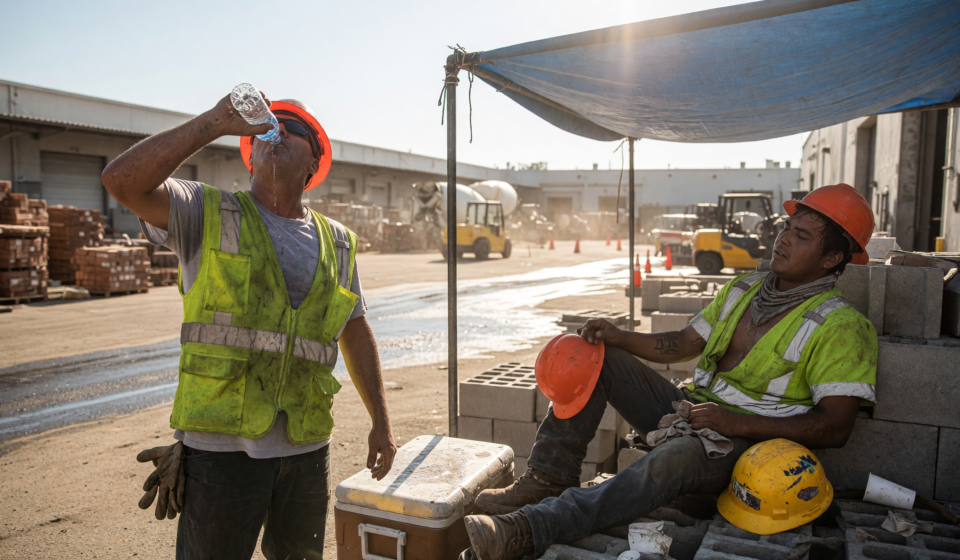
OSHA Renews Heat Safety Program for Five Years as Peak Summer Hits
WASHINGTON, D.C. — As much of the country pushes through the hottest stretch of the year, the federal government’s frontline defense against heat illness at work is not a new law but a renewed enforcement program. OSHA’s revised heat safety rules took effect on April 10, 2026, when the agency reissued its Outdoor and Indoor Heat-Related Hazards National Emphasis Program (NEP) for another five years. The move quietly extended heat-focused inspections through the peak of summer, even as a permanent federal heat standard remains stalled. For anyone who works outdoors, in a hot warehouse, or beside industrial ovens, these OSHA heat safety rules are the practical framework protecting them right now.
What happened
The original Heat NEP launched on April 8, 2022, and was scheduled to expire on April 8, 2026. Rather than let it lapse at the start of summer, OSHA issued an updated directive (CPL 03-00-024) that became effective on April 10, 2026, and will run for five years, into 2031. The renewal keeps heat squarely on the agency’s enforcement radar during the exact months when heat exposure is most dangerous.
The updated program also widened its reach. According to an analysis by law firm Littler, 33 industries carried over from the previous version and 22 new industries were added to OSHA’s list of enforcement priorities. The newly targeted sectors include plastic product manufacturing, metalworking machinery manufacturing, department stores, general freight trucking, animal slaughtering and processing, and electric power generation, transmission, and distribution — a mix of indoor and outdoor workplaces where heat can build quietly and quickly.
The inspection triggers are the heart of the program. On a “heat priority day” — defined as a day when the heat index is expected to reach 80 degrees Fahrenheit or higher — OSHA compliance officers are directed to ask about an employer’s heat-illness prevention efforts during any inspection, even one opened for an unrelated reason. Separately, OSHA will conduct programmed heat inspections in targeted industries on any day the National Weather Service issues a local heat warning or advisory. Before issuing a citation, inspectors are instructed to document the conditions on the ground, including the heat index, government heat alerts, observed wind speeds, and relative humidity.
Why it matters for safety
Heat is one of the most underestimated hazards in American workplaces because it rarely arrives as a single dramatic event. It creeps up: a worker skips water, misses a break, or is new on the job and not yet acclimatized, and heat exhaustion tips into heat stroke before anyone recognizes the warning signs. Unlike a fall or a machine guard failure, heat illness can strike a healthy person in ordinary conditions, and it disproportionately affects workers in their first days on a hot job.
The scale of OSHA’s attention reflects that risk. The agency reported conducting roughly 7,000 heat-related inspections between April 2022 and December 2024 under the original NEP. By renewing and expanding the program, OSHA is signaling that heat enforcement is not winding down — it is broadening to cover more indoor manufacturing and logistics work where hot processes, poor ventilation, and heavy exertion combine. For safety managers, that means a heat plan is no longer optional paperwork; it is the document an inspector may ask to see on the next 80-degree afternoon.
What you should do to meet the OSHA heat safety rules
The NEP does not mandate a single rigid checklist, but it lists risk-reduction strategies that mirror well-established heat-illness prevention practice. Employers and crews can put the essentials in place today:
- Write it down: Develop or update a written heat-illness prevention program that names who monitors conditions and what happens on a heat priority day.
- Water, rest, shade: Provide cool drinking water within easy reach, scheduled rest breaks, and shaded or air-conditioned areas where workers can cool down.
- Acclimatize new and returning workers: Ease people into full exertion over several days, since new workers and those coming back from time off are at the highest risk.
- Train and watch: Teach the signs of heat exhaustion and heat stroke, and set up a buddy system so someone notices when a coworker is struggling.
- Use cooling gear: Consider cooling vests, neck wraps, moisture-wicking base layers, and breathable high-visibility clothing that manages heat without sacrificing protection.
- Have an emergency plan: Know how to cool a worker rapidly and when to call 911, because heat stroke is a medical emergency where minutes matter.
What to do. Treat every day the heat index hits 80 degrees as a heat priority day. Front-load hydration, build in mandatory rest breaks in the shade, and pay special attention to anyone in their first week on the job — acclimatization is the single most effective defense against a fatal heat stroke.
Context and what’s next
The renewed NEP is an enforcement program, not a formal regulation, and that distinction matters. OSHA is still pursuing a permanent, nationwide heat standard. The agency published its proposed rule, “Heat Injury and Illness Prevention in Outdoor and Indoor Work Settings,” in the Federal Register on August 30, 2024. The public comment period closed on January 14, 2025, an informal public hearing ran from June 16 through July 2, 2025, and the post-hearing comment period ended on October 30, 2025. Since then the rulemaking has not advanced to a final rule, and OSHA’s regulatory agenda lists no firm completion date.
Until a standard is finalized, the NEP and OSHA’s authority under the General Duty Clause of the Occupational Safety and Health Act — which requires employers to keep workplaces free of recognized serious hazards — remain the tools the agency uses to cite dangerous heat conditions. Several states, including California, Oregon, Washington, and others, already enforce their own heat rules that apply regardless of federal action. The practical takeaway for the rest of 2026 is straightforward: the federal heat standard may still be waiting in the wings, but heat inspections are very much active, and the cost of ignoring them is measured in both citations and lives.
Disclaimer. This article is for general information only and is not legal, medical, or compliance advice. Program details, effective dates, and enforcement practices can change. Employers should consult OSHA’s official directive and a qualified safety or legal professional, and check state and local requirements, before making compliance decisions.
Sources: OSHA — Heat Injury and Illness Prevention Rulemaking; OSHA Directive CPL 03-00-024, Outdoor and Indoor Heat-Related Hazards NEP; Littler — OSHA Updates and Extends its Heat Program for Five More Years; Ogletree Deakins — OSHA Revives National Emphasis Program for Heat-Related Illness.