Louisville Ladder Recalls 1.7 Million Attic Stairway Ladders Over Fall Hazard
On August 6, 2026, the U.S. Consumer Product Safety Commission announced a Louisville Ladder attic stairway recall covering about 1,770,000 units sold across the United States, one of the largest ladder recalls in recent memory. The agency says the bolts on these gas-strut attic stairway ladders can break while the ladder is in use, creating a fall hazard that can lead to serious injury or death. If you have a folding attic ladder tucked above your garage, hallway, or spare room, this is a recall worth checking today.
What happened
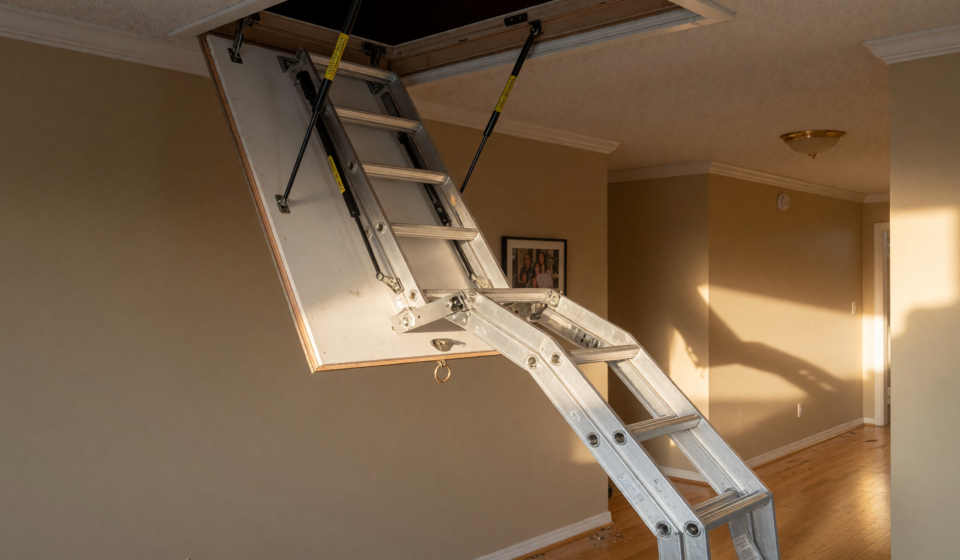
Louisville Ladder, Inc., of Louisville, Kentucky, is recalling attic stairway ladders sold under the Louisville, Featherlite, Lite, and Century brand names. The recall applies to the gas-strut versions of these ladders in both aluminum and wood-frame designs. According to the CPSC, roughly 1,770,000 were sold in the United States, with an additional 13,054 sold in Canada, under recall number 26-661.
The problem is a spreader bolt that can break during use. When that bolt fails, the ladder can give way beneath the person on it. The CPSC reports that Louisville Ladder has received 11 reports of a bolt breaking, including one report of an injury to the neck, head, and back. An attic ladder failing mid-climb is exactly the kind of sudden, no-warning failure that turns a routine trip into the attic into an emergency-room visit, which is why the agency is urging owners to act now rather than wait for a bolt to snap.
The recalled ladders were sold at The Home Depot, Lowe’s, Do It Best, Orgill, and other retailers nationwide, as well as online at Amazon.com, for prices ranging from about $170 to $600. They were on the market for a long stretch — from November 2012 through July 2026 — which is a big part of why the recalled population is so large. The ladders were manufactured in Mexico.
Why it matters for safety
Falls are one of the most common and most serious hazards in and around the home, and ladders sit at the center of that risk. A pull-down attic ladder is a piece of equipment many households use only a few times a year — to swap seasonal decorations, store luggage, or check insulation — so it rarely gets the inspection attention a work ladder might. That occasional use can create a false sense of confidence: the ladder felt fine last time, so it must be fine now. A bolt that fails without warning defeats that reasoning entirely.
Attic access also stacks several risk factors on top of one another. You are often climbing while carrying a box, reaching overhead, working in a dim space, and standing on a ladder that is steeper and more compact than a standard step ladder. A structural failure at the spreader — the mechanism that holds the ladder open at the correct angle — can cause a collapse rather than a simple slip, and the height involved means the fall is onto a hard floor, sometimes with an object in your arms. That combination is why the CPSC frames this as a risk of serious injury or death, not just a bruise.
There is also a scale issue. With nearly 1.8 million ladders in U.S. homes and a 14-year sales window, many owners will not remember the brand or where they bought it, and plenty of these ladders came pre-installed when a house changed hands. That makes proactive checking — rather than waiting to hear about the recall through a store — the safest approach for anyone with a folding attic ladder.
What you should do
What to do. Stop using a recalled Louisville, Featherlite, Lite, or Century gas-strut attic stairway ladder immediately, and register at Atticstairwayrecall.expertinquiry.com to receive a free repair kit with replacement bolts, washers, and lock nuts.
- Stop using it now: If your attic ladder is a gas-strut model under the Louisville, Featherlite, Lite, or Century brand, do not climb it until it is repaired, even if it seems to work normally.
- Register for the free repair kit: Go to Atticstairwayrecall.expertinquiry.com to sign up. The kit contains replacement bolts, washers, and lock nuts to correct the defect at no cost.
- Check the brand and type: Look for a gas-strut assist and the Louisville, Featherlite, Lite, or Century name. The recall covers both aluminum and wood-frame versions.
- Do not improvise a fix: Replacing hardware with generic bolts from a hardware store is not a substitute for the manufacturer’s kit, which is matched to the ladder’s load requirements.
- Contact Louisville Ladder with questions: The company can be reached at 888-679-5132 for help confirming whether your ladder is included and how to install the repair.
If you are not certain whether your ladder qualifies, treat it as if it does until you can confirm otherwise. It is far easier to borrow a separate, in-service ladder for a week than to recover from a fall through an attic opening. Households with older relatives or anyone with limited mobility should be especially cautious, since a collapse is harder to recover from and the consequences of a fall are more severe.
Context and what’s next
This Louisville Ladder attic stairway recall lands during a busy stretch for the CPSC, which has issued a string of fall- and structural-failure recalls in 2026 — from attic ladders and dressers to backyard ziplines. Ladders in particular are a recurring theme in the agency’s data because the failure mode is so unforgiving: unlike a product that overheats or wears out gradually, a broken bolt gives no second chance once you are already off the ground.
For the recalled ladders, the remedy is a repair rather than a refund or replacement, which means the fix depends on owners actually registering and installing the kit. Recall participation rates are often low, especially for products that are used infrequently and were bought years ago, so the practical risk will persist in many homes long after the announcement. Expect Louisville Ladder and the retailers that sold these units to publicize the repair program, and watch for direct notices if you registered a product or bought recently enough to be on file.
More broadly, the recall is a reminder that home fall protection is not only about work sites and harnesses. The everyday equipment we keep in garages and hallway ceilings deserves the same scrutiny: inspect before each use, respect weight limits, keep three points of contact, and never carry a load that keeps you from holding on. When a manufacturer flags a defect this serious, the safest move is to pause and get the free fix before the next climb.
Disclaimer. This article is for general safety information only and is not a substitute for the official recall notice or professional advice. Details such as included models, remedies, and contact information can change; always confirm your specific product and next steps with the CPSC recall notice and Louisville Ladder before acting.
Sources: U.S. Consumer Product Safety Commission — Louisville Ladder attic stairway ladder recall (Recall 26-661); CPSC Recalls & Product Safety Warnings.