Playground Heat Hazards: Hot Surfaces, Shade and Safe Play Times
It is a bright afternoon, the swings are empty, and a toddler in shorts scrambles up a plastic slide before anyone can say wait. Seconds later comes the cry. Scenes like this play out every summer across the country, and they are the reason playground heat safety deserves as much attention as splinters, fall zones, and stranger awareness. The U.S. Consumer Product Safety Commission (CPSC) has documented thermal burns from playground equipment serious enough to require medical care, and the equipment does not have to look dangerous to cause them.
This guide covers what actually happens on a hot playground and what to do about it. We will look at which surfaces heat up the fastest, why dark plastics and bare metal are the usual culprits, how solar radiation turns a mild day into a burn risk, and where shade and smart timing fit in. We will also cover the gear and habits that protect small skin, the standards that govern public play equipment, and a simple test you can run in one second before your child climbs aboard.
Why Playground Surfaces Get Dangerously Hot
The core problem is solar radiation. When equipment sits in direct sunlight for an extended period, it absorbs energy and its surface temperature climbs well above the surrounding air temperature. That is why the reading on your phone’s weather app can be misleading. The air might feel pleasant while a metal slide or a black rubber tile is far hotter to the touch. The CPSC has noted that a child can suffer serious burns even on a day that is not especially hot, because the surface, not the air, is what contacts skin.
Children are more vulnerable than adults for reasons that have nothing to do with carelessness. Their skin is thinner, so a contact burn develops faster and deeper. They are smaller, so more of their body touches a surface when they sit or slide. And they often react slowly, staying in contact with a hot surface a beat longer than an adult would. A quick brush against something scorching is unpleasant for a grown-up but can leave a lasting mark on a young child.
- Direct sun exposure: Hours in full sunlight let surfaces store heat and keep radiating it.
- Material matters: Metals conduct heat rapidly, while dark plastics and rubbers absorb and hold it.
- Color counts: Darker colors reach higher surface temperatures than lighter ones under the same sun.
- Low airflow: Sheltered corners with little breeze cool off more slowly than open, ventilated areas.
The Usual Suspects: Metal, Dark Plastic, and Rubber Surfacing
Bare metal is the surface most people worry about, and for good reason. Uncoated metal slides, steps, handrails, and platforms conduct heat quickly and can climb to temperatures that cause burns on contact. But the CPSC is explicit that metal is not the only offender. Plastic slides, especially dark ones, and rubber safety surfacing can all reach burn-capable temperatures in the sun. A single documented incident involved a child who sustained second-degree burns from a plastic slide on a day when the air temperature was only in the mid-70s Fahrenheit.
Rubber surfacing deserves special mention because it is designed to cushion falls and is often assumed to be the safe zone. Poured-in-place rubber and rubber tiles, particularly in dark colors, can become uncomfortably hot underfoot and pose a risk to bare feet and crawling infants. Engineered wood fiber and other loose-fill materials, covered under standards like ASTM F2075, tend to stay cooler than dark unitary rubber, though any surface baking in the sun deserves a check.
- Uncoated metal: Slides, monkey bars, and railings heat fast and cool slowly.
- Dark plastic: Slide beds and molded panels absorb solar heat and can burn on contact.
- Rubber tiles and poured surfacing: Cushioned does not mean cool; dark rubber can scorch bare feet.
- Asphalt and concrete: Paths and borders around equipment radiate heat onto low-to-the-ground kids.
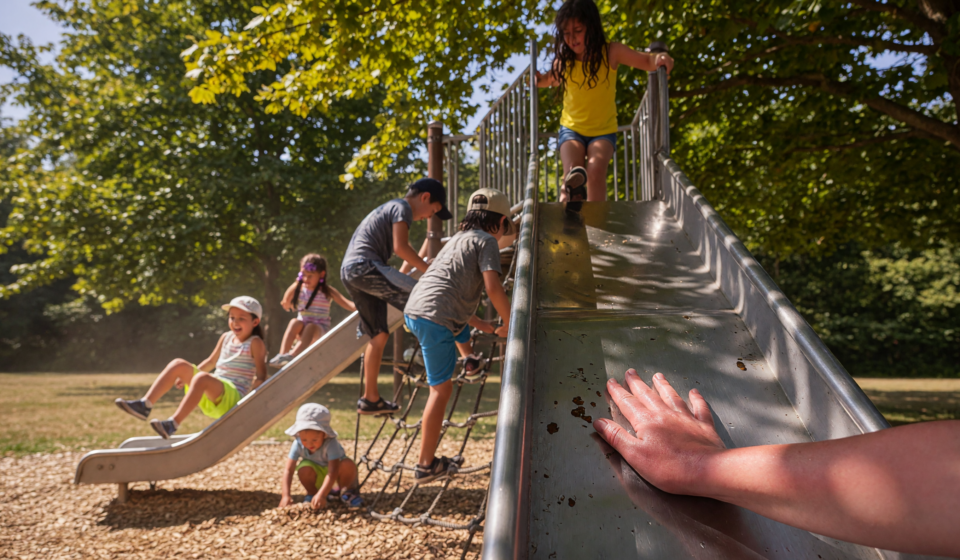
The one-second hand check. Before your child climbs on, press the back of your hand flat against the slide, the seat, and the metal parts for a few seconds. CPSC guidance is blunt: if it feels too hot for your hand, it is too hot for a child’s bare skin. When in doubt, wait or move on.
The Role of Shade in Playground Heat Safety
Shade is the single most effective way to keep equipment cooler, because it blocks the solar radiation that drives surface heating in the first place. A slide sitting under a mature tree or a purpose-built shade sail can be dramatically cooler than the identical slide in full sun a few feet away. This is why forward-thinking parks and schools increasingly plan shade over the equipment itself, not just over the benches where adults sit.
If you are choosing where to play, seek out shaded structures and north-facing surfaces that see less direct midday sun. If you help manage a playground, natural shade from trees and engineered shade structures both work, and lighter-colored equipment finishes reduce heat absorption. Shade also protects the children themselves from ultraviolet exposure and helps prevent heat-related illness, so the benefit runs well beyond burn prevention.
- Shade the equipment: Cover slides and climbers, not only the seating areas.
- Favor lighter colors: Light finishes absorb less solar heat than dark ones.
- Use natural cover: Trees provide shade plus cooling and are worth protecting during design.
- Rotate to shaded zones: Move play toward whichever structures the sun has not been baking.
👉 Shop portable playground shade sail / canopy on Amazon (Ad — as an Amazon Associate, we earn from qualifying purchases.)
Timing Play Around the Heat of the Day
When you visit matters as much as where. Surfaces are typically at their hottest in the early to mid-afternoon, after hours of accumulated sun. Morning and later-evening play sessions land on cooler equipment and expose children to less intense ultraviolet radiation. Shifting outdoor time toward the edges of the day is one of the easiest, no-cost adjustments a family or program can make.
Free public tools make timing decisions easier. The National Weather Service publishes the heat index, which combines temperature and humidity, and its HeatRisk tool flags days when heat poses elevated danger to sensitive groups, including young children. On high-heat days, treat the playground the way you would treat any strenuous outdoor activity: shorten sessions, build in water and shade breaks, and be ready to call it early.
- Aim for mornings: Equipment has had less time to heat and UV is lower.
- Avoid mid-afternoon peaks: This is when surfaces and the heat index are usually highest.
- Check HeatRisk and heat index: Use National Weather Service tools to plan around dangerous days.
- Keep sessions short in heat: Frequent breaks beat one long stint in the sun.
Dressing Kids for Hot Equipment
Clothing is a simple barrier between skin and a scorching surface, and CPSC guidance specifically encourages appropriate dress for hot playgrounds. Closed-toe shoes protect against hot rubber, sand, and asphalt, which matters most for the barefoot toddler set. Lightweight long sleeves and pants add coverage on the slide without overheating a child if the fabric is breathable. The goal is to reduce direct skin-to-surface contact while keeping the child cool.
Sun protection belongs in the same conversation. A wide-brimmed hat, sunglasses, and broad-spectrum sunscreen guard against ultraviolet exposure, and lightweight sun-protective clothing helps on long outings. None of this replaces the hand check or shade, but together these layers meaningfully lower the odds of a burn or heat illness on a bright day.
👉 Shop kids’ closed-toe play shoes and sun-protective clothing on Amazon (Ad — as an Amazon Associate, we earn from qualifying purchases.)
- Closed-toe shoes: Shield little feet from hot surfacing, sand, and pavement.
- Breathable coverage: Light long sleeves and pants reduce skin contact without overheating.
- Hats and sunglasses: Cut UV exposure to the face and eyes during play.
- Broad-spectrum sunscreen: Reapply on longer outings, especially after water play.
What the Standards and Agencies Say
Public playground equipment in the United States is guided by CPSC’s Public Playground Safety Handbook (Publication 325) and the voluntary consumer safety standard ASTM F1487, which covers performance specifications for public-use playground equipment. These documents address a broad range of hazards, and the CPSC’s dedicated burn-safety materials specifically call out thermal burns from equipment left in the sun. Loose-fill surfacing has its own standard, ASTM F2075, among others in the ASTM family.
For caregivers, the practical takeaway is that these standards set a baseline for how equipment is built and installed, but they do not switch off the sun. Day-to-day heat management still falls to the adults on site. Manufacturers, local parks and recreation departments, and school systems all play a role in material choices and shade, while the CPSC provides a reporting pathway for unsafe products and burn incidents through SaferProducts.gov.
- CPSC Publication 325: The Public Playground Safety Handbook, the core U.S. guidance document.
- ASTM F1487: The voluntary safety performance specification for public playground equipment.
- ASTM F2075: A standard covering engineered wood fiber loose-fill surfacing.
- CPSC burn-safety guidance: Materials focused specifically on thermal burns from hot equipment.
Building a Quick Pre-Play Routine
The most reliable protection is a habit, not a gadget. A short, repeatable routine catches hot surfaces before a child does, and it takes only a few seconds once it becomes second nature. Pair it with water, shade breaks, and an eye on how your child is doing, and most hot-day hazards become manageable.
Watch for signs of heat illness alongside burn risk. Flushed skin, unusual fussiness, dizziness, or a child who stops sweating on a very hot day all warrant a break in the shade and fluids. When a burn does happen, cool the area with running water and seek medical advice for anything beyond a minor red mark, especially on a young child.
👉 Shop insulated water bottle / hydration pack for kids on Amazon (Ad — as an Amazon Associate, we earn from qualifying purchases.)
- Touch before they climb: Hand-check slides, seats, and metal parts every visit.
- Scan for shade: Steer toward covered structures and away from sun-baked ones.
- Hydrate and rest: Offer water and shade breaks throughout the session.
- Know the warning signs: Act early on burns and on symptoms of heat illness.
The Bottom Line
Hot playgrounds are a real hazard, but they are a predictable and preventable one. The physics is simple: sun heats surfaces, dark and metal materials heat the most, and thin young skin burns fast. The defenses are just as simple. Check surfaces with the back of your hand, favor shade and lighter-colored equipment, time visits for the cooler edges of the day, dress kids to limit contact and UV, and keep water close. Lean on trusted guidance from the CPSC and ASTM for the built environment, and lean on your own quick routine for everything the standards cannot control. A one-second hand check today can prevent a burn that a child remembers for far longer.
Disclaimer: This article is provided for general educational purposes only and does not constitute medical, legal, or professional safety advice. Playground conditions, equipment, and local regulations vary. Always follow manufacturer instructions, posted rules, and the guidance of qualified professionals, and consult a medical provider for any burn or heat-related injury.
Sources: U.S. Consumer Product Safety Commission (CPSC), Burn Safety Awareness on Playgrounds and Public Playground Safety Handbook (Publication 325); ASTM International standards F1487 (public playground equipment) and F2075 (engineered wood fiber surfacing); National Weather Service heat index and HeatRisk tools.