BMX Protection: Full-Face Helmets, Knee Pads and Park Etiquette
The moment you commit to a dirt jump or drop into a concrete bowl, physics stops negotiating. A pedal slips, a tire washes out, and suddenly the ground is coming up fast. Every seasoned rider has a story that ends with a scuffed helmet or a cracked pad, and almost all of them will tell you the same thing: the gear did its job so their body did not have to. Building smart BMX protective gear habits is not about fear. It is about staying in the session, riding again tomorrow, and progressing without paying for every mistake in skin and bone.
This guide walks through the protection that matters most for BMX, from full-face helmets and open-face lids to knee pads, elbow pads, and gloves. We will explain the US safety standards that govern helmets, the difference between racing and freestyle needs, how to judge fit and replacement, and the park etiquette that keeps a crowded skatepark from turning into a collision course. The goal is plain-English reasoning so you understand not just what to wear, but why it works.
Why BMX Demands Its Own Approach to Protection
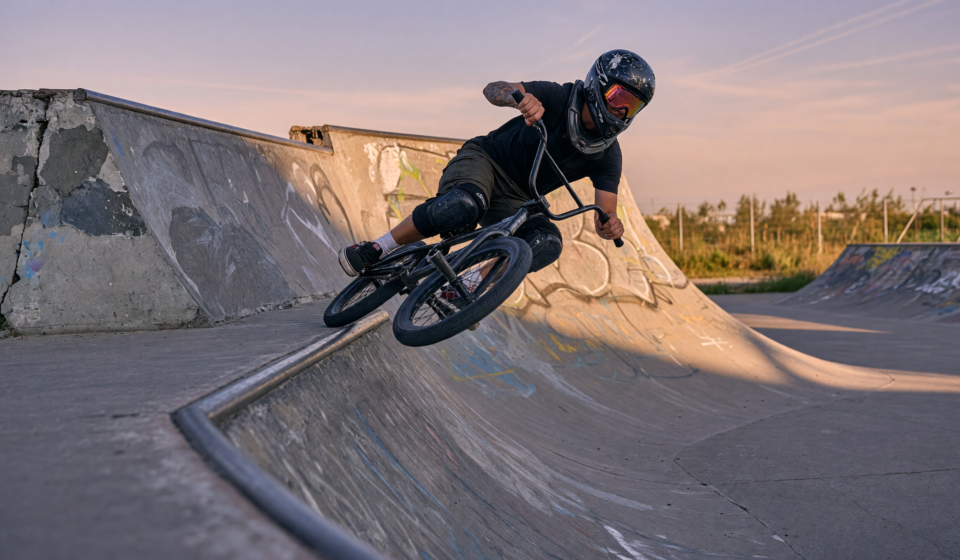
BMX is not one sport. Racing sends riders sprinting over dirt berms and doubles at high speed. Park and street riding trade speed for rotations, grinds, and hard landings onto concrete and coping. Trails and dirt jumping sit somewhere between, with big airs over packed soil. Each discipline stresses the body differently, so the smart move is to match your gear to how and where you ride rather than buying a single generic kit.
- Racing: High speeds and tight starting gates mean face, chest, and hand protection carry extra weight.
- Park and street: Repeated low-speed falls onto hard surfaces punish knees, elbows, and shins.
- Dirt and trails: Bigger airs raise the stakes on head protection and full-face coverage.
Helmets: Where US Safety Law Actually Starts
In the United States, bicycle helmets are not a gray area. The Consumer Product Safety Commission (CPSC) enforces a mandatory federal standard, 16 CFR Part 1203, that took effect in 1999 and applies to essentially all bicycle helmets manufactured for sale in the country. If a helmet is legally sold in the US for cycling, it has been tested against this standard, and you should see a CPSC compliance sticker inside the shell.
What does that standard actually check? In plain terms, it verifies that a helmet manages a serious impact and stays on your head when you need it most. The core requirements include measured impact attenuation, a retention system that resists coming loose, positional stability so the helmet does not roll off during a crash, and enough peripheral vision that the helmet does not blind you to traffic or other riders.
- Impact management: The liner is designed to crush and slow your head during a hit, reducing the force that reaches your brain.
- Retention strength: The chin strap and buckle must hold without stretching excessively so the helmet stays put.
- Positional stability: Testing confirms the helmet resists being rolled off the head from front or back.
- Peripheral vision: The design must leave a wide field of view so you can track hazards around you.
Bottom line on helmets. A CPSC sticker is the floor, not the ceiling. It confirms a helmet met the federal bicycle standard, but it does not tell you whether the fit, coverage, and style are right for your specific style of riding.
Full-Face vs. Open-Face: Choosing for Your Discipline
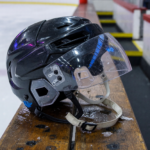
The most visible choice in BMX head protection is whether to run a full-face helmet with a fixed chin bar or a lighter open-face lid. A full-face wraps the jaw and chin, which is the region most exposed in a hard face-first crash. Racing organizations lean heavily on this coverage: USA BMX, the sport’s US sanctioning body, requires an approved helmet meeting CPSC standards for racing and strongly recommends a full-face for the added protection to the head and teeth. Many riders on the gate treat a full-face as standard equipment rather than an upgrade.
Open-face helmets are common in park and street riding, where riders value ventilation, lighter weight, and a wider field of view for spotting other people in a busy park. That trade-off is personal, but if you are learning big airs, riding fast, or putting your face over the bars regularly, the jaw protection of a full-face is hard to argue against. Some full-face models built for gravity mountain biking also carry the ASTM F1952 downhill racing certification, which adds chin-bar impact testing that a basic bicycle helmet standard does not include.
- Choose full-face if: You race, ride trails and dirt jumps, or session features where a face-first crash is a realistic outcome.
- Consider open-face if: You ride mostly flatground or lower-consequence park lines and prioritize airflow and visibility, understanding your jaw is exposed.
- Look for extra certification: A full-face carrying ASTM F1952 has passed added chin-bar testing beyond the baseline CPSC bicycle standard.
👉 Shop full-face BMX/dirt-jump helmet on Amazon (Ad — as an Amazon Associate, we earn from qualifying purchases.)
Knee Pads and Elbow Pads: Protecting the Joints That Hit First
Watch enough slams and a pattern emerges: when riders fall, they land on knees and elbows first. Those joints have thin skin over hard bone, so a low-speed spill on concrete can still mean weeks off the bike. Good knee and elbow pads absorb the impact and let you slide instead of grabbing the surface, which protects both the joint and the skin. For park and street riders especially, pads are the difference between shaking off a bail and limping home.
Pads generally fall into two families. Hard-cap pads use a plastic shell over foam and are built to take repeated concrete hits and slide cleanly, which many park riders prefer. Soft flexible pads use dense foam that stiffens on impact; they are lighter and less bulky, favored for pedaling comfort and trail riding. Whichever you choose, coverage and staying power matter more than looks: a pad that slides out of place in the first crash is doing nothing on the second.
- Hard-cap pads: Plastic shell over foam, built to slide on concrete and shrug off repeated park impacts.
- Soft impact pads: Flexible foam that firms up on impact, lighter and better for pedaling and trails.
- Fit and retention: Look for straps or a sleeve design that keeps the pad centered over the joint through a fall.
- Full coverage: Pads that extend above and below the joint protect the surrounding area, not just the cap.
👉 Shop BMX knee pad and elbow pad set on Amazon (Ad — as an Amazon Associate, we earn from qualifying purchases.)
Gloves, Shin Guards, and the Rest of the Kit
Beyond the helmet and the big joint pads, a few smaller pieces earn their place fast. Gloves protect your palms, which instinctively reach out in a fall, and they also improve grip and reduce blisters on long sessions. Shin guards or combined knee-shin pads shield the front of your legs from slipped pedals, a classic BMX injury that leaves the telltale “pedal bite” scars. Riders who spend a lot of time learning grinds and pedal-heavy tricks often add these first.
- Gloves: Palm protection for the reflex to catch yourself, plus better grip and fewer blisters.
- Shin protection: Guards against slipped-pedal strikes, one of the most common BMX leg injuries.
- Ankle and mouth protection: Sturdy shoes support landings, and a mouthguard adds cheap insurance for your teeth, especially with an open-face helmet.
👉 Shop BMX gloves on Amazon (Ad — as an Amazon Associate, we earn from qualifying purchases.)
Fit, Replacement, and Care
Even certified gear only protects you if it fits and is in good condition. A helmet should sit level, cover your forehead, and stay snug without pressure points; the straps should form a Y under each ear and buckle tight enough that the helmet barely shifts when you shake your head. A loose helmet can rotate or come off at the worst possible moment, which is exactly the failure the positional-stability testing is designed to prevent.
Helmets are also one-and-done for serious impacts. The foam liner crushes to absorb a hit, so after a significant crash you should replace the helmet even if the shell looks fine, because the protective foam may be spent. Inspect pads for cracked shells, torn straps, and flattened foam, and retire them when they stop holding position. Store everything out of direct heat, since a hot car can degrade foam over time.
- Level and snug: The helmet should sit low on the forehead and resist shifting when you shake your head.
- Replace after impact: A crushed foam liner will not protect you a second time, even if the shell looks intact.
- Inspect regularly: Retire pads with broken shells, worn straps, or foam that no longer springs back.
Park Etiquette: The Unwritten Safety System
Gear protects you from the ground; etiquette protects you from each other. A skatepark is a shared space with skaters, scooter riders, and BMXers weaving the same lines, and most collisions come from someone dropping in without looking. The core rule is simple: take turns, watch the flow, and do not roll into a feature someone is already using. A crowded park runs smoothly when everyone reads the rhythm instead of forcing their run.
- Wait your turn: Watch the pattern before you drop in, and do not snake a run someone else has started.
- Make eye contact: A quick nod or glance signals whose turn is next and avoids two riders committing at once.
- Clear the landing: Never stop or stand where riders come down; move off features quickly after a bail.
- Mind newer riders: Give beginners and kids room, and keep your speed reasonable in busy sessions.
The Bottom Line
BMX rewards commitment, and the riders who keep progressing are usually the ones who stay healthy enough to keep showing up. A CPSC-compliant helmet is your legal and practical baseline, a full-face is the smart call once the consequences climb, and knee pads, elbow pads, and gloves turn most bails into a brush-off rather than a setback. Add good etiquette at the park and you protect not just yourself but everyone sharing the concrete. Gear up thoughtfully, respect the flow, and go ride.
Disclaimer: This article is for general educational purposes only and does not constitute safety, medical, or legal advice. Safety standards and product certifications change over time. Always follow the manufacturer’s instructions, verify current certification for any gear you buy, and consult the rules of your local track or park and applicable regulations before riding.
Sources: U.S. Consumer Product Safety Commission (CPSC), Safety Standard for Bicycle Helmets, 16 CFR Part 1203; CPSC, “Which Helmet for Which Activity”; ASTM International, ASTM F1952 Standard Specification for Helmets Used for Downhill Mountain Bicycle Racing; USA BMX, official safety gear guidance; Bicycle Helmet Safety Institute (helmets.org).