Grilling Safety: Burn PPE, Propane Checks and Flare-Up Control
The backyard is quiet, the burgers are on, and then a curtain of flame rolls up the back of the grill and licks at your forearm as you reach for the tongs. That reflexive flinch is where most cookout injuries happen. The good news is that solid grilling safety is not complicated or joyless. A handful of habits, the right burn PPE, and a two-minute propane check turn the most dangerous appliance in your yard into the reliable workhorse it is supposed to be.
This guide walks through what actually keeps you safe at the grill, in plain English. We cover the heat-resistant gloves and burn PPE worth owning, how to run a proper propane leak test, why flare-ups happen and how to tame them, smart grill placement, and calm, correct burn first aid for the moment something does go wrong. Along the way we lean on guidance from the National Fire Protection Association (NFPA), the U.S. Consumer Product Safety Commission (CPSC), and the American Red Cross, so you are not just taking our word for it.
Why Grilling Deserves Real Respect
A grill is an open flame or a bed of glowing coals combined with fat, fuel, and bare skin working inches away. The NFPA notes that July is the peak month for home grill fires, with the warm-weather stretch from late spring through summer accounting for the bulk of incidents. Gas grills are involved in the majority of those fires, and a leading contributing factor is a simple one: the grill was not cleaned, so built-up grease found a spark.
Understanding the failure points helps you head them off. Most grilling injuries fall into a few buckets: thermal burns from contact or flare-ups, fires from grease and fuel leaks, and injuries tied to grills placed too close to something flammable. Every section below targets one of those buckets directly.
Burn PPE: What to Wear at the Grill
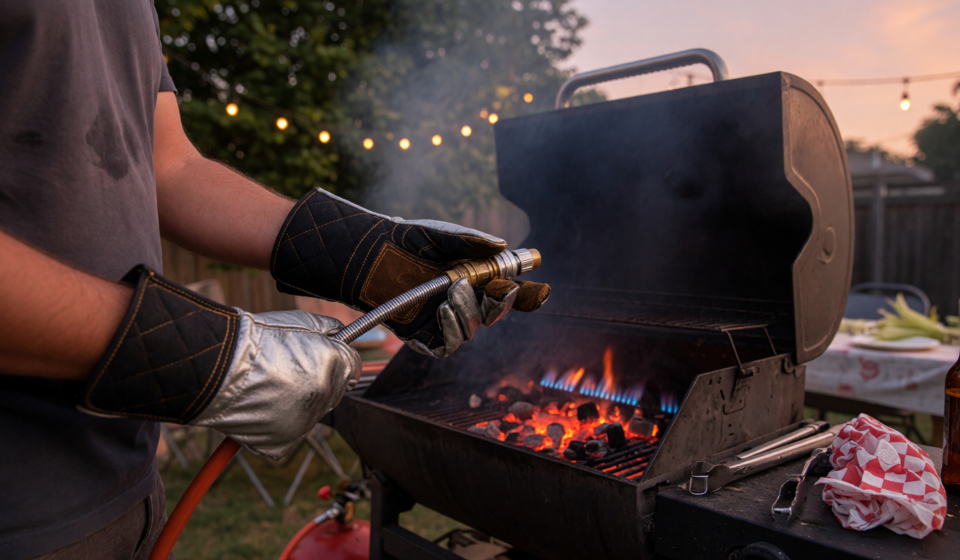
Personal protective equipment is not just a jobsite term. At the grill, the right gear is the difference between a startled step back and a trip to urgent care. Your hands and forearms are the most exposed, so that is where protection matters most.
- Heat-resistant gloves: Look for gloves built from aramid fibers (the same material family used in firefighting and welding gear) rather than thin silicone alone. Many quality grill gloves cite European standard EN 407 for thermal performance, and better designs cover the wrist and lower forearm.
- Long sleeves and closed shoes: Natural fibers like cotton or leather resist ignition better than loose synthetics that can melt onto skin. Skip flowing sleeves that can dangle into flame.
- An apron you trust: A heavy cotton or leather apron shields your torso from spatter and radiant heat, and gives you a place to keep your hands off hot surfaces.
- Long-handled tools: Tongs, spatulas, and brushes with long handles keep your hands out of the flare zone in the first place.
A note on gloves: the eye-catching temperature ratings printed on packaging usually describe short, incidental contact, not holding a hot grate indefinitely. Treat any rating as a ceiling for a quick grab, not a license to linger.
👉 Shop aramid heat-resistant grilling gloves on Amazon (Ad — as an Amazon Associate, we earn from qualifying purchases.)
The Two-Minute Propane Leak Check
If you cook on gas, the single most valuable habit you can build is the leak check. The NFPA recommends it at the start of every grilling season and any time you reconnect the tank. It costs nothing and takes about two minutes.
- Mix the solution: Combine a little dish soap with water so it foams easily.
- Brush the connections: With the tank valve open but the grill burners off, apply the soapy solution to the hose and the connection points. A leak pushes gas through and releases bubbles you can see.
- Read the result: Bubbling means gas is escaping. Turn off the tank, tighten or reseat the connection, and test again. If bubbles persist, stop and have the grill or hose serviced.
- Trust your nose: If you ever smell gas while cooking and cannot locate the source, turn off the tank, step away, and do not attempt to light the grill until it is checked.
One more gas rule that prevents a startling whoosh: always open the lid before you light a gas grill. Lighting with the lid closed lets gas pool, and igniting that pocket can send a fireball out the front.
The soapy-water test. The NFPA’s guidance is refreshingly simple: apply a light soap-and-water solution to the hose, and a propane leak will release bubbles. If it bubbles, don’t cook until it’s fixed.
Flare-Ups: Why They Happen and How to Win
A flare-up is fat meeting fire. When grease drips onto the flame or hot coals, it ignites and sends flames leaping up toward your food and your hands. Occasional small flares are normal, but a wall of flame chars your dinner and threatens burns. The fix is mostly about management, not luck.
- Clean the grill: Removing grease and fat buildup from the grates and the trays below is the NFPA’s headline maintenance tip, and it is the most effective flare-up preventer there is.
- Trim excess fat: Less rendered fat dripping down means fewer grease fires under the food.
- Use a two-zone fire: Keep one area cooler so you can slide food off the flames instead of fighting them.
- Move food, don’t douse it: Never squirt water onto a grease flare; it can spread burning fat. Move the food and close the lid to starve the flare of oxygen.
- Keep the lid handy: Closing the lid and cutting the burners smothers most flare-ups quickly.
For the rare grease fire that jumps beyond the grill, keep a Class B or multipurpose fire extinguisher within reach, and never use water on burning grease or oil.
👉 Shop multipurpose home fire extinguisher on Amazon (Ad — as an Amazon Associate, we earn from qualifying purchases.)
Placement: Where You Set Up Matters
Plenty of grill fires start not at the grate but at whatever the grill was leaning against. Radiant heat and stray embers do not need direct flame to ignite siding, railings, or a low branch. Placement is free insurance.
- Give it space: The NFPA advises keeping the grill well away from the home, deck railings, and out from under eaves and overhanging branches.
- Grill outdoors only: Never use a gas or charcoal grill inside a garage, tent, or any enclosed space. Charcoal in particular releases carbon monoxide, an invisible, odorless danger indoors.
- Level and stable: Set the grill on a flat surface where it cannot tip, and check that the legs and wheels are locked.
- Clear the traffic path: Keep the busy walking lane away from the hot zone so no one brushes the grill in passing.
Keeping Kids, Pets, and Bystanders Safe
A grill stays dangerously hot long after the food comes off, and a curious child or excited dog will not read the warning signs. The NFPA recommends keeping children and pets at least three feet away from the grill area, and that buffer should hold until the grill has fully cooled.
- Declare a no-go zone: Make the three-foot rule a family expectation, not a moment-to-moment negotiation.
- Never leave it unattended: An unwatched grill is how a small flare becomes a house fire. Stay with it from lighting to cooldown.
- Mind the cooldown: Grates and lids radiate heat well after the burners are off. Warn guests that “off” does not mean “cool.”
- Store fuel smartly: Keep spare propane tanks upright, outdoors, and away from heat sources; never store them inside the home.
Burn First Aid: Stay Calm and Cool It
Even careful cooks catch the occasional burn. Knowing the right response keeps a minor injury minor. The American Red Cross and Mayo Clinic offer consistent, straightforward guidance for small thermal burns.
- Cool it with water: Run cool (not ice-cold) water over a minor burn for several minutes. Cooling early limits how deep the damage goes.
- Skip the home remedies: Do not apply butter, oil, or ice, which can worsen the injury or trap heat.
- Cover loosely: Protect the area with a clean, non-stick dressing, and do not break any blisters.
- Remove tight items early: Take off rings or watches near the burn before swelling starts.
- Know when to get help: Seek medical care for large burns, burns on the face, hands, feet, or joints, deep or charred-looking burns, or any burn on a child or older adult. When in doubt, call for help.
Keep a stocked first aid kit near your outdoor cooking space so you are not hunting for supplies one-handed.
👉 Shop outdoor first aid kit for burns on Amazon (Ad — as an Amazon Associate, we earn from qualifying purchases.)
The Bottom Line
Great grilling and safe grilling are the same skill set. Wear real burn PPE so a flare-up is a shrug instead of an ER visit, run the soapy-water propane check before the season and after every tank swap, keep the grill clean and well-placed so grease and clearance never betray you, and hold the three-foot line for the people and pets you love. Do those things and the only heat you will worry about is whether the coals are hot enough. Fire up with confidence, cook something worth the effort, and keep everyone at the table safe.
Disclaimer: This article is provided for general educational purposes only and does not constitute professional safety, medical, or fire-protection advice. Always follow the manufacturer’s instructions for your grill and gear, comply with local fire codes, and consult a qualified professional or emergency services for specific situations. In any emergency, call 911.
Sources: National Fire Protection Association (NFPA) grilling safety guidance and grilling safety tip sheet; U.S. Consumer Product Safety Commission (CPSC) grill safety guidance; American Red Cross burn first aid resources; Mayo Clinic first aid for burns; EN 407 thermal-protection standard for gloves.