
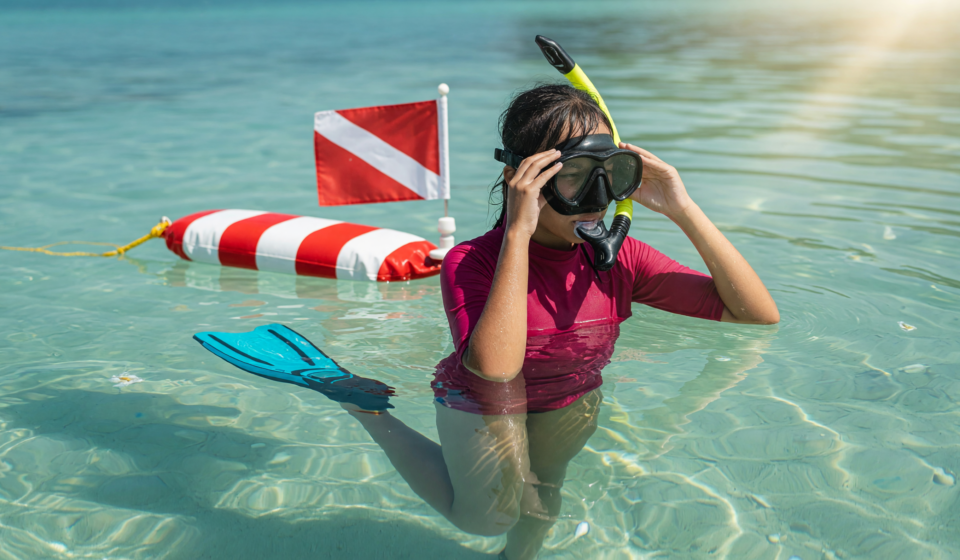
Snorkeling Safety for Beginners: Fit, Fins and Flag Rules
The first time you dip your face below the surface and the reef comes into focus, the ocean stops being scenery and becomes a place you are actually in. That moment is exactly why snorkeling is one of the easiest ways to fall in love with the water, and it is also why snorkeling safety deserves a few minutes of your attention before you ever wade in. Most snorkeling incidents are not caused by sharks or storms. They come from small, preventable problems: a mask that leaks, fins that cramp your feet, a boat that never saw you, or the simple mistake of swimming out alone.
This guide walks you through the fundamentals a first-timer actually needs. We will cover how to fit a mask that seals, how to pick fins that work with your body instead of against it, and why full-face masks have drawn safety warnings you should know about. We will explain the diver-down flag and alpha flag rules that keep boaters away from swimmers, and we will cover the habits that experienced guides never skip, from the buddy system to reading conditions before you commit. None of it is complicated. It just needs to become second nature before your first big adventure.
Start With a Mask That Actually Seals
Everything about a good snorkel session starts at the mask. A mask that leaks forces you to stop, tread water, and clear it every couple of minutes, which is tiring and stressful, and stress is what turns a minor problem into a real one. The goal is a comfortable, watertight seal against your skin, not a strap cranked down like a vise. Overtightening actually deforms the silicone skirt and creates the very leaks you are trying to prevent.
Here is the simple test any shop or guide will show you, and you can do it yourself.
- Suction check: Hold the mask to your face without using the strap, look down, and gently breathe in through your nose. It should stick on its own for a few seconds. If it falls off, the shape does not match your face.
- Skirt on skin, not hair: Keep bangs out from under the top edge and the strap above the widest part of the back of your head so it does not slide up.
- Tempered glass: Look for a lens marked tempered, which resists shattering far better than plain glass or cheap plastic.
- Defog before every swim: A drop of defog solution or a dab of baby shampoo, rinsed lightly, keeps the lens clear so you can see hazards.
👉 Shop beginner tempered-glass snorkel mask on Amazon (Ad — as an Amazon Associate, we earn from qualifying purchases.)
Choose Your Snorkel Carefully (and Think Twice About Full-Face)
A traditional snorkel is a straightforward tube, and for beginners that simplicity is a feature, not a limitation. A soft, comfortable mouthpiece and a splash guard or dry-top valve that reduces water entry are the two features worth paying for. What you breathe through matters more than most first-timers realize, because the amount of air a tube holds affects how much stale, carbon-dioxide-rich air you rebreathe with each cycle.
That physiology is exactly why full-face snorkel masks have come under scrutiny. These masks cover the entire face and let you breathe through your nose and mouth, which feels natural, but they also enclose a large volume of air that must be flushed out through valves on every breath. In March 2026, the U.S. Consumer Product Safety Commission (CPSC) urged consumers to immediately stop using a widely sold full-face model after multiple reports of breathing difficulty, dizziness, and loss of consciousness. Peer-reviewed research from the University of Auckland, published in 2023, found that full-face designs raised the incidence of hypercapnia (elevated blood carbon dioxide) and hypoxaemia during simulated snorkeling compared with conventional snorkels, in part because one-way valves did not always keep air moving in a single direction.
Know the warning signs. Carbon dioxide buildup announces itself as a headache, dizziness, shortness of breath, or a foggy, confused feeling. If you notice any of these, stop, lift your head, remove the mask, and signal your buddy. These symptoms can escalate quickly in the water, so treat them as a reason to get out, not push through.
If you do choose a full-face mask, buy a reputable model in the correct size, never use one that fits loosely, keep swims short and relaxed rather than exertional, and never put one on a small child unsupervised. When in doubt, a classic mask-and-snorkel combo remains the safest starting point.
Fins That Fit, Not Fight You
Fins turn small kicks into efficient, low-effort propulsion, which conserves the energy you will need if a current picks up or you have to cover distance back to shore. The catch is fit. Fins that are too tight cause cramps and blisters; fins that are too loose slip off at the worst possible moment. Comfort beats power for beginners every time, because a mild, sustainable kick will always outlast a stiff blade you cannot use for more than ten minutes.
- Full-foot vs. open-heel: Full-foot fins slip on like a shoe and suit warm water; open-heel fins worn with neoprene booties give a more adjustable fit and protect your feet on rocky entries.
- Snug, not crushing: Your toes should reach the end without curling, and the fin should stay put when you flex your ankle.
- Try them wet: Feet swell in warm water, so a fin that feels perfect dry can feel tight after twenty minutes.
- Match blade to fitness: Shorter, softer blades are more forgiving on your legs and easier to control in tight spots near a reef.
👉 Shop beginner snorkeling fins and booties on Amazon (Ad — as an Amazon Associate, we earn from qualifying purchases.)
Understand Diver-Down and Alpha Flag Rules
One of the most overlooked parts of snorkeling safety is making sure boat traffic knows you are in the water. Two different flags do that job in the United States, and beginners often confuse them. The red flag with a white diagonal stripe is the diver-down flag, the familiar signal that people are swimming or diving nearby. The blue-and-white alpha flag is a maritime signal that a vessel has restricted ability to maneuver because it has divers down.
- The alpha flag is federal: Under U.S. Coast Guard navigation rules, vessels engaged in diving operations must display a rigid alpha flag replica, at least one meter (about 3.3 feet) high and visible from all directions.
- The diver-down flag is state law: The red-and-white flag is not required by federal law, but many states require it to be displayed from a float or buoy over the area where people are in the water.
- Distances vary by state: How far boaters must stay from a displayed flag differs from state to state; in some it is around 300 feet in open water and closer near shore, in others roughly 100 feet. Florida, for example, spells out these distances in its state statutes.
- Stay close to your flag: A flag only protects you if you are near it, so tow a flag on a float and keep your group within the distance your state expects.
Because the specifics change with the state you are visiting, check local regulations before you go. The takeaway is universal, though: fly the right flag, stay under it, and never assume a boat operator can see a swimmer’s head in the chop.
👉 Shop diver-down flag and snorkeling float on Amazon (Ad — as an Amazon Associate, we earn from qualifying purchases.)
Never Snorkel Alone: The Buddy System
The single most protective habit in the water costs nothing: bring a buddy and actually stay with them. A partner can spot a cramp, a leaking mask, or early signs of fatigue before you notice them yourself, and can signal for help or assist directly if something goes wrong. Solo snorkeling removes the one person most likely to save you, which is why guides and dive agencies build the buddy system into their basic training.
- Agree on signals first: Settle on simple hand signs for “okay,” “problem,” and “let’s head back” before you get in.
- Set a turnaround plan: Decide how far out and how long you will go, and honor it even if the reef beckons.
- Keep each other in view: Surface and check on your buddy regularly rather than assuming they are fine.
- Tell someone on shore: Let a person who is not snorkeling know your plan and expected return time.
Read the Water Before You Get In
Conditions decide whether a snorkel is relaxing or dangerous, and the ocean does not care how good your gear is. A few minutes of observation from shore prevents most trouble. Watch how the water moves, look for warning flags on lifeguarded beaches, and be honest about your swimming ability, because snorkeling is still swimming, and a mask does not make you buoyant.
- Respect rip currents: If you are caught in a current pulling you out, do not fight it head-on; swim parallel to shore until you are free, then angle back in.
- Check beach flags and forecasts: Lifeguard warning flags and local marine forecasts tell you about surf, currents, and hazards before you commit.
- Mind your entry and exit: Rocky or surf-swept entries are where slips and cuts happen; booties and timing between wave sets help.
- Consider added flotation: A snorkel vest or float lets you rest without treading water and is a smart backup for newer swimmers.
Protect Your Skin and the Reef
Floating face-down for an hour is a fast way to get a serious sunburn on your back, neck, and the backs of your legs, all while cold water hides how much sun you are absorbing. A rash guard or wetsuit top is the most reliable protection because it does not wash off, and it adds a little warmth and abrasion resistance too. For exposed skin, the U.S. National Park Service and other agencies encourage reef-friendly mineral sunscreens over products with oxybenzone and octinoxate, which can harm coral.
Protecting the reef also protects you. Coral is sharp and some marine life stings, so the guidance to look but never touch keeps your skin intact and the ecosystem healthy. Maintain good buoyancy, keep your fins up and away from the bottom, and never stand on coral. A calm, hands-off snorkeler is both a safer and a more welcome visitor.
👉 Shop rash guard and reef-safe sunscreen on Amazon (Ad — as an Amazon Associate, we earn from qualifying purchases.)
The Bottom Line
Snorkeling rewards you with some of the most accessible beauty on the planet, and it stays that way when you respect a handful of basics. Fit a mask that seals without cranking, choose fins that fit and a snorkel you trust, and understand the diver-down and alpha flag rules that keep boats at a safe distance. Add a buddy, an honest read of the conditions, and sun and reef protection, and you have covered nearly everything that turns beginner incidents into non-events. Get the fundamentals right once, make them a habit, and the ocean opens up. Gear up thoughtfully, swim within your limits, and enjoy the view.
Disclaimer: This article is provided for general educational purposes only and does not constitute safety, medical, or legal advice. Flag laws, distance requirements, and local regulations vary by state and location and change over time; always verify current rules with the relevant authorities before you snorkel. Snorkel within the limits of your training and fitness, follow manufacturer instructions for all gear, and seek qualified instruction if you are unsure.
Sources: U.S. Consumer Product Safety Commission (CPSC) 2026 warning on full-face snorkel masks; University of Auckland (2023) study on hypercapnia and hypoxaemia in full-face snorkel masks (PMC); U.S. Coast Guard navigation rules on the alpha flag; BoatUS Foundation guidance on diver-down and alpha flags; Florida Statutes on diver-down flag distances; U.S. National Park Service guidance on reef-safe sunscreen and reef protection.