First NOCSAE Youth Football Helmet Safety Standard Reaches the Field for 2026
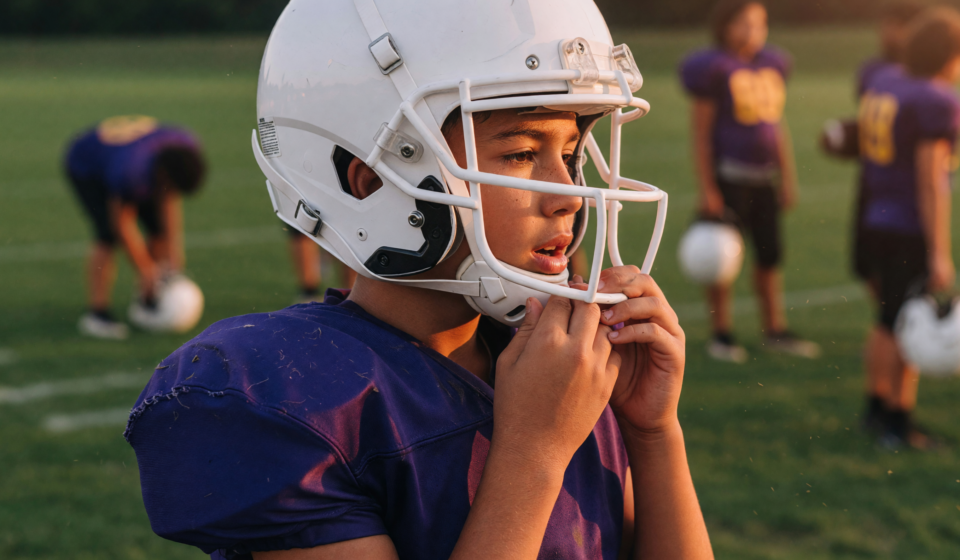
Overland Park, Kansas — The first-ever youth football helmet safety standard is moving from committee rooms to actual sidelines this year, as the earliest compliant helmets built specifically for young players roll out for the 2026 season. In April 2026, Riddell announced a new line of youth helmets engineered to meet the National Operating Committee on Standards for Athletic Equipment (NOCSAE) performance standard known as ND006, the first NOCSAE benchmark written expressly for athletes who have not yet reached high school. The standard itself becomes mandatory on September 1, 2027, but the arrival of certified gear a full year ahead of that deadline marks a concrete milestone in how the sport protects its youngest participants.
For decades, children playing tackle football wore helmets certified to the same NOCSAE standard used for adults. NOCSAE’s new approach recognizes what pediatric researchers have long argued: a 9-year-old is not a scaled-down professional, and the equipment protecting a young head should reflect that difference. Here is what changed, why it matters for athlete safety, and what parents, coaches, and program administrators should take away as the transition unfolds.
What changed
NOCSAE finalized the youth football helmet standard, designated ND006-23m25a, at its Winter Standards Committee Meeting on February 7, 2025, and announced it publicly later that month. Rather than applying the existing adult helmet protocol to smaller heads, the standard introduces test methods tailored to how younger children actually get hurt on the field.
- Tailored impact testing: The standard uses a lighter pneumatic ram than the adult football helmet test, reflecting the lower impact forces typical of youth play.
- Rotational forces addressed: Testing incorporates a rotational acceleration threshold, targeting the spinning motions of the head associated with brain injury, not just straight-line impacts.
- A weight limit: Helmets are capped at a maximum mass of 3.5 pounds, including the face mask and accessories, so gear does not overload a child’s neck and shoulders.
- New headforms: Evaluation relies on a small NOCSAE Generation III headform and multi-accelerometer instrumentation designed to capture more detailed impact data from smaller heads.
NOCSAE says the standard rests on more than a decade of research, including studies that analyzed over 6,000 head impacts recorded from youth players between the ages of 5 and 14, along with computer modeling of impact biomechanics. “Younger players don’t run as fast or get hit as hard as older players, but they do fall to the ground more often and their heads are proportionately larger compared to their bodies,” said Dr. Robert Cantu, NOCSAE’s vice president, in the organization’s announcement.
Why the youth football helmet safety standard matters
The significance of a dedicated youth football helmet safety standard lies in that biomechanical mismatch. A child’s head is larger relative to the body, the neck muscles are weaker, and the developing brain responds differently to impact than an adult’s. Testing youth helmets against adult thresholds could miss the very forces most relevant to young players. By calibrating the pneumatic ram, weight ceiling, and rotational measures to the youth population, NOCSAE is aiming certification at the injury patterns children actually experience.
Why it matters. For the first time, the helmet on a young player’s head must pass tests built around a child’s size, weight tolerance, and impact profile — not an adult’s. That is a structural shift in how the sport’s protective equipment is designed and verified for its youngest athletes.
“NOCSAE is committed to providing the highest possible level of protection for youth players, and finalizing the youth football helmet standard has been a priority,” said Mike Oliver, NOCSAE’s executive director. It is worth being precise about what a standard can and cannot do: no helmet prevents concussion, and NOCSAE certification is a manufacturing and performance benchmark, not a guarantee against injury. The value is in raising the floor for what youth-specific gear must achieve before it can be sold as compliant.
What parents, coaches, and programs should take away
The compliance clock is the practical headline. NOCSAE originally set the effective date at March 1, 2027, then extended it by six months to September 1, 2027, at its Summer Standards Meeting in Kansas City on July 25, 2025. Technical Director Elizabeth McCalley cited stakeholder feedback on “the timeframe for completing round robin testing, the value of subsequent technical review of the results, and the need for further refinement to various aspects of the standard.” In plain terms, regulators wanted manufacturers and testing labs to have enough runway to get compliant helmets right.
That runway is now producing gear. Riddell’s new youth line — sold as the SpeedFlex ND6, Speed ND6, and Jet ND6 — is built to the ND006 standard and is reaching retailers including Dick’s Sporting Goods, Academy Sports + Outdoors, and Scheels for the 2026 season. “Player protection is always our top priority,” said Thad Ide, Riddell’s chief product officer, with the company emphasizing that fielding compliant helmets early helps programs prepare ahead of the mandatory deadline. Practical guidance for the coming seasons:
- Know the deadline: Youth programs will need ND006-compliant helmets by September 1, 2027. Budgeting and phased replacement can start now rather than in a rush next year.
- Check certification, not marketing: Look for confirmation that a helmet meets the NOCSAE ND006 youth standard specifically, and confirm it is properly fitted and reconditioned on schedule.
- Remember the limits: A certified helmet is one layer of safety. Coaching technique, rule enforcement, and concussion recognition remain essential — the golden rule, “if in doubt, sit them out,” still applies.
If your league is replacing helmets this offseason, a NOCSAE-compliant youth model is a reasonable place to begin the transition (affiliate links may appear here in future updates).
Context and what’s next
Youth football participation has been a persistent concern for the sport, with safety questions weighing on parents deciding whether to enroll their children. A helmet standard built around youth biomechanics is one answer the industry can point to, alongside rule changes limiting contact in practice and growing attention to concussion protocols. Between now and September 2027, expect additional manufacturers to introduce ND006-compliant models and testing laboratories to complete the round-robin validation that helped drive the deadline extension. For families and coaches, the message is steady rather than dramatic: the equipment protecting the youngest players is being held, for the first time, to a standard designed for them.
Disclaimer. This article is for general information only and does not constitute medical, safety, or purchasing advice. NOCSAE certification is a performance standard and does not guarantee protection against concussion or other injury. Always follow manufacturer fitting and reconditioning guidance and consult qualified professionals for injury evaluation.
Sources: NOCSAE – Finalizes First-Ever Performance Standard for Youth Football Helmets; National Sporting Goods Association – NOCSAE Extends Youth Football Helmet Standard Implementation; NOCSAE – Youth Football Helmet Standard Overview; Youth Sports Business Report – Riddell Launches ND6 Youth Helmet Line Ahead of 2027 Rule.