
Goalkeeper Gloves: Grip, Cut and Sizing for Wet Fall Matches
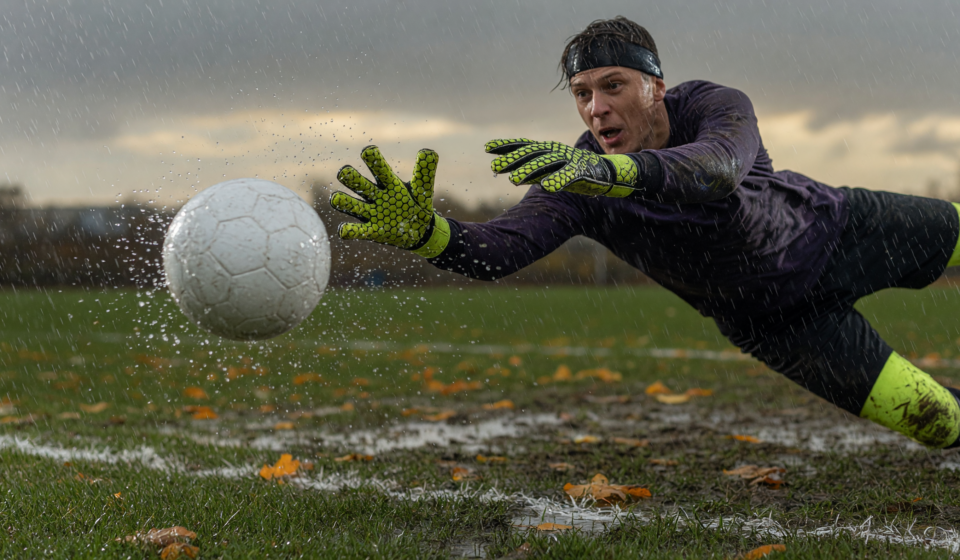
It is a gray October evening, the floodlights are on, and a fine drizzle has turned the pitch into a slick, reflective sheet. A shot skips off the wet turf, changes speed, and arrives low and heavy at your near post. In that split second, everything depends on one thing: whether the latex on your goalkeeper gloves can hold a soaked, greasy ball that wants nothing more than to squirm free. Fall soccer in the United States lives in exactly these conditions, and the keeper who prepares for them stops shots that others only wave at.
This guide walks through the three things that decide how a glove performs when the weather turns: grip (the latex on the palm and how it behaves when wet), cut (how the glove is built around your fingers, which changes both feel and fit), and sizing (getting a fit that is snug without choking your hands). Along the way we cover finger protection, simple latex care, and what the US rulebooks say about goalkeeper equipment. The aim is plain English and practical calls you can actually use before your next wet fall match.
Why Wet Fall Matches Are Different
A dry ball and a wet ball are almost two different pieces of equipment. Moisture sits between the ball surface and your palm, and that thin film is exactly what latex has to cut through to grab. Cold hands stiffen, reactions slow a hair, and a rain-soaked ball is heavier and less predictable off the turf. Fall in most of the country also means shorter days and colder, damper evenings for those late-kickoff games, so the smart move is to plan your gear around the conditions you will actually face, not the sunny July session you bought your last pair in.
- The ball speeds up off wet turf: a low driven shot can skid rather than grip, arriving faster and lower than expected.
- Water fights your grip: latex has to displace the surface film to make real contact, which is why wet-weather latex exists.
- Cold reduces feel: stiff, cold hands are slower and less sensitive, so fit and warmth matter more than in summer.
How Goalkeeper Gloves Grip a Wet Ball
Nearly all serious goalkeeper gloves grip through a layer of soft foam latex on the palm. That latex is a natural material, tacky by design, and it is the single biggest factor in how a glove feels. Manufacturers formulate different latex blends for different jobs. A high-end “contact” style latex is prized for its sticky feel in dry conditions and performs acceptably in rain once you towel the excess water away. A dedicated wet-weather or “aqua” latex is engineered specifically for damp play and can actually grip better when the palm is kept lightly moist. There are also durable, everyday latex blends built to last on rougher surfaces at the cost of a little raw stickiness.
The counterintuitive part for newer keepers: latex often grips best slightly damp, not bone dry. A quick spritz of water on the palms before kickoff, and a top-up during breaks, can wake the latex up. In heavy rain the opposite problem appears once the palm is flooded, so keepers carry a small towel to knock the excess off. Choosing a latex matched to fall weather, rather than the flashiest pro-grade dry-only palm, is the first real decision.
Field note. If your gloves feel slippery in the rain, they are usually too wet, not too dry. Wipe the palms on a towel between saves to restore tack, and give them a light dampening before kickoff rather than letting them dry out on the bench.
👉 Shop wet-weather / aqua latex goalkeeper gloves on Amazon (Ad — as an Amazon Associate, we earn from qualifying purchases.)
Glove Cuts: Flat, Roll, Negative and Hybrid
“Cut” describes how the palm and backhand are stitched together around your fingers. It changes both the fit and how much latex touches the ball, and it is largely a matter of personal preference once you understand the trade-offs.
- Flat (gunn) cut: the classic build with the gussets stitched on the outside between the fingers. It fits loose and roomy, tends to be the most affordable, and lays a broad, flat patch of latex on the ball.
- Roll finger cut: the latex wraps all the way around each finger with no external gussets, giving a rounded, snug feel and plenty of latex-to-ball contact. Many keepers find it the most natural for catching.
- Negative cut: the seams are stitched on the inside, pulling the glove in tight around the fingers for a close, responsive feel. Popular with keepers who want maximum control, though a tighter fit can wear a touch faster.
- Hybrid cuts: combinations such as roll-finger-negative blend a snug fit with wraparound contact, letting brands mix comfort and control in a single glove.
There is no “best” cut, only the one that suits your hands and how you like to catch. If you are between choices, a roll or hybrid cut is a forgiving starting point because the generous latex contact is helpful precisely when a wet ball is trying to escape.
Getting the Size Right
Sizing is where a lot of otherwise good gloves get let down. Goalkeeper glove sizes run on a numeric scale, and the common method is to measure your hand and then add roughly a size for working room. One widely used approach: measure around the widest part of your palm (excluding the thumb) in inches, round up, and add about one to land on your glove size. You want a snug fit with a small gap at the fingertips, generally something like a quarter to half an inch of space, roughly a thumbnail’s length, so the fingers are not jammed against the end and not swimming in slack.
- Too tight: cramped fingertips, restricted movement, and latex under tension that can tear at the seams sooner.
- Too loose: the glove twists on the hand, latex bunches, and you lose the direct feel you need on a fast wet shot.
- Youth versus adult: a youth size and an adult size with the same number are not the same glove, so check each brand’s youth and age or height guidance before buying for a young keeper.
- Brands vary: numbers are not perfectly standardized between makers, so treat the chart as a starting point and confirm against the specific brand’s guide.
👉 Shop goalkeeper gloves sizing chart / fit guide products on Amazon (Ad — as an Amazon Associate, we earn from qualifying purchases.)
Finger Protection: Do You Need It?
Many gloves offer finger protection, often marketed as “fingersave” and built from semi-rigid spines or inserts running up the back of each finger. The idea is to limit how far the fingers bend backward when a hard shot strikes the fingertips, which can reduce the chance of a painful hyperextension. It is a genuinely useful feature for younger keepers still building hand strength, for anyone coming back from a finger injury, and for the busy shot-stopper who wants extra insurance against a driven ball.
The trade-off is feel. Spines add a little stiffness and can make the glove feel less soft when catching, which is why plenty of experienced keepers leave them out or choose removable versions. Some gloves let you take the spines out so you can run protected in high-traffic games and stripped-down in easier ones. In the wet, where a heavy ball hits harder, a lot of keepers appreciate having protection available. It is a personal call, not a rule.
👉 Shop fingersave / finger-protection goalkeeper gloves on Amazon (Ad — as an Amazon Associate, we earn from qualifying purchases.)
Caring for Latex So It Keeps Gripping
The best palm in the world will feel dead if you neglect it, and this matters even more in fall when mud and cold are working against you. A few simple habits keep the grip alive. Pre-wash a brand-new pair before the first use and let them dry naturally; this rinses off the manufacturing residue and wakes the latex up. During play, keep the palms lightly damp for the best tack. After a match, rinse the palms in cool water, no hotter than roughly body temperature, gently massage the dirt out, and let them air dry away from any direct heat.
- No direct heat: radiators, heaters, tumble dryers, and hot sun all dry out the latex and shorten its life. Air dry only.
- Store palms apart: do not let the two palms press together in the bag, or the latex can stick and tear.
- Keep them out of the damp bag: a sealed, humid bag invites mold; let gloves breathe in a cool, dry spot.
- Rotate pairs: a dedicated match pair plus a training pair means your best grip is fresh on game day.
👉 Shop goalkeeper glove wash / latex care products on Amazon (Ad — as an Amazon Associate, we earn from qualifying purchases.)
What the US Rulebooks Say
Gloves themselves are optional under the Laws of the Game maintained by the IFAB, but goalkeeper equipment is still governed by the same core safety principle that applies to everyone on the field: a player must not use equipment that is dangerous. In organized US play, the governing body sets the specifics. High school soccer follows the rules of the National Federation of State High School Associations (NFHS), college play follows the NCAA, and youth and club soccer generally operate under US Soccer, which adopts the IFAB Laws. The practical takeaways are consistent across all of them.
- Nothing dangerous: equipment, gloves included, must not endanger the keeper or other players, so hard or sharp add-ons are out.
- Distinguish the keeper: the goalkeeper must wear colors that set them apart from the field players and officials.
- Check your league: NFHS, NCAA, and your local US Soccer affiliate can differ on details, so confirm equipment rules with your specific competition before the season.
The Bottom Line
Wet fall soccer rewards the keeper who prepares for the conditions instead of hoping to get lucky. Match your latex to damp weather, pick a cut that fits how you catch, size the glove snug with a small fingertip gap, decide honestly whether you want finger protection, and treat the latex with a little respect so it grips when it counts. Do those five things and a rain-soaked, floodlit night stops being the enemy and starts being the stage where a well-chosen pair of goalkeeper gloves quietly wins you the game. Get the fundamentals right now, and every save on a greasy ball feels a little more like it was always going to stick.
Disclaimer: This article is provided for general educational purposes only and does not constitute equipment, safety, or purchasing advice for any specific player or situation. Product performance varies by brand, model, condition, and use. Always follow the manufacturer’s instructions and confirm equipment rules with your specific league or governing body before play.
Sources: The International Football Association Board (IFAB), Laws of the Game (Law 4, Players’ Equipment); National Federation of State High School Associations (NFHS), Soccer Rules; NCAA Soccer Rules; U.S. Soccer Federation; and general goalkeeper glove guidance from The One Glove, Keeperstop, and Top Goalkeeping on latex types, glove cuts, sizing, finger protection, and latex care.