
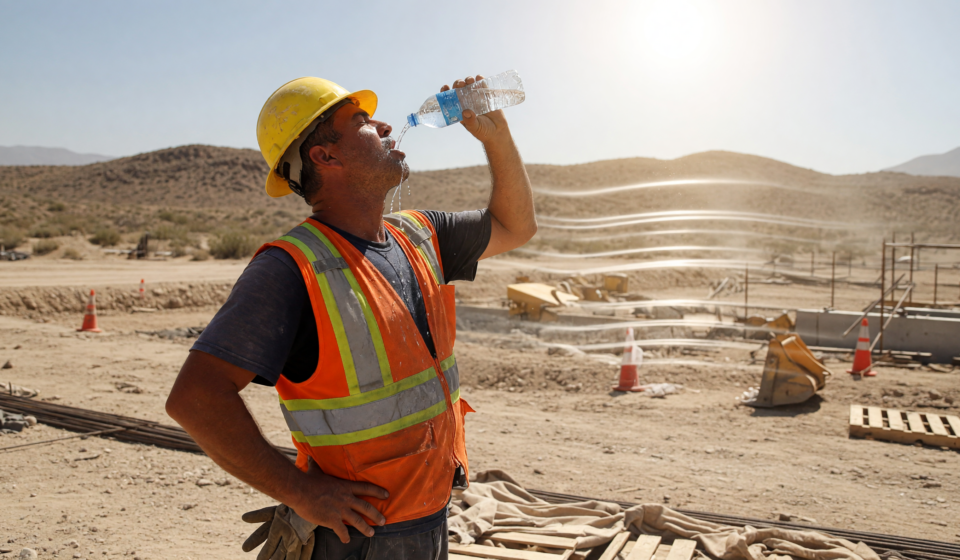
Record-Breaking Heat Wave Bakes the West as NWS Issues Extreme Heat Warnings
A punishing, record-breaking heat wave settled over the western United States this week, and by August 10, 2026 it had become one of the summer’s most serious weather-safety events. The National Weather Service (NWS) issued Extreme Heat Warnings across Arizona, California, Nevada, and Utah as temperatures peaked on August 8 and 9, then extended the danger eastward with new warnings for parts of the Midwest. For anyone working, traveling, or exercising outdoors, extreme heat safety is not optional right now — heat is consistently one of the deadliest weather hazards in the country, and this event has already broken long-standing records.
What happened
Forecasters tracked a strong ridge of high pressure parking over the Southwest, driving temperatures well above normal for early August. In the Mojave Desert, highs were forecast to reach roughly 110 to 120°F, with overnight lows staying in the 80s and low 90s — the kind of “warm nights” that give the body no chance to recover. The Phoenix area saw highs around 109 to 114°F, and desert stretches of Imperial County and the Coachella Valley pushed past 110°F as well. Higher-elevation areas were not spared: the Salt Lake Valley reached the low 100s, and popular outdoor destinations such as Zion National Park and the Lake Powell area were forecast near 110°F.
Records fell as the heat built. Reno hit 103°F on August 7, breaking a record set back in 1990, and Salt Lake City also reached 103°F the same day, surpassing its previous mark for the date. The NWS urged residents across the warning areas to stay hydrated, use air-conditioned or otherwise cooled spaces, and limit strenuous outdoor activity during the hottest part of the day. At the Grand Canyon, rangers warned day hikers on the Bright Angel Trail not to descend beyond 1.5 miles from the upper trailhead and to avoid the canyon between roughly 10 a.m. and 4 p.m., when heat in the inner canyon becomes life-threatening.
Why extreme heat safety matters
Extreme heat kills more people in a typical year than hurricanes, tornadoes, or floods, yet it does its damage quietly, without the dramatic imagery of other disasters. The danger is that heat illness can escalate fast — from heavy sweating and cramps to full heat stroke, a medical emergency — and the people most at risk are not always the ones who feel it first. Outdoor workers, athletes, older adults, young children, people without reliable air conditioning, and anyone taking certain medications all face elevated risk. When overnight temperatures stay high, as they did across the desert Southwest this week, the risk compounds day after day.
The NWS asks people to learn the warning signs and act on them. According to the agency’s heat-safety guidance, symptoms that call for quick action include cramping, a rapid pulse, heavy sweating, hot and red skin, dizziness, confusion, nausea, and vomiting. Confusion, a very high body temperature, and skin that turns hot and dry can signal heat stroke, which requires calling 911 immediately.
- Heat exhaustion: heavy sweating, cold or clammy skin, a fast and weak pulse, nausea, muscle cramps, tiredness, dizziness, or fainting.
- Heat stroke: a body temperature that climbs dangerously high, hot and red skin, a strong and rapid pulse, confusion, and possible loss of consciousness — a life-threatening emergency.
- Highest-risk groups: outdoor and construction workers, older adults, infants and young children, and anyone without access to cooling.
What you should do
The NWS boils its advice down to the acronym HEAT: hydrate, educate yourself, act quickly, and take it easy. Drink plenty of water before you feel thirsty, especially when working or exercising outside, and don’t rely on sugary or alcoholic drinks. Stay informed about the forecast and heat index, and take precautions once temperatures approach 85°F or the heat index nears 90°F. People working outdoors should avoid overexertion during the hottest hours — roughly 11 a.m. to 6 p.m. — and take regular breaks in shade or air conditioning. Wear lightweight, loose-fitting, light-colored clothing, and for outdoor jobs, use cooling gear, a wide-brim hard-hat attachment or brimmed hat, and moisture-wicking layers where appropriate.
Two rules deserve special emphasis. First, never leave a child, older adult, or pet in a parked vehicle — even briefly, even with a window cracked. The interior of a closed car can turn deadly within minutes on a hot day. Second, check on neighbors, elderly relatives, and anyone who lives alone or lacks air conditioning; a quick phone call or knock on the door can prevent a tragedy. If someone shows signs of heat illness, move them to a cool, shaded place, help them hydrate, and seek medical help right away.
What to do. If you must be outside, plan the day around the heat: work or exercise in the early morning, carry water, know the nearest cooling center, and stop at the first sign of dizziness, cramps, or nausea. For heat stroke — confusion, hot skin, or collapse — call 911 immediately.
Context and what’s next
The heat is not staying in the West. As the ridge shifted, the NWS issued an Extreme Heat Warning for parts of south-central and southwestern Illinois and central and east-central Missouri, where the heat index was forecast to reach up to 110°F through the evening of August 12. In those areas, humidity — not just the air temperature — drives the heat index higher and makes it harder for the body to cool itself through sweat. Local officials pointed residents to cooling centers and 2-1-1 help lines, a reminder that many communities open public cooling spaces during dangerous heat.
Mid-to-late summer is peak season for this kind of event, and forecasters will be watching whether the ridge rebuilds or breaks down in the days ahead. The practical takeaway is the same whether you are in the desert Southwest or the humid Midwest: treat an Extreme Heat Warning as the serious safety alert it is, build your day around the cooler hours, and keep an eye on the people around you. For employers with outdoor crews, this week is a prompt to revisit water-rest-shade routines and acclimatization plans before the next heat wave arrives.
Disclaimer. This article is for general safety information only and is not medical advice or an official weather forecast. Conditions and warnings change quickly; always follow the latest guidance from the National Weather Service and your local emergency officials, and seek professional medical care for any suspected heat illness.
Sources: The Watchers — record-breaking Western heat wave; National Weather Service — Extreme Heat: Forecasts and Safety; NWS St. Louis Extreme Heat Warning (via ABC17).