
E-Bike Safety: Helmets, Battery Fires and Riding Rules
Electric bikes have quietly become one of the most popular ways to get around American towns and cities, and it is easy to see why: they flatten hills, shrink commutes, and make cycling accessible to riders who thought their pedaling days were behind them. But the same motor that makes an e-bike so much fun also raises the stakes. Higher speeds mean harder crashes, and the compact lithium-ion battery that powers your ride carries real fire risk if it is mistreated. That is why e-bike safety deserves more than a passing thought before you clip in and roll out.
This guide walks you through the essentials, one topic at a time. We will cover the U.S. e-bike class system and why it changes where you can ride, the helmets and gear that actually match e-bike speeds, the riding rules that vary from state to state, and the lithium battery fire risk explained in plain language. You will also learn how to buy certified equipment, charge and store batteries safely, spot a battery that has gone bad, and react calmly if one ever overheats. Consider it your practical, safety-first starting point.
The E-Bike Class System and Why It Matters
Most U.S. states organize electric bikes into a three-class system, and knowing which class you own tells you a great deal about how fast it goes and where the law lets you take it. The classes are defined by how the motor helps you and how fast that assistance continues.
- Class 1: Pedal-assist only, with motor help that cuts off at 20 mph. The motor works only while you pedal.
- Class 2: Throttle-assisted, with a top motor-assisted speed of 20 mph. It can propel the bike without pedaling.
- Class 3: Pedal-assist only, with assistance continuing up to 28 mph. These faster bikes usually carry a speedometer and often face extra rules.
Here is the catch: the class system is a framework, not a single national law. Rules vary by state and even by city, county, or park district. Some places allow Class 1 and Class 2 e-bikes on paved multi-use paths but restrict the faster Class 3 to roads and bike lanes. Others set minimum ages or helmet requirements tied to a specific class. Before you buy or ride somewhere new, check your state and local regulations rather than assuming the sticker on the frame settles the question.
Helmets and Gear at E-Bike Speeds
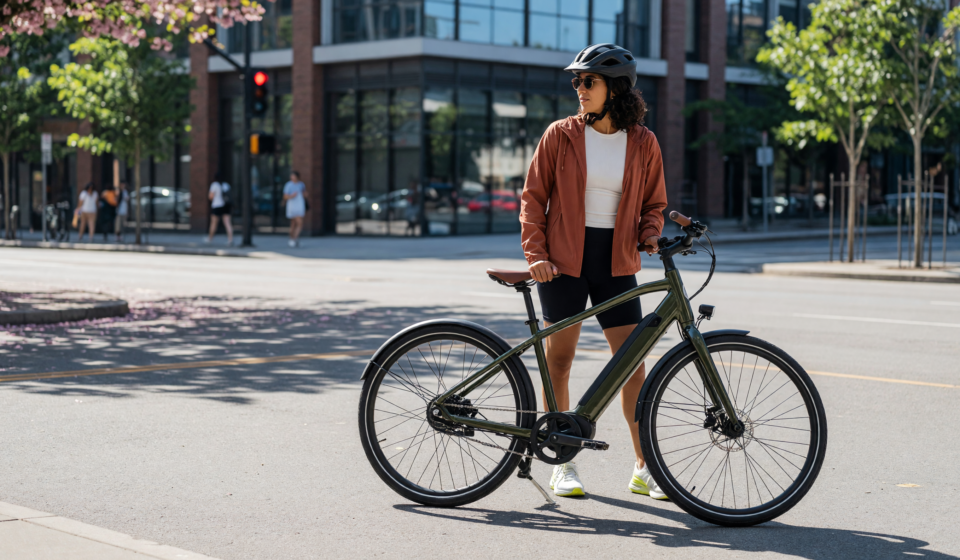
A helmet matters on any bicycle, but it matters more on an e-bike. Crash energy rises sharply with speed, so a spill at 20 or 28 mph delivers far more force to your head than a tumble at a leisurely 10 mph on a traditional bike. E-bikes also accelerate quickly and are heavier, which can catch newer riders off guard in traffic and at intersections. The right head protection is not optional gear; it is the single most important thing you can wear.
Many states reinforce this with the law. It is common for Class 3 e-bikes to carry helmet requirements and minimum-age rules, and some jurisdictions require helmets for all e-bike riders under a certain age regardless of class. Look for a helmet that fits snugly and sits level on your head, and consider one designed for the higher speeds and impact profiles of e-bikes. Add gloves, eye protection, and bright clothing, and you have covered the basics that keep a bad moment from becoming a serious one.
👉 Shop certified bike helmet on Amazon (Ad — as an Amazon Associate, we earn from qualifying purchases.)
Riding Rules and Where You Can Ride
Because e-bike access is decided locally, the smartest habit is to learn the rules for the roads, lanes, and trails you actually use. Ask a few simple questions: Is my class allowed on this path? Is there a minimum age? Am I required to wear a helmet here? Are there speed limits on shared paths? Parks, campuses, and beach boardwalks often post their own restrictions, and those can differ from the street rules a block away.
Beyond the letter of the law, ride like a considerate guest. Signal your turns, obey traffic signals, yield to pedestrians, and slow down when you approach walkers, children, or blind corners on a shared path. E-bikes are quiet and quick, which means people may not hear you coming. A friendly bell and a little patience go a long way toward keeping trails open and welcoming for everyone.
The Lithium Battery Fire Risk, Explained
The lithium-ion battery that gives your e-bike its range packs a lot of energy into a small space. Under normal use it is safe, but a damaged, defective, or poorly made cell can enter a chain reaction called thermal runaway. When that happens, the battery heats uncontrollably and can release intense fire and toxic smoke very quickly, sometimes with little warning. Fire safety officials, including the FDNY, have highlighted e-bike and e-scooter batteries as a growing cause of serious residential fires.
The good news is that the vast majority of these fires are preventable. They tend to trace back to a handful of causes: cheap or uncertified batteries and chargers, physical damage, water damage, overcharging, mismatched chargers, and storage in extreme heat. Understanding those risk factors, and avoiding them, is the heart of practical e-bike safety at home.
Remember. A lithium-ion battery fire can escalate in seconds and is hard to extinguish. Prevention through certified equipment and smart charging habits is far more effective than any response after a fire starts.
Buying Certified: UL 2849 and UL 2271
The most important safety decision you make happens before you ever ride: what you buy. Independent, third-party certification tells you the product has been tested against a recognized safety standard rather than simply advertised as safe. For e-bikes, two UL Standards matter most.
- UL 2849: Covers the safety of the e-bike’s overall electrical system, including the drivetrain, charger, and battery working together.
- UL 2271: Covers the battery pack itself, evaluating the lithium-ion cells and pack for safe performance.
Look for these markings when you shop, and be cautious with ultra-cheap online listings, off-brand replacement batteries, and universal chargers that promise to fit any bike. Buying from reputable manufacturers and retailers, and choosing certified products, is one of the strongest steps you can take. Safety agencies including the U.S. Consumer Product Safety Commission (CPSC) have urged consumers to buy certified e-mobility devices and batteries for exactly this reason.
👉 Shop UL-listed e-bike charger on Amazon (Ad — as an Amazon Associate, we earn from qualifying purchases.)
Safe Charging Habits
How you charge your battery is just as important as what you bought. Most e-bike fires happen during or shortly after charging, so a few disciplined habits dramatically reduce your risk. None of them are difficult; they simply take a little attention.
- Use the right charger: Always charge with the charger that came with your e-bike, or a certified manufacturer-approved replacement. Never substitute a random universal charger.
- Charge on a hard, non-flammable surface: Avoid beds, sofas, carpets, and piles of clothing that can ignite and trap heat.
- Keep exits clear: Do not charge in hallways, doorways, or near the only path out of a room. If a fire starts, you must be able to escape.
- Stay awake and present: Do not charge while you are asleep or away from home, and unplug once charging is complete rather than leaving it plugged in indefinitely.
- Do not overcharge: Avoid leaving the battery on the charger long after it reaches full, and follow the manufacturer’s guidance on charge times.
👉 Shop fireproof charging bag on Amazon (Ad — as an Amazon Associate, we earn from qualifying purchases.)
Storage and Damaged Batteries
Where and how you store a battery affects its safety and its lifespan. Keep batteries at moderate temperatures, away from direct sunlight, radiators, and freezing conditions. Extreme heat is especially hard on lithium-ion cells and can accelerate failure. A cool, dry indoor spot away from flammable materials and exits is ideal.
Just as important, learn to retire a battery that has warning signs. Stop using and safely replace any battery that is swollen or bulging, cracked or physically damaged, leaking, giving off an unusual smell, making odd noises, or getting unusually hot. A battery that has been submerged or exposed to water should also be taken out of service, even if it seems to still work. Damaged lithium-ion batteries are unpredictable, and no amount of remaining range is worth the risk. Contact the manufacturer or a proper recycling facility for safe disposal rather than tossing it in the trash.
What to Do If a Battery Fails or Overheats
Even with good habits, it helps to know the warning signs and have a plan. If a battery becomes hot to the touch, swells, hisses, pops, smokes, or gives off a strong chemical odor, treat it as an emergency in the making. If you can do so safely and the battery is not yet burning, unplug the charger and move the device away from anything flammable and away from your exit path.
Once a lithium-ion battery is actually on fire, do not try to be a hero. These fires are intense, can reignite, and produce toxic smoke. Get everyone out, close the door behind you if possible to slow the spread, and call 911 from a safe location. Fire departments including the FDNY stress that early escape and professional response save lives, because a battery fire can overwhelm a room faster than most people expect. Prevention remains your best protection, but a clear head and a fast exit are the right response when prevention has failed.
Visibility and Braking: E-Bike Safety on the Road
Back on the road, two things separate a confident e-bike rider from a vulnerable one: being seen and being able to stop. Because e-bikes travel faster than drivers often expect a bicycle to move, visibility is your friend. Run a bright white light up front and a red light in back, day or night, and add reflective elements to your bike, bags, and clothing. Position yourself where drivers naturally look, make eye contact at intersections, and signal early.
Braking deserves respect too. A heavier bike moving at higher speed needs more distance to stop, especially on wet or loose surfaces, and downhill runs can build speed quickly. Give yourself extra following distance, brake sooner than you think you need to, and get comfortable with how your bike handles hard stops in a safe, empty area before you rely on them in traffic. Smooth, early braking beats a last-second grab every time.
👉 Shop bike lights on Amazon (Ad — as an Amazon Associate, we earn from qualifying purchases.)
The Bottom Line
E-bikes are a genuinely great way to travel, and they can be ridden safely by nearly anyone who respects a few fundamentals. Know your class and follow the rules where you ride. Wear a helmet that matches the speeds you actually reach. Buy certified equipment, marked with standards like UL 2849 and UL 2271, and treat your lithium-ion battery with the care it deserves: the right charger, a hard non-flammable charging surface away from exits, moderate storage temperatures, and a firm rule to retire any battery that is swollen, damaged, or water-exposed. Add good lights, generous braking distance, and a courteous riding style, and you have covered the ground that keeps electric cycling both joyful and safe. Ride smart, stay seen, and let the motor be the only thing that runs hot.
Disclaimer: This article is provided for general educational purposes only and does not constitute legal, safety, or professional advice. E-bike laws and requirements vary by state and locality, and product standards change over time. Always follow your local e-bike laws and your manufacturer’s instructions, and consult qualified professionals or official agencies for guidance specific to your situation.
Sources: U.S. CPSC; UL Standards (UL 2849, UL 2271); NFPA; FDNY lithium-ion battery safety; state and local e-bike class and helmet regulations.