
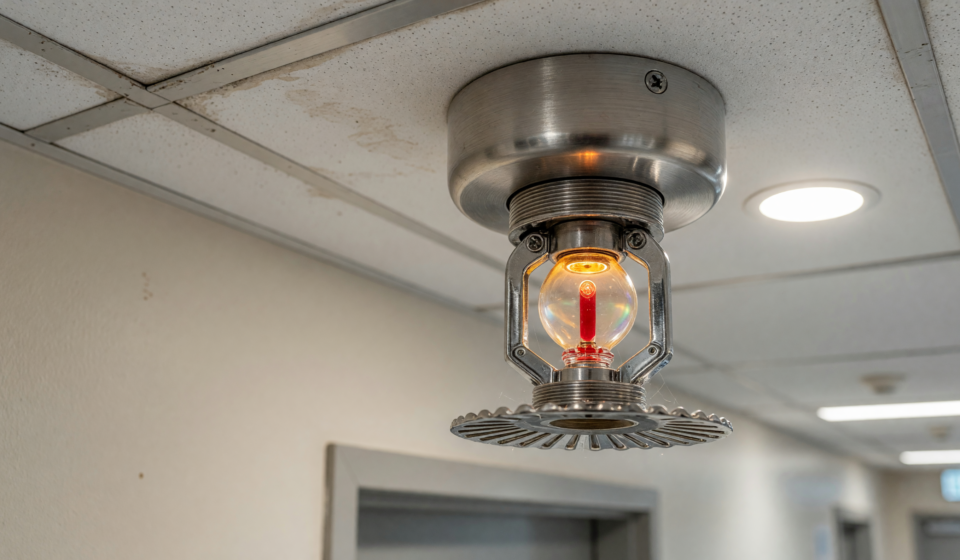
CPSC Renews Urgent Fire Sprinkler Recall Warning Over Central Heads That Can Fail in a Fire
On September 24, 2026, the U.S. Consumer Product Safety Commission (CPSC) and Tyco Fire Products LP renewed an urgent fire sprinkler recall warning, urging consumers, businesses, and property managers nationwide to check their buildings for older Central brand sprinkler heads that can fail to activate when a fire breaks out. The affected sprinklers were manufactured from the mid-1970s through June 2001, and the agency made clear that this is not a routine notice to file away — it is a call to inspect now, because a sprinkler that does not open during a fire offers no protection at the moment you need it most.
What the CPSC and Tyco warning covers
The renewed alert centers on Central brand fire sprinkler heads that use a rubber O-ring seal. According to the CPSC, “minerals, salts, and other contaminants in water can degrade the rubber O-ring seals, which can cause the sprinkler heads to fail to activate during a fire.” In plain terms, the seal that is supposed to let water flow when heat triggers the sprinkler can stick or corrode over the years, so the head stays shut even as a fire grows beneath it.
Tyco Fire Products LP is the firm responsible for the Central sprinkler line today, and the company has set up a dedicated notice page where building owners can look up whether their hardware is affected. The heads were installed in a wide range of properties over roughly a quarter century of production, so they can turn up in apartment buildings, offices, warehouses, schools, and care facilities as easily as in some homes.
- Product: Central brand fire sprinkler heads equipped with O-ring seals.
- When made: mid-1970s through June 2001.
- The defect: water contaminants can degrade the O-ring so the sprinkler fails to activate in a fire.
- Responsible firm: Tyco Fire Products LP, which maintains an identification and replacement notice for owners.
Why this fire sprinkler recall matters for safety
A fire sprinkler is a last line of defense. It is supposed to open automatically as temperatures climb, dousing flames before they spread and buying occupants precious time to escape. When a sprinkler head cannot activate, that protection quietly disappears — and the gap is invisible until a fire exposes it. That is what makes this fire sprinkler recall different from a typical product recall: the hazard is not that the device will do something dangerous, but that it will do nothing at all.
The CPSC underscored the stakes by pointing to a tragedy. The agency cited a July 13, 2025 fire at an assisted living facility in Fall River, Massachusetts that, in its words, “claimed the lives of ten residents and injured dozens more.” The CPSC noted that the facility had not replaced recalled sprinkler heads even though a prior fire-safety inspection had identified them. The point is sobering: in buildings full of people who cannot move quickly, a working sprinkler system is not a convenience — it is the difference between an incident and a catastrophe.
Why it hits home. A recalled sprinkler head looks completely normal on the ceiling. You cannot tell from the ground whether it will open in a fire, which is exactly why inspection records and professional verification matter so much here.
What you should do now
The CPSC urged “all consumers, businesses, property managers, and governmental entities” — including building managers, homeowners associations, facility administrators, and operators of schools, hospitals, and nursing homes — to act rather than assume their systems are current. Because these heads cannot be judged by eye, the agency’s guidance leans on records, identification resources, and licensed professionals.
- Identify your hardware: visit Tyco’s Central Sprinkler O-ring notice page to check whether the heads in your building are covered.
- Pull the records: review your building’s fire-protection maintenance and inspection history for any prior mention of Central O-ring sprinklers.
- Bring in a professional: have a qualified, licensed fire-protection contractor inspect the system and replace any affected heads — this is not a do-it-yourself swap.
- Alert the right people: if you rent, manage, or sit on an HOA board, make sure the responsible party knows and documents the findings.
What to do. If you own or manage any building constructed or re-sprinklered between the mid-1970s and 2001, treat verification as a priority this fall, not a someday task. Confirm the sprinkler status, schedule a professional inspection, and keep written proof of the replacement.
Context and what comes next
Concerns about O-ring sprinkler heads are not new. The Central sprinkler line was the subject of one of the largest fire-protection recalls in CPSC history back in 2001, with follow-up action in 2003. The September 2026 message is a renewal of that long-standing warning, aimed at the many heads that were never replaced in the years since. Older safety recalls do not expire just because time passes, and products installed decades ago can still be in daily service — which is precisely why the agency felt the need to speak up again.
The timing also lands in the heart of fire-safety season. With cooler weather pushing more people indoors and heating systems coming back online, October is when fire risk tends to climb and when organizations review their emergency readiness. This renewed fire sprinkler recall warning is a reminder that life-safety systems are only as good as their upkeep. If you oversee a building, the responsible move is to verify your sprinklers now, document what you find, and replace anything on the list before a fire ever tests them.
Disclaimer: This article is for general information only and is not professional fire-protection, legal, or safety advice. Details can change as agencies update their guidance. Always confirm current recall status and remedies directly with the CPSC and Tyco Fire Products, and consult a qualified, licensed fire-protection professional before making decisions about your sprinkler system.
Sources: U.S. Consumer Product Safety Commission; CPSC 2001 Central Sprinkler recall; CPSC 2003 recall update.