
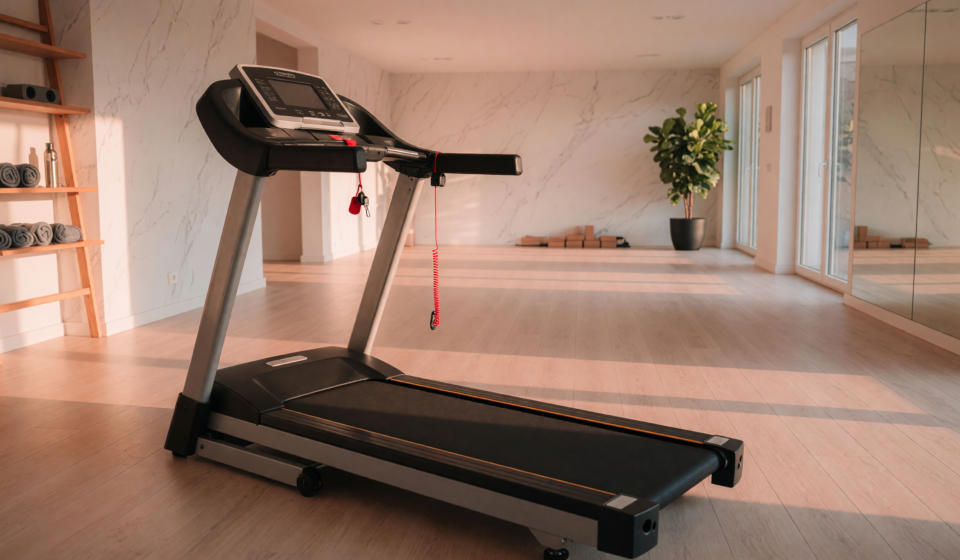
Treadmill Maker to Pay $16.875 Million for Sitting on a Fall Hazard, CPSC Says
On August 4, 2026, the U.S. Consumer Product Safety Commission (CPSC) announced that Johnson Health Tech Trading, Inc. had agreed to pay a $16.875 million civil penalty for failing to promptly report a serious treadmill safety defect to the federal government. The case centers on the company’s popular Horizon T101-05 treadmill, which regulators say could unexpectedly speed up, slow down, or stop on its own — throwing users off balance and creating a fall hazard. The settlement is one of the larger penalties the CPSC has secured in recent years, and it is a pointed reminder of a rule that protects every consumer: when a company learns its product may be dangerous, it is legally required to tell the government right away.
What happened
Johnson Health Tech Trading, based in Cottage Grove, Wisconsin, sells fitness equipment under the Horizon brand. According to the CPSC, the company received at least 874 reports that its Horizon T101-05 treadmills would “unexpectedly accelerate, change speed, or stop without user input” between March 2018 and October 2022. Those malfunctions were tied to at least 71 reports of consumer injuries over the same period. The commission alleges the company knowingly failed to immediately report the defect and the mounting incident reports to regulators, as federal law requires.
The company did not ignore the problem entirely. The CPSC notes that Johnson Health Tech implemented production changes in February 2021 and again in September 2021 to address the issue. But incidents continued even after those fixes, and the treadmills were not formally recalled until October 27, 2022 — a recall the company announced jointly with the CPSC. The penalty announced this month resolves the government’s claim that the reporting came far too late, given how early and how clearly the safety picture had come into focus.
- The product: Horizon T101-05 treadmills, a widely sold home-fitness model.
- The hazard: Unexpected acceleration, speed changes, or sudden stops that can cause a user to lose balance and fall.
- The scale: At least 874 incident reports and at least 71 injury reports from March 2018 through October 2022.
- The penalty: A $16.875 million civil penalty for failing to immediately report the defect to the CPSC.
Why it matters for treadmill safety
Treadmills are among the most injury-prone pieces of exercise equipment in American homes, and a machine that changes speed on its own turns an ordinary workout into a genuine fall risk. A belt that surges forward or halts without warning can pitch a runner face-first into the console or backward onto the floor, and the moving belt can then drag or abrade skin — a particular danger for children and pets who wander near a running machine. That is why the reliability of the speed control is not a minor feature; it is central to treadmill safety.
The larger lesson sits underneath the specific product. The nation’s consumer-protection system leans heavily on companies to be honest and fast when their own data starts pointing to a hazard. The CPSC has a small fraction of the eyes and ears that manufacturers do, so the law obligates businesses to raise their hands early rather than wait, patch quietly, and hope the problem fades. When a company sits on that information, dangerous products stay in living rooms and home gyms longer than they should — and this settlement is the government putting a price on that delay.
What you should do
If you own a Horizon T101 treadmill, this is a good moment to confirm whether your machine was part of the October 2022 recall and, if so, whether the remedy was ever completed. Beyond this specific model, the case is a useful prompt to review a few habits that keep any treadmill workout safer.
- Check for the recall: Look up your model and serial number at the manufacturer’s site or on SaferProducts.gov to see whether a repair or refund remedy applies to your unit.
- Always clip the safety key: Attach the emergency stop tether to your clothing every time you run. If you fall or the belt behaves strangely, the key pulls free and cuts power instantly.
- Keep a clear runway: Leave open space behind the treadmill, and keep children and pets well away from the machine while it is powered on — even between sets.
- Watch for warning signs: Any surging, hesitation, or unexpected speed change is a reason to stop using the machine and contact the manufacturer, not something to run through.
- Report incidents: If a product hurts you or behaves dangerously, file a report at SaferProducts.gov. Those consumer reports are exactly the kind of early data that helps the CPSC spot hazards.
What to do. Before your next workout, clip the safety key to your clothing, clear the space behind the belt, and start at a slow speed to confirm the treadmill holds a steady pace. If it surges or stops on its own, stop using it and contact the manufacturer.
Context and what’s next
The rule at the heart of this case is Section 15(b) of the Consumer Product Safety Act, which requires companies to immediately report to the CPSC when they obtain information reasonably supporting the conclusion that a product contains a defect that could create a substantial hazard, poses an unreasonable risk of serious injury or death, or fails to comply with a safety rule. Regulators read “immediately” strictly, and a manufacturer’s own stream of incident and injury reports is precisely the kind of information the law expects them to act on rather than set aside.
Beyond the dollar figure, the settlement requires Johnson Health Tech Trading to build stronger internal safeguards. The company has agreed to appoint a product-safety professional to oversee its compliance with the Consumer Product Safety Act and its reporting decisions, to put procedures in place for reviewing and analyzing incident and injury data, and to submit annual compliance reports for three years documenting its internal controls, audits, and training. An affiliated company, Johnson Health Tech North America, is also covered by the compliance obligations. As with most CPSC settlements, the company agreed to the penalty without formally admitting the allegations.
For consumers, the practical takeaway outlasts this one brand. Recalls and penalties are lagging signals — they arrive after the injuries have already happened. The best protection is to register the equipment you buy so manufacturers can reach you, take any odd behavior seriously the first time, and file a report when something goes wrong. Those small habits feed the same early-warning system this case was built to defend.
Disclaimer: This article is for general informational and safety-awareness purposes only and does not constitute legal, medical, or product-specific advice. Recall status, remedies, and eligibility can change; always confirm current details with the manufacturer and the CPSC before acting. If you believe you own an affected product, follow the official guidance from the CPSC and the manufacturer.
Sources: U.S. Consumer Product Safety Commission — Johnson Health Tech Trading civil penalty announcement (Aug. 4, 2026); CPSC Newsroom press releases; CPSC SaferProducts.gov reporting portal.