Summer Trail Riding Safety: Hydration, Bugs and Emergency ID
There is a particular kind of quiet that settles over a trail in late August: the cicadas droning, your horse’s ears swiveling at a rustle in the brush, the sweat already beading under your helmet before you have gone half a mile. It is beautiful, and it is also the exact moment when summer conditions start working against you. Heat builds, biting insects come out to feed, and you are often miles from the nearest road or cell signal. Good trail riding safety in summer is not about fear; it is about stacking small, sensible habits so that a long ride stays a good story instead of a bad one.
This guide covers the three summer hazards that trip up even experienced riders: hydration and heat illness, bug protection against ticks and mosquitoes, and emergency identification so that responders and Good Samaritans can help you fast if something goes wrong. Along the way we will point to the U.S. agencies and voluntary standards worth knowing, from the CDC’s heat guidance to the ASTM helmet and body-protector specifications, so you can make informed choices about your gear rather than guessing.
Why Summer Heat Is a Two-Rider Problem
On a hot trail there are two athletes working hard: you and your horse. The U.S. Centers for Disease Control and Prevention (CDC) notes that heat-related illness is largely preventable, yet it still sends people to emergency rooms every summer, and physical exertion in hot, humid weather is one of the biggest risk factors. Riding is deceptive here. You are sitting still relative to the horse, so it is easy to underestimate how much your own body is heating up under a helmet, long sleeves, and half-chaps in full sun.
The CDC’s guidance for athletes and people working or exercising outdoors is consistent: drink before you are thirsty, take breaks in shade, and learn the warning signs of heat exhaustion and heat stroke. For riders, that means treating heat as a planned variable, not a surprise you tough out at mile eight.
- Heat exhaustion signs: heavy sweating, weakness, cold or clammy skin, nausea, dizziness, and a fast, weak pulse. Get off, get to shade, cool down, and sip water.
- Heat stroke signs: a body that stops sweating, hot and red skin, confusion, and a fast, strong pulse. The CDC treats this as a medical emergency; call 911.
- Timing matters: the hottest part of the day is typically mid-afternoon, so early-morning starts keep both you and your horse in a safer window.
Hydration Systems That Actually Work on Horseback
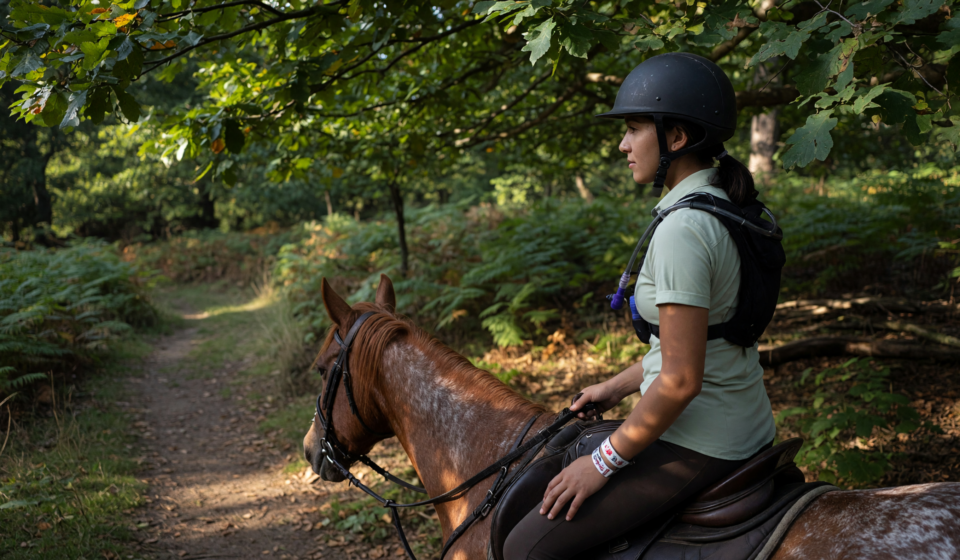
The best water is the water you will actually drink. A bottle buried in a saddlebag gets forgotten; a hydration source you can reach without stopping gets used. That is why so many endurance and distance riders favor a hands-free hydration pack or a bite-valve bladder routed over the shoulder. You want water at your mouth, not at your knee.
The CDC and NIOSH generally advise drinking water regularly during sustained activity in the heat rather than waiting to gulp a large amount at once, and they note that for prolonged, sweaty exertion an electrolyte drink can help replace salts. For a multi-hour trail ride in summer, plan your water like you plan your route.
- Carry more than you think: summer sweat losses add up fast, and a second bottle for your horse or for a rinse is rarely wasted.
- Add electrolytes for long efforts: plain water is fine for short rides, but for hours in the sun a low-sugar electrolyte mix helps you keep drinking and holds onto fluid.
- Keep it reachable: a chest-mounted bite valve or a pommel bag beats anything you have to dismount to open.
- Do not forget the horse: know where natural water crossings are, and let your horse drink when it is safe to do so.
👉 Shop hydration pack / bite-valve bladder for riders on Amazon (Ad — as an Amazon Associate, we earn from qualifying purchases.)
Field tip. Freeze one water bottle the night before and pack it alongside a liquid one. As the frozen bottle thaws through the ride, you get cold water for hours and a built-in cold pack against the small of your back.
Dressing for the Heat Without Losing Protection
It is tempting to strip down in July, but the trail rewards coverage. Lightweight, light-colored, moisture-wicking long sleeves protect you from both sun and brush, and they give ticks and mosquitoes less skin to reach. The trade-off riders worry about is overheating, and the answer is fabric choice: breathable, sun-rated shirts and ventilated riding tights move air and dump sweat far better than heavy cotton.
The one piece of gear you should not lighten up on is your helmet. In the United States, equestrian helmets are built to the ASTM F1163 standard and independently certified through the Safety Equipment Institute (SEI); look for both marks inside the shell. A summer-friendly helmet with generous vents keeps that certified protection on your head while letting heat escape, which removes the excuse to ride bareheaded on a hot day.
- Look for ASTM F1163 with SEI certification: this is the U.S. benchmark for equestrian headgear, and the label is your proof.
- Choose vented over bare: a well-ventilated certified helmet solves the heat complaint without sacrificing protection.
- Sun-rated layers help twice: UPF fabrics cut sun exposure and add a physical barrier against bites.
- Replace a helmet after any fall: the foam is designed to crush once, so a helmet that has taken an impact is spent even if it looks fine.
👉 Shop ASTM/SEI certified vented equestrian helmet on Amazon (Ad — as an Amazon Associate, we earn from qualifying purchases.)
Ticks, Mosquitoes and the Case for Repellent
Summer trails are prime habitat for ticks and mosquitoes, and the stakes are more than itching. The CDC links tick bites to Lyme disease and other illnesses, and mosquitoes to viruses like West Nile. The agency’s core advice for anyone spending time in brushy, grassy, or wooded areas is straightforward: use an EPA-registered insect repellent, treat your gear, and check yourself thoroughly afterward.
The U.S. Environmental Protection Agency (EPA) registers repellents so that products carry tested directions for safe use. The CDC and EPA both recognize active ingredients such as DEET and picaridin for skin, while permethrin is meant for treating clothing and gear rather than skin. For riders, this matters because you are brushing through exactly the vegetation ticks wait in, often with a horse kicking insects up around your legs.
- Use an EPA-registered repellent: registration means the product’s label directions have been reviewed, so follow them exactly.
- DEET or picaridin on skin: both are recognized by the CDC for repelling ticks and mosquitoes; apply per the label.
- Permethrin on clothing, not skin: treating boots, socks, and pants adds a layer of protection ticks have to cross.
- Tuck and check: the CDC recommends tucking pants into socks or boots and doing a full tick check after every ride, including the scalp under your helmet.
👉 Shop EPA-registered insect repellent (DEET or picaridin) and permethrin clothing treatment on Amazon (Ad — as an Amazon Associate, we earn from qualifying purchases.)
Emergency ID: Riding for the Worst Ten Minutes
Horses are large, fast, and occasionally unpredictable, and a fall on a remote trail is the scenario every rider hopes to avoid and should still plan for. If you are found unconscious or disoriented, the single most useful thing you can carry is information: who you are, who to call, and any medical facts a responder needs before treating you. This is where emergency identification earns its place next to your helmet.
Wearable ID that stays on your body is more reliable than a phone that flew into the brush or a wallet zipped in a saddlebag that trots off with a loose horse. A simple engraved wrist or boot ID with your name, an emergency contact, and key medical details (allergies, conditions, medications) lets a stranger help you in the crucial minutes before EMS arrives. Many riders pair this with their phone’s built-in medical ID feature, which can display emergency information and contacts from a locked screen.
- Wear ID on your body: a wristband or boot tag survives a separation from your horse and your bags.
- Include the essentials: name, an emergency contact number, and critical medical information such as allergies or conditions.
- Set your phone’s medical ID: both major smartphone platforms let responders view emergency info and call a contact without unlocking the device.
- Tell someone your plan: share your route and expected return time so a search starts early if you do not check in.
👉 Shop engraved emergency ID bracelet or boot tag for riders on Amazon (Ad — as an Amazon Associate, we earn from qualifying purchases.)
Body Protection and the Rest of the Kit
Beyond the summer-specific hazards, warm weather is no reason to shed core protective gear. Many trail and eventing riders wear a body protector, and in the United States these vests are made to the ASTM F1937 standard for body protectors used in horse sports. Modern vests use ventilated, flexible foam that is far more wearable in heat than older designs, so summer is not a valid excuse to leave one at home if you normally ride in it.
Round out the kit with the small things that make a rescue or a repair possible: a charged phone in a secure pocket, a basic first-aid kit, a hoof pick and a short length of cordage, and sun protection for your face and neck. None of it is heavy, and all of it earns its keep the day the ride does not go to plan.
- Consider an ASTM F1937 body protector: the U.S. standard for equestrian body protectors, now available in breathable summer-friendly designs.
- Secure your phone: a zipped or clipped pocket keeps your lifeline with you if you part ways with the saddle.
- Pack a minimal first-aid kit: enough to manage a scrape or stabilize a problem until you can get out.
- Protect your skin: broad-spectrum sunscreen on exposed areas, reapplied on long days.
Reading Your Horse in the Heat
Your safety and your horse’s are linked, because an overheated or distressed horse is a dangerous horse to be sitting on. Watch for a horse that is blowing hard long after you slow down, sweating heavily then stopping suddenly, or feeling dull and unresponsive. These can signal a horse in trouble, and the response is the same as for you: slow down, seek shade, offer water, and cut the ride short if needed.
Building in walk breaks, choosing shaded routes, and starting early are not just comfort measures; they keep the animal underneath you clear-headed and cooperative. A rider who manages the heat well tends to have a horse who trusts the pace, and that partnership is its own form of safety.
The Bottom Line
Summer trail riding is one of the great pleasures of horse ownership, and it stays that way when you respect the season’s three quiet hazards. Hydrate on a schedule and know the CDC’s warning signs of heat illness. Keep ticks and mosquitoes off with EPA-registered repellents and thorough post-ride checks. Wear ID that stays on your body, and keep your certified helmet and, where appropriate, an ASTM-standard body protector on even when it is hot. None of these habits cost much or weigh much. Together, they are the difference between a ride you cannot wait to repeat and one you spend months recovering from. Saddle up, but stack the odds in your favor first.
Disclaimer: This article is provided for general educational purposes only and is not medical, veterinary, or professional safety advice. Product standards and certifications are referenced as of publication and can change; always follow the directions on any product label and consult qualified professionals for guidance specific to you and your horse.
Sources: U.S. Centers for Disease Control and Prevention (CDC) heat-related illness and tick/mosquito prevention guidance; National Institute for Occupational Safety and Health (NIOSH) hydration guidance; U.S. Environmental Protection Agency (EPA) insect repellent registration; ASTM International F1163 (equestrian helmets) and F1937 (equestrian body protectors); Safety Equipment Institute (SEI) helmet certification.