Skateboarding Protective Gear: Helmets, Wrist Guards and Pad Fit
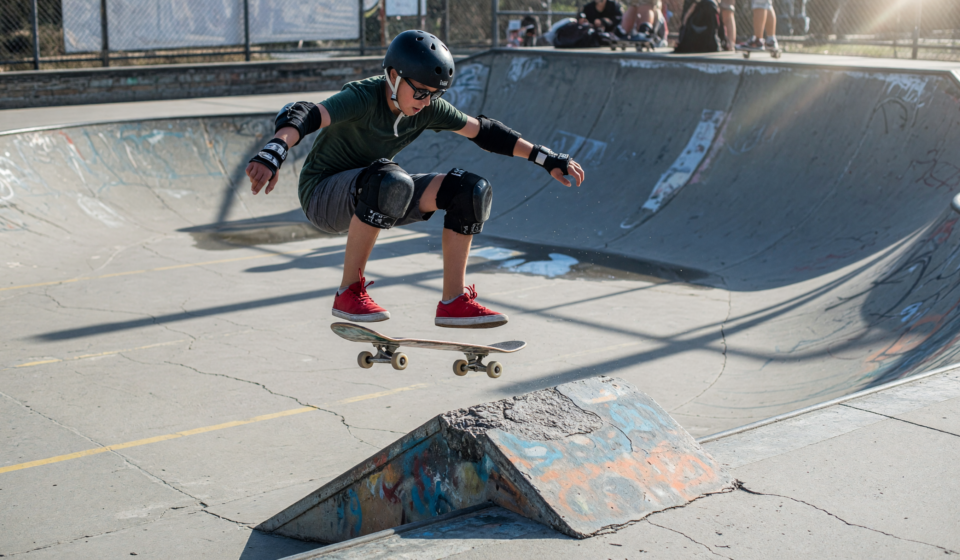
Skateboarding rewards commitment, and so does the slam that follows a missed trick. Whether you are cruising a neighborhood sidewalk or dropping into a concrete bowl, the right skateboarding protective gear is what stands between a bruised ego and a broken bone. The good news is that the core kit is simple, affordable, and backed by decades of injury research: a certified helmet, wrist guards, and a set of knee and elbow pads.
This guide breaks down what actually protects you, which safety standards to look for, and how to get the fit right so your gear works the way it was designed to. We cover the difference between a bike helmet and a dual-certified skate helmet, why wrist guards matter more than most beginners realize, and when a helmet needs to be retired after a hard hit. If you skate, or you are buying for someone who does, this is the equipment that belongs in the bag before the board comes out.
How Skaters Actually Get Hurt
Understanding common injuries tells you where to spend your protection budget. When a skater loses the board, the instinctive reaction is to throw the hands out to break the fall, which is exactly why the wrist takes so much punishment. According to the American Academy of Orthopaedic Surgeons (AAOS), wrist fractures are among the most frequently reported skateboarding injuries, alongside injuries to the arms, ankles, and face.
Head injuries are less common than wrist and arm injuries, but they are the ones that end careers and lives. The AAOS notes that head injuries and concussions can be especially serious among younger riders, which is why a helmet is non-negotiable regardless of skill level. The pattern is consistent: extremities get hurt most often, but the head carries the highest stakes. Good gear addresses both realities at once.
- Wrists and forearms: the classic skateboarding fracture, caused by bracing against the ground during a fall.
- Head and face: less frequent but potentially catastrophic, including concussions and facial fractures.
- Knees and elbows: cuts, scrapes, and gravel burns from sliding across pavement or coping.
- Ankles and shins: sprains and impacts when the board flips or the landing goes wrong.
Helmets: CPSC vs. ASTM F1492 and Why Coverage Matters
Not all helmets are built for skateboarding. Most bicycle helmets sold in the United States meet the U.S. Consumer Product Safety Commission (CPSC) standard, which is a mandatory federal safety standard for bike helmets. The CPSC standard is designed around a single severe impact, the kind you might take once in a serious bicycle crash. Skateboarding is different: you fall more often, and you frequently hit the same spots repeatedly over a session.
That is where ASTM F1492 comes in. It is the ASTM International standard specification for helmets used in skateboarding and trick roller skating, and unlike the CPSC bicycle standard, it is a multi-impact standard. The Bicycle Helmet Safety Institute (BHSI) explains that the skateboard standard also uses a lower test line at the back of the head than the CPSC bicycle standard, meaning a certified skate helmet is verified to protect more of the rear skull, the area that hits the ground when you fall backward off a board.
The smart move is a dual-certified helmet that meets both CPSC and ASTM F1492. You get the front coverage the bike standard tests for plus the multi-impact, back-of-head protection the skate standard demands. BHSI cautions buyers to check the certification sticker inside the helmet itself, because some marketing calls a helmet “dual certified” when it only meets CPSC and a European standard rather than the more demanding ASTM F1492 skateboard standard.
👉 Shop Dual-certified skate helmet (CPSC + ASTM F1492) on Amazon (Ad — as an Amazon Associate, we earn from qualifying purchases.)
Look inside the shell before you buy. A helmet that only carries a CPSC sticker is a bike helmet. If skateboarding is the plan, you want to see both CPSC and ASTM F1492 printed on the label.
Wrist Guards: The Most Underrated Piece
If wrist fractures are the most common skateboarding injury, wrist guards are the most cost-effective protection you can buy. They are designed to support the wrist joint and spread the force of a fall across the forearm instead of concentrating it on the small bones of the wrist. The AAOS states plainly that wearing wrist guards has been shown to reduce both the frequency and the severity of wrist fractures in skaters.
A good wrist guard has a rigid splint on the palm side, and often a second splint on the back, held in place by secure straps. When you fall and your hand slaps the ground, the splint slides across the surface and limits how far the wrist can bend backward. Beginners in particular should treat wrist guards as mandatory, because early falls almost always involve throwing the hands out. They fit easily under or over a sleeve and cost far less than a trip to urgent care.
👉 Shop Skateboarding wrist guards with dual splints on Amazon (Ad — as an Amazon Associate, we earn from qualifying purchases.)
Knee and Elbow Pads
Knee and elbow pads do two jobs. First, they reduce the cuts, scrapes, and gravel burns that come from sliding across pavement, which the AAOS lists among their main benefits. Second, and just as important for park and ramp skaters, hard-cap knee pads let you bail on purpose. When a trick goes wrong on a vert ramp or in a bowl, experienced skaters drop to their knees and slide down the transition on the plastic caps, turning a potential crash into a controlled slide.
- Hard-cap knee pads: essential for transition, vert, and bowl skating where knee-sliding is a core survival skill.
- Elbow pads: protect against the scrapes and impacts that come from sideways falls on flat ground and ramps.
- Soft-cap or slim pads: lower-profile options that street skaters accept for comfort, trading some protection for mobility.
👉 Shop Knee and elbow pad set on Amazon (Ad — as an Amazon Associate, we earn from qualifying purchases.)
Getting the Fit Right
Even certified gear fails if it does not fit. A helmet that slides around or perches on the back of the head cannot protect the skull it is supposed to cover. The AAOS offers a clear fit checklist for helmets, and the same principle of a snug, secure fit applies to every piece of gear you wear.
- Level and low: the helmet should sit flat on the head, resting low on the forehead with the bottom edge parallel to the ground.
- V-straps: the side straps should form a “V” that meets just below and slightly in front of each ear.
- No wobble: when you shake your head, the helmet should not slide or move independently of your scalp.
- Snug pads: wrist guards and pads should be firm enough not to shift on impact, but not so tight they cut off circulation.
Buckle the chin strap every time. A helmet that is on your head but unbuckled can come off in the exact moment you need it. Take a minute at the start of each session to check straps and buckles, especially on kids whose gear loosens as they move.
Gear by Skater Level
Your setup should match where and how you skate. Beginners fall the most, and almost always onto their hands, so their priority is a certified helmet and wrist guards from day one. The AAOS recommends that children under five should not skateboard, that six to ten year olds need close adult supervision, and that new skaters practice basic skills like stopping and turning before attempting tricks.
Street and cruising skaters typically run a dual-certified helmet plus wrist guards, adding knee and elbow pads based on how aggressive their tricks get. Park and vert skaters need the most complete loadout: a dual-certified helmet, wrist guards, and hard-cap knee and elbow pads that make knee-sliding possible. The faster the speeds and the bigger the transitions, the more a full pad set earns its place in the bag.
👉 Shop Full skateboarding pad set for park and vert on Amazon (Ad — as an Amazon Associate, we earn from qualifying purchases.)
Replacing Gear After Impacts
A helmet’s protective foam is designed to crush and absorb energy in a crash. Once it has done that job, it may not do it again, even if the shell looks fine from the outside. The AAOS advises replacing a helmet if it is damaged, and replacing it every five years even without a major impact, because materials and straps degrade over time.
Because ASTM F1492 skate helmets are multi-impact rated, they tolerate the routine minor knocks of a normal session better than a single-impact bike helmet. That does not make them indestructible. Inspect your helmet regularly for cracks in the shell, dents or compression in the foam, and frayed or stretched straps. If you take a hard hit to the head, retire the helmet or have it evaluated rather than gambling on it. Wrist guards, knee pads, and elbow pads should also be replaced when splints crack, caps wear through, or straps stop holding a firm fit.
The Bottom Line
Effective skateboarding protection is not complicated. Start with a dual-certified helmet that meets both CPSC and ASTM F1492, add wrist guards to protect against the most common injury, and match your knee and elbow pads to how hard you skate. Get everything fitted snugly, buckle up every session, and retire gear once it has absorbed a serious hit or shows its age. The kit costs a fraction of a single emergency room visit, and it keeps you rolling instead of healing.
Disclaimer: This article is for general informational purposes only and is not medical advice. No protective gear can prevent all injuries. Always follow manufacturer instructions and the certification requirements printed on your equipment, and consult a qualified professional for guidance specific to your situation. PSAWEAR may earn a commission from qualifying purchases made through links on this page, at no additional cost to you.
Sources: American Academy of Orthopaedic Surgeons (AAOS), OrthoInfo, “Skateboarding Safety”; Bicycle Helmet Safety Institute (BHSI), “Skate Helmets with Dual CPSC and ASTM Certification”; ASTM International, F1492 Standard Specification for Helmets Used in Skateboarding and Trick Roller Skating; U.S. Consumer Product Safety Commission (CPSC) bicycle helmet standard.