
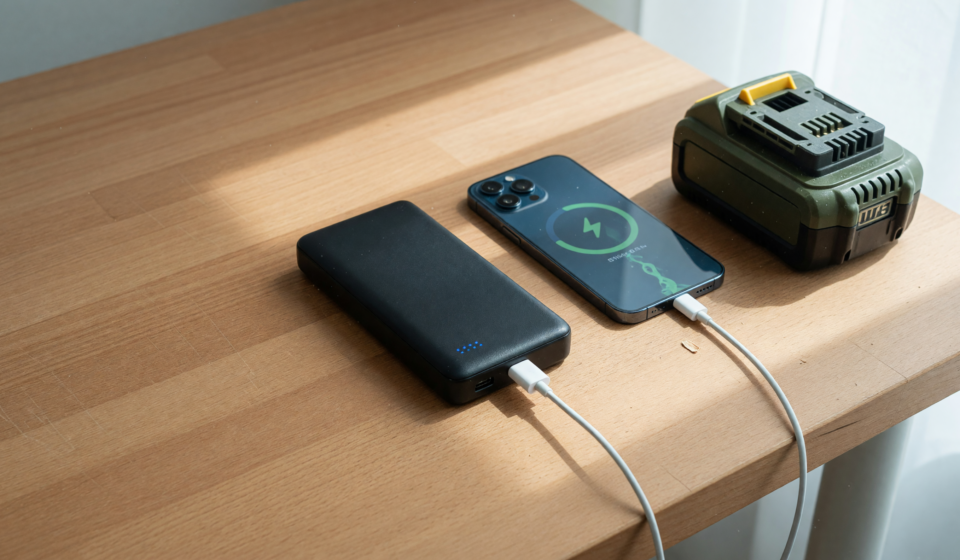
Fire Prevention Week 2026 Targets Lithium-Ion Battery Charging Safety, Oct. 4-10
On September 24, 2026, the National Fire Protection Association (NFPA) announced that Fire Prevention Week 2026 will run October 4–10 with the theme “Charge Into Fire Safety™: Safe Charging Is a Superpower.” The campaign puts lithium-ion battery fire safety front and center, urging households and workplaces to rethink how they charge, store, and use the rechargeable devices that now sit in nearly every pocket, garage, and tool belt. With the observance just days away, now is the time to check your charging habits.
What NFPA announced
Fire Prevention Week is the longest-running public health observance in the United States, held each year around the anniversary of the Great Chicago Fire of October 1871. For 2026, NFPA chose to spotlight the rechargeable lithium-ion batteries that power smartphones, tablets, laptops, cordless power tools, children’s toys, e-bikes, and electric scooters. The organization is asking people to treat safe charging as a simple, everyday habit rather than an afterthought.
“Because lithium-ion batteries are a newer technology, not everyone is aware of the potential dangers they present, particularly when it comes to charging them safely,” said Lorraine Carli, NFPA’s Vice President of Outreach and Advocacy. NFPA notes that it does not yet track national statistics specifically for lithium-ion battery fires, but points to the growing number of battery explosions and fires reported by fire departments, news organizations, and other sources as a clear signal that the risk deserves broader public attention.
Why lithium-ion battery fire safety matters
Lithium-ion batteries pack a large amount of energy into a small, lightweight cell, which is exactly why they have become the standard for portable electronics and cordless equipment. That same energy density is what makes lithium-ion battery fire safety such an important topic. When a cell is damaged, defective, overcharged, or exposed to extreme heat, it can enter a chain reaction known as thermal runaway. In that state the battery rapidly overheats, can vent flammable gas, and may catch fire or explode—sometimes with little warning and with flames that are difficult to extinguish with a standard household approach.
The devices most people worry about live in the same spaces where we sleep, work, and store equipment. That is what makes this year’s theme so relevant to a safety-minded audience:
- Personal electronics: phones, tablets, and laptops that are frequently charged overnight on soft surfaces such as beds and couches.
- Cordless tools: drills, saws, and other jobsite equipment that rely on high-capacity battery packs and repeated fast charging.
- Micromobility: e-bikes and electric scooters, whose larger batteries store far more energy and are often charged indoors or in shared entryways.
- Everyday extras: power banks, children’s toys, vaping devices, and other rechargeables that are easy to forget about while plugged in.
What you should do
The good news is that most of NFPA’s guidance is straightforward and costs nothing. Building these habits before Fire Prevention Week begins can meaningfully lower your risk at home and on the job:
- Use the right charger: stick to the charger and cable that came with the device, or a manufacturer-approved replacement. Off-brand or damaged chargers are a common trigger for trouble.
- Charge on hard surfaces: place charging devices on a hard, flat surface and keep them away from beds, couches, pillows, and other soft or flammable materials that trap heat.
- Watch for warning signs: stop using any device or battery that becomes unusually hot, swells, changes shape, leaks, smokes, or gives off an odd smell.
- Unplug when done: disconnect devices once they reach a full charge rather than leaving them plugged in indefinitely.
- Charge big batteries carefully: charge e-bikes, scooters, and large power tools away from doors and exit paths, and follow the manufacturer’s instructions for indoor versus outdoor charging.
- Buy certified products: choose batteries and devices that have been tested and listed by a recognized testing laboratory, and buy replacement batteries from the original manufacturer.
What to do if a battery fails. If a lithium-ion battery is smoking, sparking, or on fire, get everyone away from it, leave the area, and call 911. Do not try to move a burning device with your bare hands. Once you are safely outside, alert your neighbors or coworkers so they can evacuate too.
What it means for workplaces
For employers, Fire Prevention Week is a natural prompt to review how battery-powered equipment is charged and stored on site. Jobsites, warehouses, and delivery operations increasingly rely on cordless tools and battery packs, and shared charging areas can quickly become crowded with cables and devices. Designating a clear, non-combustible charging station, keeping it away from exits and stored materials, and reminding workers not to charge damaged packs are practical steps that align with the campaign’s message. Pairing that with working smoke alarms and a rehearsed evacuation plan gives your team a real margin of safety.
Context and what’s next
“Properly charging devices can significantly reduce the risk of fires and associated hazards,” Carli said. “Making informed choices and practicing simple habits are critical to these efforts.” NFPA and its network of fire departments, safety educators, and volunteer organizations will spend the week sharing tools and messaging to help the public build those habits. During the observance, fire departments across the country typically hold open houses, school visits, and community events, and free resources are available through the NFPA Fire Prevention Week website.
With Fire Prevention Week arriving October 4–10, the most useful thing you can do this week is walk through your home and workplace and look at how every rechargeable device is being charged. A few minutes of attention—swapping out a frayed cable, moving a charger off the bed, or setting up a proper charging spot for tools—is exactly the kind of small habit NFPA is asking people to adopt.
Disclaimer: This article is for general informational purposes only and does not constitute professional fire-safety, legal, or engineering advice. Product designs, safety standards, and manufacturer instructions vary; always follow the guidance for your specific device and consult your local fire department or a qualified professional for situation-specific advice. In an emergency, call 911.
Sources: NFPA – Fire Prevention Week; National Volunteer Fire Council – 2026 Fire Prevention Week Theme Announced; Firehouse – Fire Prevention Week Theme Focuses on Lithium-Ion Battery-Related Fire Safety; Security Systems News – NFPA Sets 2026 Fire Prevention Week Theme on Lithium-Ion Battery Safety.


