
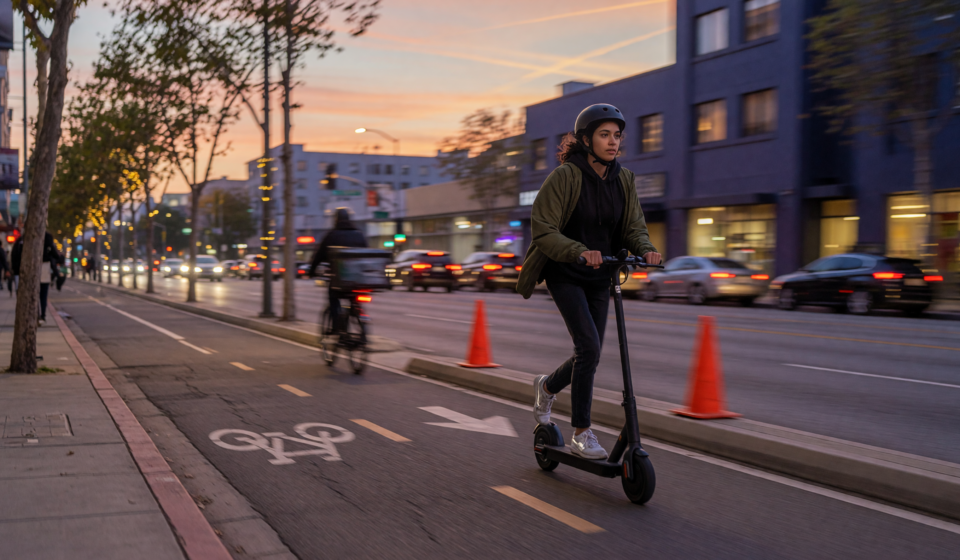
Study Check: A New E-Scooter Injury Study Links Substance Use to Doubled Brain-Injury Odds
LOS ANGELES — A new e-scooter injury study led by researchers at UCLA reports that roughly one in four Americans hospitalized after a stand-up scooter crash had a substance in their system at the time — and that those riders faced nearly double the odds of a traumatic brain injury. The analysis, published online April 29, 2025, in The American Surgeon, tracked national hospitalization records from 2016 through 2021 and adds hard numbers to a trend safety professionals have watched with growing concern as shared and privately owned scooters spread across US cities.
The team, with first author Hannah Benharash and senior author Dr. Areti Tillou, drew on the National Inpatient Sample, one of the largest publicly available databases of US hospital stays. Their goal was narrow but important: not just to count scooter injuries, but to see how often impairment showed up in the records and whether it changed how badly people were hurt. Here is what they found, how much weight it can carry, and what it means if you or your crew ride.
What the e-scooter injury study found
Across the six-year window, the researchers identified 7,350 adults aged 18 to 64 hospitalized for scooter-related trauma. The volume of those hospitalizations climbed steeply — from 330 cases in 2016 to 2,705 in 2021, an eight-fold rise that mirrors the rapid rollout of rental scooter fleets. Within that group, 24.8 percent had documented substance use, spanning alcohol, opioids, marijuana, and cocaine.
The differences between impaired and non-impaired patients were meaningful:
- Head injuries: Riders with substance use had higher adjusted odds of traumatic brain injury (adjusted odds ratio 1.91; 95% confidence interval 1.26–2.91) — close to double.
- Surgical complications: The impaired group also had higher odds of perioperative complications (adjusted odds ratio 1.98; 95% CI 1.07–3.67).
- Cost: Substance use was tied to about $4,600 more in hospitalization costs per patient (95% CI $300–$8,800).
- What did not differ: In-hospital death rates and overall length of stay were statistically similar between the two groups.
In plain terms: impairment was common among the most seriously injured riders, and it traveled with worse head trauma and pricier hospital care — but the study did not find it made those crashes more likely to be fatal once a patient was admitted.
How solid is it? The study check
This is a well-constructed look at a real and growing problem, but it has boundaries worth understanding before anyone treats the headline as the last word.
- Hospitalized patients only: The data cover people sick enough to be admitted. As the authors put it, the analysis “was limited to hospitalized patients and thus likely underestimates the current rate of injuries.” Emergency-room visits that did not lead to admission, and the many minor scrapes that never reach a hospital, are not counted.
- It shows association, not cause: The design is a retrospective look back at billing and diagnostic codes. It can show that impairment and brain injury appeared together, but it cannot prove that the substance caused the worse outcome, or rule out other factors such as speed, no helmet, or where the crash happened.
- Coding has blind spots: Substance use was captured through hospital records, which depend on testing and documentation that vary by facility. Real impairment could be undercounted, so 24.8 percent may be a floor rather than a ceiling.
- No helmet or trip detail: The database does not reliably capture whether a rider wore a helmet, how fast they were going, or whether they were on a sidewalk, bike lane, or road — all variables that shape injury severity.
None of this undercuts the core signal. A large national sample, a clear rise in cases, and adjusted odds ratios that account for some confounding all make the brain-injury finding credible. The honest framing is that impairment is a strong marker for a bad scooter outcome, even if this particular dataset cannot isolate exactly how much of the harm it causes.
The takeaway. Among Americans hospitalized after scooter crashes from 2016 to 2021, about one in four had substances on board, and those riders faced roughly double the odds of a traumatic brain injury. It is a warning sign, not a verdict on cause — but it is a warning worth heeding.
What it means for you
For everyday riders and for the safety managers overseeing campuses, warehouses, and delivery fleets where scooters now show up, the practical message is simple and familiar. Head protection matters most exactly when judgment is most likely to fail. A scooter feels casual and low-stakes, which is part of the risk: riders often skip helmets on short trips, and a night out can turn an ordinary curb or pothole into a serious head strike.
The study’s authors point toward the same layered response that works elsewhere in injury prevention — helmet use, substance-use prevention, and better street and path infrastructure. No single fix carries the load. For individuals, the highest-value habit is the one most riders neglect: putting on a helmet every time, sober or not.
Practical takeaways
- Never ride impaired: Alcohol, cannabis, and other substances slow reaction time and worsen balance — the two things a scooter demands most.
- Wear a helmet on every trip: Short rides and first rides are when many injuries happen. A certified helmet is the single cheapest way to cut head-injury severity.
- Respect first-ride jitters: Unfamiliar controls plus real traffic is a bad combination. Get a feel for braking and turning in a low-traffic spot before committing to a route.
- Mind the surface: Small scooter wheels catch on potholes, curbs, and rail seams. Scan ahead and slow down over rough pavement.
- Fleet managers, set a policy: If scooters are used at your worksite, treat helmets and sobriety as non-negotiable, the same way you would for any other powered equipment.
If your organization is standardizing head protection for riders, look for helmets that meet the relevant US safety certification for your use case rather than the cheapest option on the shelf. (Product guidance here is general; PSAWEAR may earn a commission on some links elsewhere on the site.)
Disclaimer
This article is for general education and safety awareness only. It is not medical advice and does not replace guidance from a qualified clinician or a diagnosis for any specific injury. If you or someone else may have a head injury after a crash, seek professional medical care promptly.
Sources: Benharash et al., “National Prevalence and Associated Outcomes of Substance Use in Scooter-Related Trauma,” The American Surgeon (2025); UCLA Health news release; PubMed record; ScienceDaily summary.