
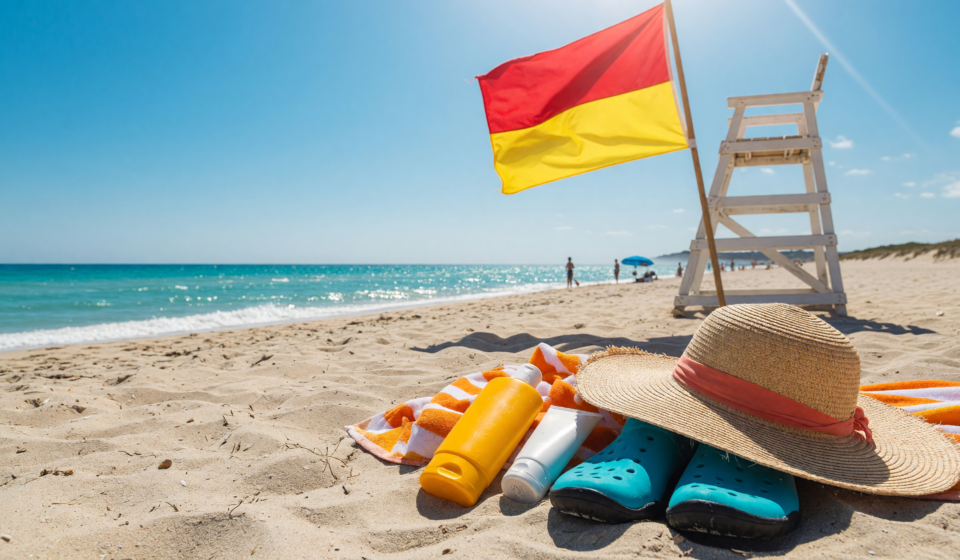
Beach Vacation Safety Kit: Reef-Safe SPF, Flags and Foot Protection
A day at the shore looks effortless from the parking lot: sand, surf, and a cooler full of snacks. But the beach is a genuine outdoor environment with real hazards, from rip currents and hot sand to relentless UV and the occasional jellyfish. The difference between a smooth trip and a ruined one usually comes down to preparation. A well-built beach safety kit is the single most useful thing a family can pack, because it turns predictable problems into minor footnotes instead of vacation-ending emergencies.
This guide walks through what actually belongs in a family beach kit and, just as important, the knowledge that makes the gear work: how to read the warning flags before you swim, why reef-safe sunscreen matters, what protects young feet from scorching sand and sharp rocks, and how to stay ahead of heat and dehydration. Think of it as the checklist we wish every renter and day-tripper packed before the drive to the coast.
Know the Flags Before You Swim
Before anyone sets foot in the water, look for the colored warning flags flying near the lifeguard stand. Many U.S. beaches follow the flag system endorsed by the United States Lifesaving Association (USLA), often coordinated with local conditions and National Weather Service (NWS) rip-current forecasts. The flags are a fast, at-a-glance read on how dangerous the water is right now, and conditions can change hour to hour.
- Green: Flown at many U.S. beaches to signal calm or low-hazard conditions. The USLA notes green is not part of the official International Life Saving flag set, so treat it as “conditions look mild,” not “hazard-free.”
- Yellow: Medium hazard. Moderate surf and/or currents are present, and weak swimmers are discouraged from entering the water.
- Red: High hazard. Rough conditions such as strong surf and/or currents are present, and all swimmers are discouraged from entering.
- Double red: The water is closed to public use. This is not a suggestion.
- Purple: Marine pests such as jellyfish or stingrays are present and can cause minor injuries.
Teach kids the flag colors the same way you teach traffic lights: green is go with caution, yellow is slow down, red means stay out, and a purple flag means watch for stinging critters. A thirty-second glance at the flagpole is the cheapest safety step of the entire day.
When flags are posted, believe them. Lifeguards raise a red or double-red flag because they are reading currents, wind, and surf that a visitor standing on the sand cannot see. If the beach is unguarded and there are no flags, default to caution: check the local NWS surf-zone forecast before you go, and keep small children in shallow, supervised water only.
Reef-Safe Sun Protection
Sunscreen is non-negotiable, but not all sunscreen is created equal, either for your skin or for the water you are swimming in. The National Oceanic and Atmospheric Administration (NOAA) reports that certain chemical UV filters can harm coral and other aquatic life, accumulating in tissues and contributing to coral bleaching and DNA damage. The two ingredients most often flagged are oxybenzone and octinoxate, which is exactly why Hawaii passed a law restricting the sale of sunscreens containing them, with other jurisdictions following suit.
“Reef-safe” is not a regulated term, so read the label rather than trusting the front-of-bottle marketing. NOAA and reef-conservation groups generally point toward mineral sunscreens that use non-nano zinc oxide or titanium dioxide as the active ingredient, and away from oxybenzone, octinoxate, and octocrylene. Whatever you choose, the FDA and CDC advice on effectiveness still applies: use a broad-spectrum product of at least SPF 30, apply it generously before you go out, and reapply at least every two hours and after swimming, sweating, or toweling off.
👉 Shop reef-safe mineral sunscreen — broad-spectrum SPF 30+, non-nano zinc oxide, water resistant on Amazon (Ad — as an Amazon Associate, we earn from qualifying purchases.)
Remember that sunscreen is only one layer of defense. The CDC recommends pairing it with shade during peak midday hours, a wide-brimmed hat, UV-blocking sunglasses, and sun-protective clothing or a rash guard, which is especially practical for kids who will not sit still for reapplication. A UPF-rated shirt keeps working even when the sunscreen wears thin.
👉 Shop UV pop-up beach shade / sun shelter with UPF 50+ canopy on Amazon (Ad — as an Amazon Associate, we earn from qualifying purchases.)
Foot Protection and Water Shoes
Bare feet are one of the most underrated beach hazards. Midday sand can reach temperatures that cause burns in seconds, and the tide line often hides sharp shells, broken glass, hot pavement on the walk down, and rocks slick with algae. In the water, stingrays and jellyfish add another reason to keep feet covered, and doing the “stingray shuffle” (sliding your feet rather than stepping down) helps scare rays out of the way before you step on one.
Closed-toe water shoes with a grippy, puncture-resistant sole solve most of these problems at once. Look for a snug heel so they do not float off in the surf, quick-draining mesh, and a sole thick enough to handle hot sand and rocky entries. For toddlers and young kids, water shoes also make tide-pool exploring and rocky shorelines far less nerve-wracking for the adult holding their hand.
👉 Shop quick-dry water shoes for adults and kids — non-slip, puncture-resistant sole on Amazon (Ad — as an Amazon Associate, we earn from qualifying purchases.)
Building the Family Beach Safety Kit
A complete beach safety kit is less about any single gadget and more about having the right small items when you need them. Pack it once, keep it in a dedicated dry bag, and restock it after each trip so it is always ready. Here is the core list we recommend for a family day at the shore:
- Reef-safe sunscreen and lip balm with SPF: Enough to reapply every two hours for everyone in the group.
- A stocked first-aid kit: Adhesive bandages, antiseptic wipes, tweezers for splinters, blister care, and any personal medications.
- Water shoes: One pair per person for hot sand, rocks, and stinging marine life.
- Shade and cover-ups: A UV pop-up shelter or umbrella, wide-brimmed hats, sunglasses, and rash guards.
- Plenty of water: More than you think you need, plus electrolyte packets for long, hot days.
- Vinegar or a sting-relief plan: Household white vinegar can help with some jellyfish stings; know the local guidance before you go.
- A charged phone in a waterproof pouch: For calling 911 and reaching lifeguards quickly.
- Whistle and a bright rash guard for each child: Easy signaling and easy spotting in a crowd or in the surf.
👉 Shop compact beach first-aid kit with sting relief and blister care on Amazon (Ad — as an Amazon Associate, we earn from qualifying purchases.)
A pre-packed kit removes the decision fatigue that leads to skipped steps. When everything you need already lives in one bag, reapplying sunscreen and slipping on water shoes becomes automatic rather than a debate under the midday sun.
Heat and Hydration
The ocean breeze is deceptive. It cools your skin while the sun and physical activity quietly push your body toward dehydration and heat illness. The CDC warns that heat-related illness ranges from painful cramps and heat exhaustion to life-threatening heat stroke, and beach settings, with their glare, exertion, and limited shade, are prime conditions for it, especially for young children and older adults.
Stay ahead of it rather than reacting. Drink water regularly instead of waiting until you feel thirsty, take deliberate breaks in the shade during the hottest part of the day, and watch for early warning signs: heavy sweating, dizziness, nausea, headache, muscle cramps, or a child who suddenly turns cranky and flushed. If someone stops sweating, becomes confused, or their skin turns hot and dry, treat it as a medical emergency and call 911. Getting into shade, cooling the body, and sipping water are the immediate first steps while help is on the way.
Watching Kids Near Water
Drowning is fast and silent, and it rarely looks like the thrashing shown in movies. For families, active supervision is the most important safety tool of all, and no gear replaces it. Assign a designated “water watcher” adult whose only job is to keep eyes on the kids, then rotate that role so no one gets distracted by phones, snacks, or conversation.
Keep young and weaker swimmers within arm’s reach in the water, and put them in properly fitted, Coast Guard-approved life jackets rather than inflatable toys or water wings, which can slip off or drift away. Choose a spot near a lifeguard when one is available, set clear boundaries about how deep the kids may go, and pick an easy-to-spot landmark so a lost child knows where to return. A brightly colored rash guard makes any child far easier to track in a busy surf line.
A Quick Rip-Current Reminder
Rip currents are the deadliest hazard at surf beaches, and the NWS advice for escaping one is worth memorizing. If you are caught in a rip, do not fight it by swimming straight back to shore; that only exhausts you. Stay calm, keep your head above water, and swim parallel to the shoreline until you are out of the current’s pull, then angle back toward the beach. If you cannot break free, float or tread water, face the shore, and wave and call for help.
The best rip-current strategy is avoidance: swim at beaches with lifeguards, never swim alone, and heed the warning flags. This is only a refresher, and our full rip-current guide covers spotting them and escaping in much more detail.
The Bottom Line
A great beach day is mostly about what you do before you leave the house. Read the flags, pack reef-safe sunscreen, protect everyone’s feet, carry plenty of water, and assign someone to watch the kids. None of it is complicated, and most of it fits in a single dry bag. Build your kit once, keep it stocked, and the shore stays what it should be: the best part of the trip, not the risky part.
Disclaimer: This article is for general informational purposes only and is not a substitute for professional medical advice, lifeguard instruction, or official local warnings. Always follow the guidance of on-duty lifeguards and posted signage, and check current conditions before entering the water. In an emergency, call 911.
Sources: United States Lifesaving Association (USLA), Beach Warning Flags; National Weather Service (NWS), Rip Current Safety; National Oceanic and Atmospheric Administration (NOAA), sunscreen and coral reef guidance; U.S. Food and Drug Administration (FDA), sunscreen use; Centers for Disease Control and Prevention (CDC), sun safety and heat-related illness.