
DR Power Recalls PRO MAX30 Mowers After Blades Fail to Stop
On August 6, 2026, the U.S. Consumer Product Safety Commission (CPSC) and DR Power Equipment announced a lawn mower recall covering the company’s PRO MAX30 30-inch walk-behind power mowers after the machines were found to violate the federal safety standard that is supposed to stop the blades the moment an operator lets go. According to the CPSC, the blades on the recalled mowers “can operate without the blade control system engaged or continue to operate even after the release of the control.” That is exactly the failure the standard exists to prevent, and it turns a routine yard chore into a serious laceration risk. About 320 mowers were sold in the United States, along with nine more in Canada.
What happened
The recall covers the DR Power PRO MAX30 30″ Walk-Behind Power Lawn Mower in three model variations: WM25030DEN (the electric-start “ES” model), WM25030DMN (the manual-start “MS” model), and WM25030DMNR (the “MS Recon” model). The mowers were sold from September 2024 through September 2025 at independent power equipment stores nationwide and online at drpower.com, priced between roughly $1,600 and $1,800. The mowers are manufactured by Generac Power Systems Inc. of Waukesha, Wisconsin, and distributed by DR Power Equipment of South Burlington, Vermont.
The CPSC says it has received 19 reports of incidents “involving the mower blades staying engaged or not stopping after release of the blade control.” Importantly, no injuries have been reported so far. This is a case where the agency and the company are acting before someone gets hurt rather than after, which is the way product-safety enforcement is meant to work.
Why a blade that won’t stop is so dangerous
Every walk-behind power mower sold in the United States has to meet a mandatory federal safety standard, and one of its core requirements is a blade-control system, often called an operator-presence or “deadman” control. It is the bar or lever you hold against the handle while you mow. Let go, and the blade is required to stop spinning within a few seconds. That single feature is one of the most effective injury-prevention designs in outdoor power equipment, because it means the blade goes still whenever your hands leave the controls, whether you are clearing a stuck clump of grass, tipping the deck to move it, or reacting to a slip.
When that system does not work, the whole safety assumption collapses. A spinning mower blade moves fast enough to amputate fingers and toes and cause deep lacerations, and people naturally reach toward a mower deck once they believe the blade has stopped. A mower that keeps cutting after you release the control, or that spins up when it should not, defeats the reflex that keeps hands and feet away from the danger zone. That is why the CPSC treats a blade-control defect as a serious hazard even in a small recall with no injuries yet reported.
What owners should do
If you own one of these mowers, the CPSC’s guidance is direct: stop using it immediately unless you have already received and installed the free repair kit.
- Check the model number. Look for WM25030DEN, WM25030DMN, or WM25030DMNR on the PRO MAX30 30-inch walk-behind mower before your next mow.
- Stop using it now. Do not run the mower until the repair has been completed, even if the blade control seems to be working on a given day.
- Get the free repair. Contact DR Power Equipment to receive a free repair kit or to schedule a free repair. There is no cost to owners.
- Do not attempt a workaround. Never bypass, tie down, or disable the blade-control bar, and do not reach under the deck while the engine is running.
What to do. Stop mowing with a recalled PRO MAX30 until the free repair kit is installed. Verify the model number, then contact DR Power Equipment for the fix, and keep hands and feet away from the deck whenever the engine is running.
Smart protection every time you mow
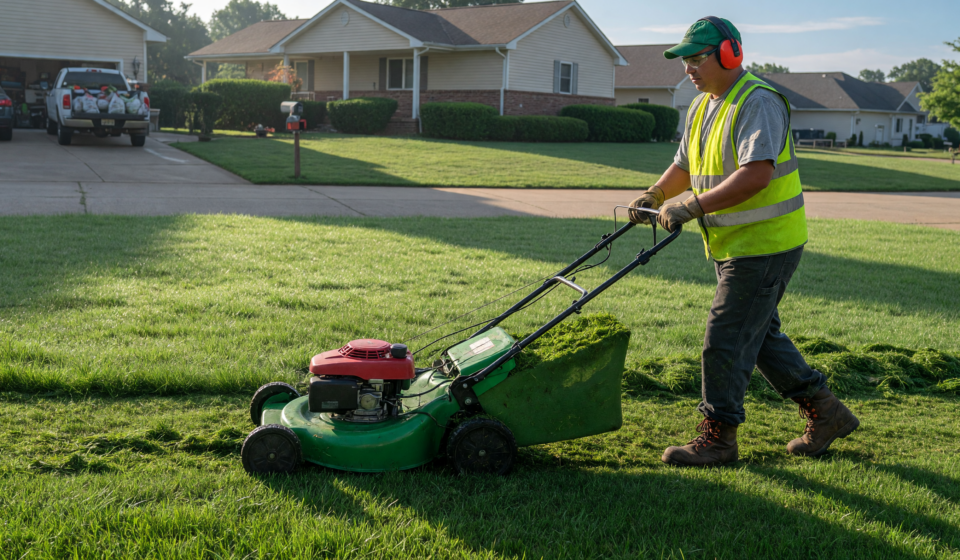
A recall is a good reminder that a mower is one of the most powerful cutting tools most households and landscaping crews ever operate. Even a properly functioning machine deserves the same care you would give any piece of professional equipment. Wear sturdy, closed-toe boots rather than sneakers or sandals, put on wraparound safety glasses to guard against thrown debris, and use hearing protection during longer sessions. Long pants help shield your legs from flying rocks and clippings.
Just as important is how you handle the machine. Always shut the engine off and wait for the blade to come to a complete stop before you clear a clog, cross gravel, refuel, or tip the mower to inspect the underside. Clear the lawn of sticks, stones, and toys before you start, keep bystanders and pets well away, and mow across slopes rather than up and down them. These habits do not replace a working blade-control system, but they add a margin of safety when equipment or attention falls short.
Context and what’s next
The PRO MAX30 recall arrived as part of a busy week for the CPSC, which posted more than a dozen recalls on August 6 spanning ladders, children’s products, and outdoor power equipment. Lawn and garden gear is a recurring theme: mower blades, string trimmers, and leaf equipment show up in the agency’s data year after year as sources of serious cutting injuries, and DR Power has issued separate laceration-related recalls on other product lines in recent seasons.
For now, the number of affected mowers is small, and no one has been hurt, which gives owners a real chance to act before the peak of late-summer mowing. Anyone who bought a PRO MAX30 in the past two years should confirm the model number and arrange the free repair rather than gamble that the blade control will behave. If you are unsure whether your machine is included, DR Power Equipment and the CPSC recall notice can confirm it.
Disclaimer: This article is for general safety information only and is not legal, medical, or professional advice. Product details, unit counts, and remedies reflect the CPSC recall notice as published and may be updated. Always follow the official CPSC and manufacturer instructions for your specific model.
Sources: U.S. Consumer Product Safety Commission recall notice; CPSC Recalls.