Arborist Climbing Ropes Recalled Over Deadly Splice-Failure Fall Hazard
On August 6, 2026, the U.S. Consumer Product Safety Commission (CPSC) announced a climbing rope recall that hits close to home for anyone who works at height for a living: about 1,050 Courant Spliced Kalimba climbing ropes used by arborists and tree care professionals are being pulled because their spliced termination ends can fail unexpectedly, posing a risk of serious injury or death from a fall. When the single line holding a climber aloft is the product in question, this is not an abstract hazard — it is a direct threat to the life-safety equipment a worker trusts with their weight every day.
What happened
Wichard Groupe North America, based in North Kingstown, Rhode Island, is recalling Courant Spliced Kalimba climbing ropes manufactured by Courant of Angers, France. According to the CPSC notice (Recall Number 26-675), the spliced termination ends on the recalled ropes can fail unexpectedly. A spliced termination is the finished eye at the end of a climbing line — the load-bearing connection point a climber clips into — so a failure there means the rope can let go precisely where it is supposed to be strongest.
The recall covers Spliced Kalimba ropes sold in 45-meter, 50-meter, and 60-meter lengths, in two colorways described as “lollipop” (part numbers MH730JZC045, MH730JZC050, and MH730JZC060) and “bubblegum” (MH730MCC045, MH730MCC050, and MH730MCC060). Importantly, the recall also extends to any additional Kalimba ropes spliced under Courant protocols before June 15, 2026, which means a rope may be affected even if its part number does not appear on the list. The ropes were sold from January 2023 through June 2026 for between $250 and $350 at Vertical Supply Group, Arbsession, RBI Corporation, and other retailers nationwide. The company has received three reports of splice failures; no injuries have been reported so far.
Why this climbing rope recall matters for safety
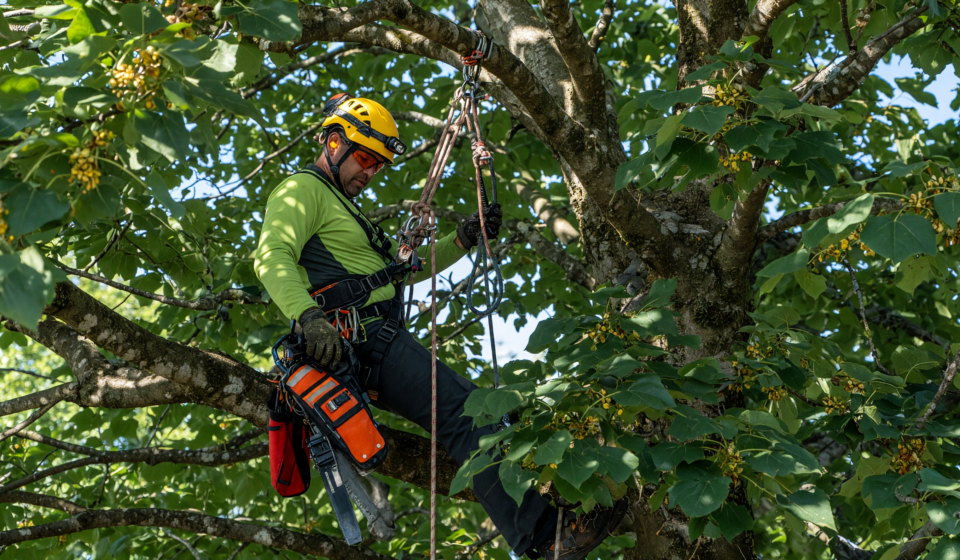
For tree care workers, a climbing rope is not an accessory — it is primary life-safety equipment, in the same category as a harness or a lanyard. Arborist work routinely places a single climber dozens of feet above the ground, often on moving limbs, with the rope as the only thing between a controlled position and a serious fall. A defect in the spliced eye is especially concerning because that termination is the anchor for the entire climbing system; when it fails, there is typically no backup in that part of the setup to arrest the fall.
Falls from height remain one of the leading causes of serious and fatal injuries in outdoor and construction-adjacent trades, and tree care is consistently among the more dangerous occupations. That the manufacturer logged three splice failures before anyone was hurt is a fortunate outcome, not a reassuring one — it shows the failure mode is real and repeatable. The fact that no injuries have been reported should be read as a reason to act quickly while the odds are still favorable, not as evidence that the ropes are safe to keep using.
What you should do
The CPSC advises anyone with a recalled rope to stop using it immediately and contact Wichard Groupe North America for a free replacement rope, with shipping included. Owners can register at the company’s recall page to receive a prepaid shipping label, and the firm is offering two replacement options with varying availability. Wichard Groupe North America can be reached at 401-683-5055 from 8 a.m. to 4:30 p.m. Eastern Time, Monday through Friday, or by email at safety@wichardgroupe.us.
- Take it out of service now: Immediately stop climbing on any Courant Spliced Kalimba rope and remove it from your active gear so no one grabs it by mistake.
- Check part numbers and splice dates: Look for the lollipop or bubblegum part numbers, and treat any Kalimba rope spliced under Courant protocols before June 15, 2026 as included, even if the number is not listed.
- Register for the free replacement: Complete the recall registration to receive a prepaid shipping label and your free replacement rope from Wichard Groupe North America.
- Inspect the rest of your system: Use this as a prompt to check harnesses, connectors, and other spliced terminations for wear, and retire any life-safety gear you are unsure about.
- Tell your crew: Make sure everyone on the team knows the rope is recalled so a shared or spare line does not end up back in use.
What to do. Stop climbing on any Courant Spliced Kalimba rope right away, register at the Wichard Groupe recall page for a prepaid shipping label and free replacement, and keep the recalled rope out of service until it is replaced.
Context and what’s next
This recall lands during peak season for tree work, when storms, growth, and property maintenance keep arborists busy and climbing ropes in near-constant use. Because the affected ropes were sold over more than three years, many are likely still in daily rotation in professional kits, and some may have been re-spliced or passed between crews, which is exactly why the recall reaches beyond a fixed list of part numbers to include ropes spliced under Courant protocols before mid-June 2026. Professionals who buy through distributors like Vertical Supply Group, Arbsession, or RBI Corporation should double-check recent purchases specifically.
More broadly, the recall is a reminder that life-safety equipment deserves the same scrutiny as any other tool on the truck — arguably more. Regular inspection of ropes, splices, and hardware, prompt retirement of anything damaged or suspect, and attention to manufacturer and CPSC recall notices are all part of a sound at-height safety program. The CPSC maintains the full notice, including product identification details, on its website, and Wichard Groupe North America is handling replacements directly. For workers whose safety depends on a single line, the smart move is simple: verify your ropes now, and swap out anything covered before the next climb.
Disclaimer. This article is provided for general safety information only and is not legal, medical, or professional advice. Product details, part-number coverage, and remedy instructions can change; always confirm the current guidance directly with the CPSC and Wichard Groupe North America before acting. If you believe you have been injured by a recalled product, consult the manufacturer and appropriate professionals.
Sources: U.S. Consumer Product Safety Commission — Wichard Groupe Recalls Courant Spliced Kalimba Climbing Ropes (Recall 26-675); Wichard Groupe North America — Spliced Kalimba Recall & Registration; Fox Business — Climbing ropes recalled over risk of death from falling.