Wildfire Smoke & Air Quality: Masks, AQI and Protecting Your Lungs
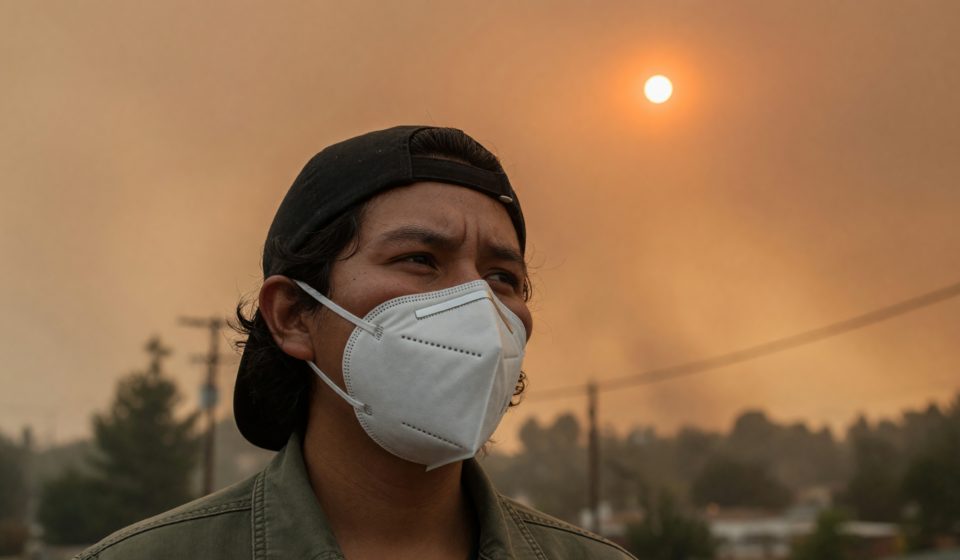
You step outside on a summer morning and the sun is a dull orange disk. The air smells like a campfire that never quite goes out, your eyes sting, and a scratch settles into the back of your throat. For millions of Americans, that hazy sky is no longer a rare event but a seasonal reality, and good wildfire smoke protection has become as essential as sunscreen or a seatbelt. The particles hanging in that air are small enough to slip deep into your lungs and even into your bloodstream, so knowing how to respond is genuinely a health issue, not just a comfort one.
This guide walks you through what wildfire smoke actually is, how to read the AQI so you know when to act, and which tools truly reduce your exposure. We will cover why fine particulate matter, or PM2.5, is so harmful, who faces the greatest risk, and how a properly fitted N95 respirator differs from the cloth mask in your junk drawer. You will also learn how to turn a single room into a clean-air refuge and how to keep kids, older adults, and pets safe when the sky turns brown.
What Wildfire Smoke Is and Why It Hurts Your Lungs
Wildfire smoke is a shifting mixture of gases and microscopic particles produced when vegetation, homes, and other materials burn. The single biggest health concern is fine particulate matter known as PM2.5: particles 2.5 micrometers wide or smaller, roughly thirty times thinner than a human hair. Because they are so tiny, your nose and throat cannot filter them out. They travel deep into the lung’s smallest airways, and the finest fraction can pass into the bloodstream.
Even short-term exposure can trigger real symptoms, and repeated or heavy exposure is linked by health agencies to more serious cardiovascular and respiratory effects. Here is what that smoke can do:
- Irritates airways: coughing, a scratchy throat, burning eyes, and a runny nose are the most common early signs.
- Worsens existing conditions: smoke can set off asthma attacks and flare-ups of COPD, sometimes hours after exposure.
- Strains the heart: agencies including the EPA link PM2.5 to increased risk of heart attacks and irregular heartbeats in vulnerable people.
- Reduces defenses: heavy smoke can make it harder for your lungs to fight off respiratory infections.
How to Read the Air Quality Index (AQI)
The Air Quality Index is the EPA’s simple scale for how polluted the air is right now and what it means for your health. It runs from 0 to 500, and for wildfire season the driver is almost always PM2.5. You can check your local number for free at AirNow.gov or on most weather apps. The higher the value, the more caution it calls for. The EPA divides the scale into six color-coded categories:
- Green, Good (0–50): air quality is satisfactory and poses little or no risk.
- Yellow, Moderate (51–100): acceptable for most, though unusually sensitive people may notice symptoms.
- Orange, Unhealthy for Sensitive Groups (101–150): people with heart or lung conditions, older adults, children, and pregnant people should cut back on outdoor exertion.
- Red, Unhealthy (151–200): everyone may begin to feel effects; sensitive groups feel them more strongly.
- Purple, Very Unhealthy (201–300): a health alert; everyone should minimize outdoor activity.
- Maroon, Hazardous (301 and above): emergency conditions; stay indoors with filtered air whenever possible.
A practical habit during fire season is to check the AQI the way you check the weather. When it climbs into the orange band, sensitive people should start taking precautions; by red and above, those precautions apply to everyone.
Who Is Most at Risk
Smoke affects everyone, but some people feel it sooner and more severely. If you or someone in your household falls into one of these groups, treat rising AQI numbers with extra seriousness:
- People with lung disease: asthma, COPD, and other chronic conditions are readily aggravated by fine particles.
- People with heart disease: PM2.5 places added stress on the cardiovascular system.
- Children: their lungs are still developing and they breathe more air per pound of body weight than adults.
- Older adults: aging lungs and a higher rate of underlying conditions raise the risk.
- Pregnant people: smoke exposure is a concern for both parent and developing baby.
- Outdoor workers: prolonged exertion outside means breathing far more smoke over a shift.
Masks That Actually Work: N95 and P100 vs Cloth
Not all masks are equal when it comes to smoke, and this is where a lot of well-meaning effort is wasted. The particles in wildfire smoke are extremely fine, so a mask has to do two things: filter those particles and seal tightly to your face so unfiltered air cannot leak in around the edges. Cloth and surgical masks fail on both counts for this purpose.
- N95 respirators: NIOSH-certified to filter at least 95 percent of airborne particles, including the PM2.5 in smoke, when properly fitted.
- P100 respirators: a higher tier that filters roughly 99.9 percent of particles; often used for heavier or prolonged exposure and available in reusable elastomeric form.
- Cloth masks: loosely woven and loose-fitting, they do little against fine particles and are not considered effective smoke protection.
- Surgical masks: better than cloth at capturing some particles, but the loose fit lets smoky air leak in around the sides.
Fit is everything. A respirator only performs if it forms a seal, so choose the right size, press the metal nose clip to the bridge of your nose, and make sure it sits snugly under the chin. Facial hair breaks the seal, and models with exhalation valves make breathing easier but do not filter what you breathe out. Respirators also make breathing a little harder, so anyone with a heart or lung condition should check with a clinician before relying on one.
👉 Shop N95/P100 respirator masks on Amazon (Ad — as an Amazon Associate, we earn from qualifying purchases.)
Building Clean Indoor Air: Your Best Wildfire Smoke Protection
The most reliable defense is not a mask at all; it is clean indoor air. The EPA recommends setting up a “clean room,” a single space where you concentrate your efforts to keep particle levels low. The idea is to seal the space against outdoor smoke and then actively filter the air inside it.
- Seal up: close windows and doors, and set air conditioners or HVAC systems to recirculate rather than pull in fresh outside air.
- Run a portable air cleaner: choose a HEPA unit sized for the room and run it continuously on high. Match the cleaner’s CADR (Clean Air Delivery Rate) to your room size, and avoid any device that produces ozone.
- Upgrade your furnace filter: if you have central air, a high-efficiency filter rated MERV 13 or higher captures far more fine particles.
- Consider a DIY air cleaner: the EPA notes you can tape one or more high-efficiency furnace filters to a box fan as a lower-cost option when a commercial cleaner is not available or affordable.
- Avoid adding particles: do not smoke, vape, fry food, burn candles, or vacuum without a HEPA filter while sheltering, since all of these add to indoor particle levels.
The one rule to remember. Clean, filtered indoor air beats any mask. When the AQI is high, your first move is to get inside, seal the room, and run a HEPA air cleaner, then use a fitted respirator only when you must go out.
👉 Shop HEPA portable air purifier on Amazon (Ad — as an Amazon Associate, we earn from qualifying purchases.)
Outdoor Precautions and Activity
When the air is smoky, the simplest and safest choice is to spend less time outdoors and to lower how hard you exert yourself when you are out there. Exercise makes you breathe faster and more deeply, pulling more smoke into your lungs, so a high-AQI day is the day to move that run indoors. A dedicated AQI monitor or a trusted app helps you time errands and outdoor tasks for cleaner windows.
- Check before you go: look at the current AQI and the forecast so you can plan around the cleaner hours of the day.
- Dial back exertion: postpone hard workouts, yard work, and youth sports when numbers are in the red or worse.
- Wear a fitted respirator outdoors: if you must be outside in heavy smoke, an N95 or P100 with a good seal is your portable line of defense.
- Keep your car set to recirculate: this prevents the ventilation system from drawing smoky outside air into the cabin.
- Listen to your body: if you feel chest tightness, dizziness, or trouble breathing, get to cleaner air and seek medical help if it persists.
👉 Shop home AQI air quality monitor on Amazon (Ad — as an Amazon Associate, we earn from qualifying purchases.)
Protecting Kids, Older Adults, and Pets
The most vulnerable members of your household need a plan of their own, because standard advice does not always fit them. Children, for example, cannot get a reliable seal from adult respirators, and pets have their own signs of distress worth watching for.
- Children: keep them indoors in the clean room during smoky spells, since properly fitting respirators are hard to find in child sizes and a loose one offers little protection.
- Older adults: watch closely for fatigue, breathlessness, or confusion, and keep medications for heart and lung conditions filled and within reach.
- People with chronic illness: follow any asthma or COPD action plan, and do not wait to contact a clinician if symptoms escalate.
- Pets: bring animals inside, limit walks to quick breaks, and call a veterinarian if you notice coughing, wheezing, or lethargy.
The Bottom Line
Wildfire smoke is a genuine health hazard, but you are far from powerless against it. Build the habit of checking the AQI, know that clean, filtered indoor air is your strongest and most dependable defense, and keep well-fitted N95 or P100 respirators on hand for the times you have to head outside. Pay special attention to children, older adults, people with heart or lung conditions, and pets, who feel the effects first. A little preparation before smoke season arrives, a clean room ready to go, filters on hand, and a plan for the whole household, turns a frightening orange sky into something you can manage calmly and safely.
Disclaimer: This article is for general educational purposes and is not a substitute for medical advice, diagnosis, or treatment. Wildfire smoke can affect individuals differently, and if you have a heart or lung condition or experience worsening symptoms, consult a healthcare professional or seek emergency care.
Sources: U.S. EPA AirNow (Air Quality Index categories and basics); U.S. EPA guidance on creating a clean room and DIY air cleaners for wildfire smoke; CDC wildfire smoke guidance; NIOSH respirator classifications (N95 and P100).