
Ladder Safety at Home: Duty Ratings and the #1 DIY Injury
The ladder in your garage is probably the most dangerous tool you own — and you almost certainly don’t treat it that way. Every year in the United States, ladders are involved in hundreds of thousands of injuries serious enough to require an emergency-room visit, and falls from height remain one of the leading causes of accidental death at home. Most of these accidents happen during ordinary jobs: cleaning gutters, hanging holiday lights, changing a bulb, trimming a branch. The tasks feel routine, so people rush, overreach, or grab whatever ladder is closest.
The reassuring part is that ladder falls are almost entirely preventable, and the knowledge required is simple. It comes down to three things: using a ladder rated to hold you and your load, choosing the right type and height for the job, and following a handful of setup and climbing rules that never change. This guide covers all three so your next weekend project doesn’t end in a cast.
Duty ratings: how much weight a ladder really holds
Every ladder sold in the U.S. carries a duty rating — the maximum safe working load, which includes your body weight plus everything you’re carrying or wearing: tools, a bucket of paint, materials, your phone, your boots. People routinely underestimate this. A 200-pound person carrying a 30-pound bundle of shingles needs a ladder rated well above 200 pounds. The ratings, set by ANSI, are:
- Type III — 200 lb (Household/light duty). The cheapest ladders. Fine for very light indoor tasks, but easy to overload.
- Type II — 225 lb (Medium duty). Light commercial and heavier household use.
- Type I — 250 lb (Heavy duty). General contractor and serious DIY use.
- Type IA — 300 lb (Extra heavy duty). Industrial use — a smart choice for most homeowners because it leaves a real safety margin.
- Type IAA — 375 lb (Special duty). The strongest rating.
The counterintuitive takeaway: buy more ladder than you think you need. A Type IA or IAA costs a little more, but the extra capacity is cheap insurance, and a sturdier ladder simply feels more stable underfoot. Never treat the duty rating as a target to approach — treat it as a ceiling to stay well under.
👉 Shop Type IA / IAA heavy-duty ladder on Amazon (Ad — as an Amazon Associate, we earn from qualifying purchases.)
Choosing the right ladder and material
The right ladder depends on the job and the environment:
- Step ladder (A-frame): self-supporting, for tasks up to about 10 feet — painting, changing bulbs, reaching shelves. Never stand on the top cap or the top step.
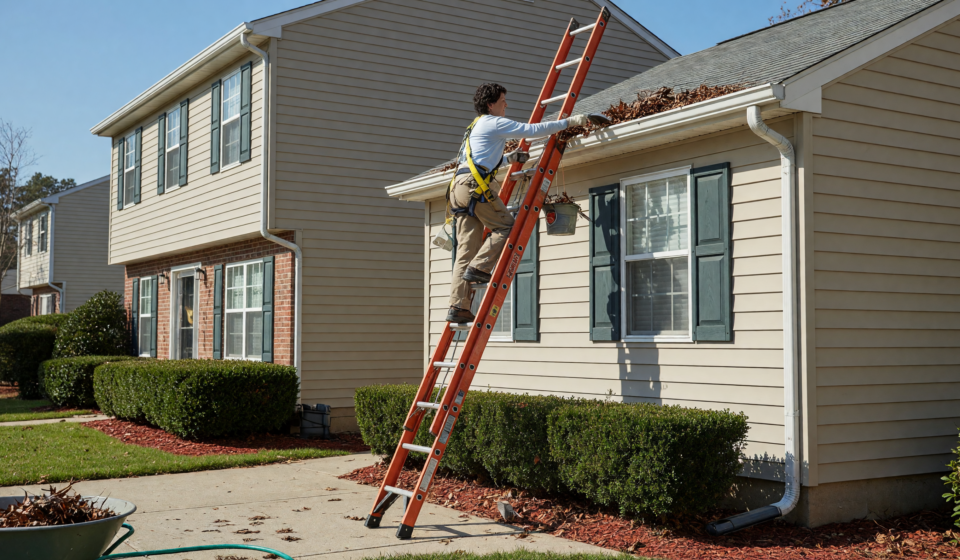
- Extension ladder: for reaching roofs, gutters, and high walls. Must lean against a solid surface and extend at least 3 feet above the roofline you’re stepping onto.
- Multi-position/articulating ladder: versatile for stairs and awkward spots, though usually heavier.
On material, the rule is simple and can save your life: never use an aluminum ladder near electricity. Aluminum conducts, and contact with a power line or a live circuit can be fatal. For any work near electrical service — including the drop line to your house, which people forget when cleaning gutters — use a fiberglass ladder, which doesn’t conduct. Fiberglass is also more durable outdoors. Reserve aluminum for jobs with zero electrical risk.
Setup: the rules that prevent the fall
Most ladder falls happen because of how the ladder was set up, not because it broke. Get these right every time:
- The 4-to-1 rule for extension ladders: for every 4 feet of height to the contact point, move the base 1 foot out from the wall. A ladder touching at 16 feet should have its feet 4 feet out. Too steep and it can tip back; too shallow and the base can slide out.
- Solid, level footing. Set the feet on firm, level ground — never on a box, a table, or soft soil. Use the built-in leg levelers on uneven ground rather than improvising.
- 3 feet above the roofline. An extension ladder must extend at least 3 feet past the edge you’re climbing onto, so you have something to hold while transitioning.
- Fully open and locked. On a step ladder, open it completely and lock the spreader braces. On an extension ladder, make sure the rung locks are fully engaged.
- Secure the top and bottom where possible — tie off the top of an extension ladder, or have a helper hold the base.
Climbing: three points of contact, and don’t overreach
Once the ladder is set, your body does the rest of the safety work:
- Maintain three points of contact at all times — two hands and one foot, or two feet and one hand. That means you carry tools in a tool belt or hoist them with a rope, never in your hands while climbing.
- Keep your belt buckle between the rails. This is the golden rule against overreaching. If you have to lean so your buckle passes outside the side rails, climb down and move the ladder. Overreaching is the single most common cause of tip-over falls.
- Face the ladder going up and down, and hold the rungs — not the side rails — for a more secure grip if your feet slip.
- Don’t stand too high. Never stand on the top two rungs of an extension ladder or the top cap/top step of a step ladder. You need the upper portion to hold.
- One person at a time, unless the ladder is specifically rated for two.
Inspect before every climb
A 30-second inspection catches most equipment failures. Before you climb, check for:
- Cracked, bent, or dented rails and rungs.
- Loose or missing rung locks, spreader braces, or rivets.
- Worn, missing, or slippery feet (the rubber pads that grip the ground).
- Grease, mud, or paint on the rungs that could make them slick.
A ladder that has been dropped, or a fiberglass ladder that has been left out in the sun for years until the surface is chalky and splintered, should be retired. There’s no repairing a compromised ladder — replace it.
👉 Shop ladder stabilizer / standoff and levelers on Amazon (Ad — as an Amazon Associate, we earn from qualifying purchases.)
Common fatal mistakes
- Overreaching instead of moving the ladder — the number one cause of falls.
- Using an aluminum ladder near a power line while cleaning gutters.
- Standing on the top cap or top step.
- Setting the base on uneven or soft ground, or on a makeshift riser.
- Climbing with tools in hand and losing three points of contact.
- Using a household Type III ladder for a job that exceeds its 200-pound rating.
The bottom line
Ladders injure hundreds of thousands of people a year not because they’re mysterious, but because they’re familiar — and familiarity breeds shortcuts. Respect the duty rating and buy more capacity than you need, pick fiberglass for anything near electricity, set the base with the 4-to-1 rule on solid ground, and keep three points of contact with your belt buckle between the rails. Follow those rules and the most dangerous tool in your garage becomes a safe one. The gutters can wait five minutes while you set up right.
Disclaimer: This article is for general educational purposes. Always follow the manufacturer’s instructions and weight ratings printed on your specific ladder, and use appropriate caution or professional help for work at significant height or near electrical hazards.
Sources: ANSI ASC A14 ladder safety standards; U.S. Consumer Product Safety Commission (CPSC) injury data; OSHA and American Ladder Institute portable-ladder safety guidance.