
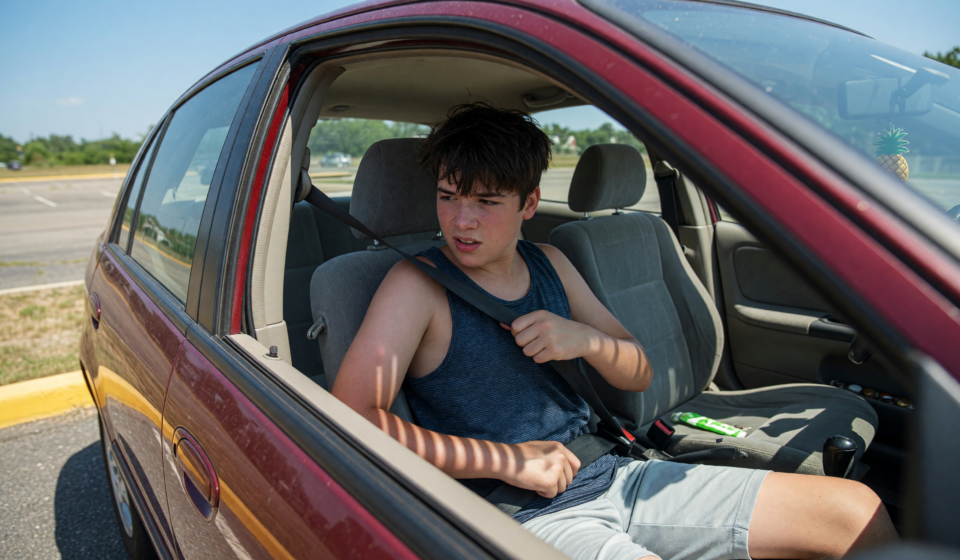
Teen Summer Driving: The 100 Deadliest Days and Passenger Rules
School lets out, the days stretch long, and a newly licensed 17-year-old grabs the keys to drive three friends to the lake. It is one of summer’s most ordinary scenes, and it is also one of its most dangerous. Traffic safety researchers call the stretch between Memorial Day and Labor Day the “100 Deadliest Days,” because more people die in crashes involving teen drivers during these weeks than at any other point in the year. If you are a parent, a new driver, or someone who shares the road with them, understanding teen summer driving risk is one of the most useful things you can do before the next long weekend.
This guide walks through why summer is so uniquely hazardous for young drivers, what the graduated driver licensing (GDL) system is and why it exists, how teen passengers multiply crash risk, and the practical habits and gear that give families a real safety margin. Along the way we lean on findings from the Insurance Institute for Highway Safety (IIHS), the National Highway Traffic Safety Administration (NHTSA), and AAA, so you can separate what is proven from what is merely repeated.
What “the 100 Deadliest Days” Actually Means
The phrase is not marketing. AAA uses it to describe the roughly 100-day window from Memorial Day to Labor Day, a period its research has repeatedly identified as the deadliest of the year for crashes involving teen drivers. According to AAA’s analysis, a disproportionate share of the year’s teen-related driving deaths cluster into these summer weeks, and the average number of people killed per day in teen-involved crashes runs higher in summer than during the rest of the year.
The reason is less about the calendar and more about behavior. When school is out, teens simply drive more, and much of that driving is unsupervised, recreational, and at night. AAA attributes the summer spike in part to teens having more free, unsupervised time behind the wheel than during the school year. More miles, more passengers, and more late-night trips add up to more exposure during exactly the season when a young driver’s skills are least seasoned.
Why Teen Drivers Are at Higher Risk to Begin With
Even outside of summer, the youngest drivers carry the heaviest risk. IIHS reports that teen drivers have crash rates substantially higher than those of drivers 20 and older on a per-mile basis, with the danger most acute at age 16. Two forces drive this: inexperience and developmental stage. A new driver has not yet built the automatic scanning, hazard anticipation, and speed judgment that come only with practice, and the adolescent brain is still developing the impulse control that helps resist risk.
- Inexperience: New drivers are slower to spot and react to hazards, and they tend to misjudge safe following distances and cornering speeds.
- Nighttime exposure: IIHS notes that the fatal crash rate for 16-to-19-year-olds is far higher at night than during the day, and summer brings more after-dark driving.
- Risk-taking: Speeding, short following distances, and lower seat belt use appear more often among young drivers, especially young males.
- Distraction: Phones, in-car conversation, and a carful of friends all pull attention away from a task that still demands most of a new driver’s focus.
The Passenger Effect: Why a Full Car Is a Dangerous Car
Of all the summer risk factors, passengers may be the most underestimated. The pattern in the research is strikingly consistent: for a teen driver, each additional young passenger is associated with a higher likelihood of a fatal crash. NHTSA describes this escalation directly, noting that risk climbs most sharply when young male drivers carry same-age passengers. It is one of the few areas of traffic safety where the effect actually reverses with age, because for drivers 30 and older, having a passenger tends to lower crash risk rather than raise it.
The mechanism is human. Peers are a source of both distraction and social pressure, and a young driver who might otherwise ease off the gas can feel nudged toward showing off, following too closely, or simply talking instead of scanning the road. This is precisely why passenger limits sit at the heart of graduated licensing, and why families should treat “how many friends can ride along” as a genuine safety decision, not a scheduling one.
The takeaway. The single fastest way to lower a new driver’s crash risk this summer is to keep other teens out of the car during the first months of solo driving. It costs nothing, and the evidence behind it is some of the strongest in all of traffic safety.
How Graduated Driver Licensing Passenger Rules Work
Every U.S. state uses some form of graduated driver licensing, a three-stage system designed to let new drivers build skill under lower-risk conditions before earning full privileges. The stages typically run from a supervised learner’s permit, to an intermediate (or provisional) license with restrictions, to a full unrestricted license. The restrictions on that middle stage are where most of the life-saving happens.
- Passenger limits: NHTSA reports that the most common rule allows an intermediate license holder to carry either no passengers or just one, often with exceptions for family members.
- Nighttime restrictions: Many states bar intermediate drivers from driving during late-night hours, when fatal crash risk is highest.
- Supervised practice hours: Best-practice GDL programs call for a substantial block of supervised driving, commonly cited around 70 hours, before solo driving begins.
- Phased entry: Minimum ages and waiting periods stagger how quickly a new driver moves from permit to full license.
These rules are not bureaucratic box-checking. NHTSA points to research showing meaningful crash reductions where passenger restrictions are in force, and IIHS credits strong GDL systems with a large decline in teen crash deaths over the past few decades. The catch is that state laws vary widely, and the legal minimum is often weaker than the safest practice. Families are free to set house rules that go beyond what their state requires, and the evidence says they should.
👉 Shop teen driver safety window decal / new-driver magnet on Amazon (Ad — as an Amazon Associate, we earn from qualifying purchases.)
Seat Belts, Speed, and the Basics That Still Save Lives
The flashiest risks get the headlines, but the fundamentals do the heavy lifting. Seat belts remain the most effective piece of everyday safety equipment in any vehicle, and young occupants historically buckle up at lower rates than adults, a gap that turns survivable crashes into fatal ones. NHTSA’s guidance is blunt: belts should be worn on every trip, by every occupant, no matter how short the drive or how full the car.
- Buckle up every time: A properly worn lap-and-shoulder belt is the baseline for surviving a crash, and it is non-negotiable for driver and passengers alike.
- Manage speed: Higher speeds shorten reaction time and multiply crash energy, and speeding shows up often in serious teen crashes.
- Kill the distractions: Phones go in the glovebox or into do-not-disturb mode before the car moves, not after a notification arrives.
- Respect the conditions: Rain, glare, and unfamiliar roads all demand slower, more deliberate driving, especially from a driver still building judgment.
👉 Shop high-visibility reflective safety vest and roadside emergency kit on Amazon (Ad — as an Amazon Associate, we earn from qualifying purchases.)
Preparing for the Roadside: Gear a New Driver Should Carry
Summer driving means more long trips, more time on unfamiliar roads, and a higher chance of a breakdown or a fender-bender far from home. A new driver who has to step out of a disabled car on the shoulder of a busy road is exposed to real danger, and this is where safety gear earns its place. The goal is simple: make the driver visible and give them the tools to handle a stop without stepping into traffic blind.
- High-visibility vest: A reflective, high-visibility vest makes a stranded driver dramatically easier to see, day or night; look for garments meeting the ANSI/ISEA 107 standard used for roadside worker safety.
- Reflective triangles or flares: Placed behind a disabled vehicle, they warn oncoming traffic long before headlights reach the car itself.
- Flashlight and first-aid kit: Basic, reliable tools for the two most common roadside needs after dark.
- Charged phone and a plan: A way to call for help, plus a family rule to pull well off the road and stay belted while waiting when it is safer to remain in the vehicle.
👉 Shop ANSI/ISEA 107 reflective vest for young drivers on Amazon (Ad — as an Amazon Associate, we earn from qualifying purchases.)
How Parents Can Set the Rules That Matter
The strongest lever in teen driving safety is not a law; it is a parent. Surveys cited by NHTSA show overwhelming support among parents for passenger limits, and the research suggests that clear, enforced family agreements outperform vague expectations. A written parent-teen driving agreement turns good intentions into specifics: how many passengers, how late, which roads, and what happens if the rules are broken.
- Start passenger-free: Keep the car free of teen passengers during the first several months of solo driving, regardless of what state law allows.
- Set a night curfew: Limit late-night driving early on, since darkness carries the steepest risk for young drivers.
- Model the behavior: Teens copy the drivers they grew up watching, so buckling up, slowing down, and putting the phone away start with the adults in the family.
- Keep practicing: Supervised practice should not stop the day a license is issued; ride along in rain, on highways, and after dark to keep building judgment.
The Bottom Line
The 100 Deadliest Days are not a curse of the calendar; they are the predictable result of new drivers logging more miles, later hours, and fuller cars during a single stretch of the year. The good news is that the biggest risk factors are also the most controllable. Keep other teens out of the car early on, respect the nighttime and passenger rules that graduated licensing puts in place, insist on seat belts and reasonable speeds, and send every young driver out the door with the visibility gear to handle a roadside stop safely. None of it requires new technology or deep pockets, just a family willing to treat summer driving as the serious business it is. Do that, and the deadliest days of the year become a lot more survivable.
Disclaimer: This article is for general educational purposes only and does not constitute legal, medical, or professional safety advice. Graduated driver licensing rules, passenger restrictions, and equipment requirements vary by state and change over time; always confirm the current laws in your jurisdiction and follow the guidance of qualified authorities. Safety gear must be selected, fitted, and used according to the manufacturer’s instructions and the applicable standard.
Sources: AAA Foundation for Traffic Safety and AAA Newsroom (“100 Deadliest Days”); Insurance Institute for Highway Safety (IIHS), Teenagers research area; National Highway Traffic Safety Administration (NHTSA), Countermeasures That Work — Graduated Driver Licensing and passenger restrictions; ANSI/ISEA 107 high-visibility apparel standard.