Mouthguards and Protective Gear for Contact Sports
Ask any fighter, hockey player, or weekend jiu-jitsu student who has taken an accidental elbow to the face, and they will tell you the same thing: a chipped tooth or split lip has a way of making you appreciate protective gear you once thought was optional. A well-fitted sports mouthguard is one of the cheapest, most effective pieces of equipment you can own, yet it is also one of the most misunderstood. People overestimate what it can do, underestimate how much fit matters, and often replace it far too late.
This guide walks through what a mouthguard actually protects, the three types you can buy and their honest trade-offs, and the evidence on the question everyone asks first: does it prevent concussions? From there we cover fitting, cleaning, and replacement, then round out your kit with the other gear that keeps contact-sport athletes in one piece: headgear, hand and wrist protection, shin guards, and groin protection. The goal is simple: help you spend smart, train hard, and keep your teeth where they belong.
Why a Sports Mouthguard Matters
A mouthguard’s job is to absorb and spread out the force of a blow before it reaches your teeth and the soft tissue around them. When something strikes your face, that energy has to go somewhere. A layer of resilient thermoplastic cushions the impact, so instead of a concentrated hit fracturing an upper front tooth, the load is dampened and distributed. According to the American Dental Association, mouthguards protect primarily the upper (maxillary) teeth while also shielding the lips, cheeks, and tongue from being cut against your own teeth.
The benefits go beyond the teeth themselves. As the ADA’s consumer guidance notes, a mouthguard helps cushion a blow to the face, minimizing the risk of broken teeth and injuries to your lips, tongue, face, or jaw. A systematic review and meta-analysis published in Sports Medicine found that athletes who did not wear mouthguards faced more than double the risk of orofacial injury compared with those who did. That is a strong, consistent finding: for protecting teeth and the surrounding soft tissue, mouthguards work. If you wear braces, the case is even stronger, since a guard also creates a barrier between metal brackets and the inside of your lips and cheeks.
The Three Types of Mouthguards, Compared
Every mouthguard on the market falls into one of three categories. They differ in cost, comfort, and how well they stay put when it counts.
- Stock (ready-made): The cheapest option, sold pre-formed in a few generic sizes. The ADA considers stock guards the least effective type because they cannot be adjusted to your mouth. They tend to be bulky, make breathing and talking harder, and often require you to clench to hold them in place, which is exactly the wrong thing to be doing mid-round.
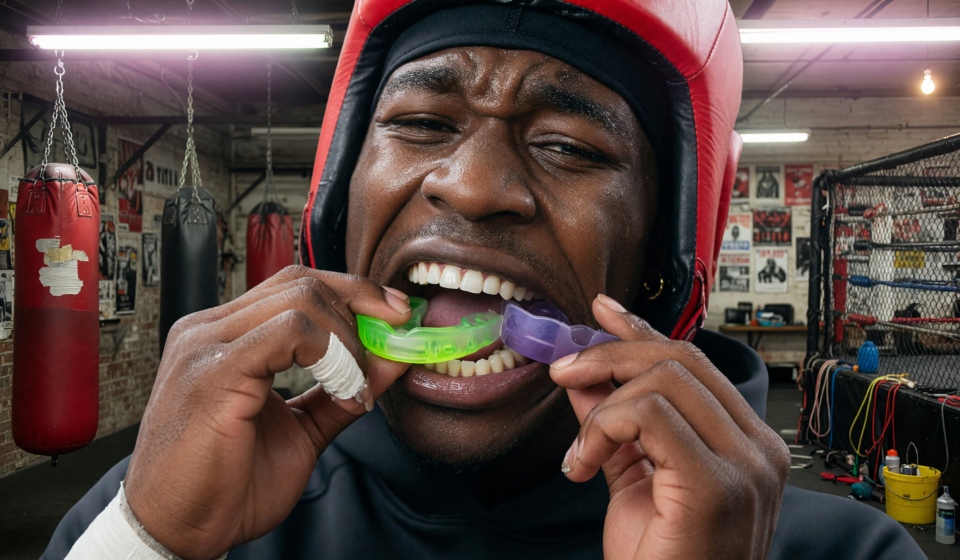
- Boil-and-bite (mouth-formed): The most popular middle ground. Made of thermoplastic that softens in hot water, then molds to your teeth when you bite down and press with your tongue and fingers. Widely available at sporting goods stores, a boil-and-bite guard fits far better than stock if you follow the instructions carefully. This is the sweet spot for most recreational and amateur athletes.
- Custom-fitted by a dentist: Made from an impression of your teeth and thermoformed in a dental lab for a precise, low-profile fit. Custom guards offer the best retention, comfort, and breathability, and the ADA recognizes them as providing the greatest protection and adaptability. They cost the most, but for anyone training seriously or with braces or dental work, they are frequently worth it.
👉 Shop boil-and-bite mouthguard on Amazon (Ad — as an Amazon Associate, we earn from qualifying purchases.)
The Honest Truth on Mouthguards and Concussions
Here is where marketing tends to outrun the science. You will see products advertised as concussion-reducing or brain-protecting. Be skeptical. While the evidence that mouthguards prevent dental and orofacial injuries is strong, the evidence that they prevent concussions is limited and inconclusive.
The same Sports Medicine meta-analysis that confirmed the orofacial-injury benefit found the effect on concussion incidence to be modest and statistically uncertain, with a confidence interval that crossed the line of no effect. In plain terms, researchers could not conclude that mouthguards meaningfully reduce concussion risk. The American Dental Association’s own review describes the concussion evidence as mixed. A mouthguard does not stop your brain from moving inside your skull, which is the mechanism behind most concussions.
Bottom line on the brain. Wear a mouthguard to protect your teeth, jaw, and soft tissue, which it does very well. Do not treat it as concussion insurance. If you take a hard head impact, watch for symptoms and follow proper concussion protocols regardless of what gear you had on.
Getting a Good Fit
A guard only protects you if it stays in place, and fit is the difference between a device you forget you are wearing and one you keep spitting out. If you go the boil-and-bite route, take your time with the molding process.
- Heat correctly: Bring water to a boil, remove it from the heat, and follow the package timing. Water that is too hot for too long can distort the material.
- Seat it straight: Center the softened guard over your upper teeth and press it firmly against them, biting down evenly without grinding.
- Suck and press: Draw air and use your tongue and fingertips to hug the material tight to your teeth and gumline for the best adaptation.
- Set and test: Cool it in cold water, then check the fit. It should stay put without clenching. If it is loose or bulky, most guards can be reheated and remolded once or twice.
When is custom worth the money? If you train frequently, compete, have braces or crowns, struggle to breathe or talk with a bulky boil-and-bite, or simply keep losing your guard mid-session, a dentist-made model pays for itself in comfort and reliability. A guard you actually keep in your mouth protects you infinitely better than a better one sitting on the bench.
👉 Shop custom mouthguard kit on Amazon (Ad — as an Amazon Associate, we earn from qualifying purchases.)
Care and Replacement
A mouthguard lives in a warm, wet environment, which makes it a happy home for bacteria if you neglect it. Good habits keep it clean and extend its life.
- Rinse every time: Rinse before and after each use, or brush it gently with a toothbrush and toothpaste.
- Clean regularly: Wash it in cool, soapy water and rinse thoroughly. Avoid hot water and direct sunlight, both of which can warp the material.
- Store ventilated: Keep it in a firm, perforated case that lets it dry out between sessions, rather than sealed damp in your gym bag.
- Bring it to checkups: Your dentist can inspect and clean it and flag fit problems you might miss.
Replace a mouthguard as soon as it shows wear, tears, thinning bite surfaces, or a loosening fit. For children and teenagers, plan on replacing guards more often. Their mouths are still growing, and a guard that fit last season may no longer seat properly. When in doubt, ask your dentist how often you should be swapping yours out.
Headgear for Combat Sports
In boxing, kickboxing, Muay Thai, and MMA sparring, protective headgear is standard training equipment. Padded headgear cushions the impact of strikes, reduces cuts and swelling, and protects the ears and cheekbones from repeated contact. Cheek-protection styles offer more coverage at the cost of some peripheral vision, while open-face models keep your sightlines clear for competitive sparring.
As with mouthguards, keep expectations realistic. Headgear reduces surface trauma, but it does not eliminate the forces that cause concussions, and heavier gear can even increase head size and the chance of catching a punch. Choose a snug fit that does not slide over your eyes, and pair it with controlled, respectful sparring rather than treating it as a license to trade heavy shots.
👉 Shop MMA/boxing headgear on Amazon (Ad — as an Amazon Associate, we earn from qualifying purchases.)
Hand and Wrist Protection
Your hands contain dozens of small, easily injured bones, and striking arts put them under real stress. Two layers matter here. Hand wraps go on first, supporting the wrist and compressing the small bones and knuckles into a more stable unit. Gloves go over the wraps to cushion the impact for both you and your training partner.
- Hand wraps: Semi-elastic wraps that anchor the wrist and knuckles. Learn to wrap correctly so you get support without cutting off circulation.
- Bag gloves: Lighter padding for heavy-bag and pad work, prioritizing wrist support and knuckle protection.
- Sparring gloves: Heavier, more cushioned gloves, often 16 ounces, that soften impact and protect your partner during live rounds.
👉 Shop hand wraps on Amazon (Ad — as an Amazon Associate, we earn from qualifying purchases.)
Other Gear by Sport
Beyond the mouth and hands, a few more pieces round out a complete contact-sport kit. What you need depends on your discipline.
- Shin guards: Essential for Muay Thai, kickboxing, and MMA sparring, protecting the shins and insteps during checks and low kicks. Padded slip-on styles are standard for training.
- Groin protection: A groin guard or cup is standard for men in most combat sports and strongly recommended for hard sparring. Female athletes have pelvic-protector options as well.
- Body and rib protection: Padded chest and rib guards help beginners and coaches absorb body shots during drilling.
- Elbow, knee, and joint pads: Grappling and mixed styles benefit from padded supports on mats and during clinch work.
Whatever the sport, the same principles apply: buy gear that fits, replace it when it wears out, and keep it clean. Well-maintained equipment protects you better and lasts longer than a bargain piece you never look after.
The Bottom Line
A mouthguard is the highest-value protective purchase most contact-sport athletes will make. The science is clear that it dramatically reduces the risk of broken teeth and soft-tissue injuries, so wear one every time you train or compete. Be honest, though, about its limits: it is not a concussion device, and no piece of gear replaces good technique, controlled sparring, and sensible coaching. For most people, a well-molded boil-and-bite is plenty, while frequent competitors and anyone with braces or dental work should seriously consider a custom guard.
Build out from there with headgear, hand wraps and gloves, shin guards, and groin protection suited to your sport, keep everything clean and well-fitted, and replace items before they fail. Protect your teeth, protect your hands, respect your training partners, and you will be able to keep doing the sport you love for a very long time.
Disclaimer: This article is for general educational purposes only and is not medical or dental advice. Individual needs vary, and no protective equipment can guarantee against injury. Consult a dentist, physician, or qualified coaching professional for guidance specific to your situation, and follow proper protocols after any head impact.
Sources: American Dental Association (Athletic Mouth Protectors and MouthHealthy consumer guidance); sports-medicine guidance including the systematic review and meta-analysis “Effectiveness of Mouthguards for the Prevention of Orofacial Injuries and Concussions in Sports” (Sports Medicine, 2019); and general sports-dentistry and combat-sports safety resources.