Winter Driving Safety: Emergency Kit and What to Do If You’re Stranded
The first hard freeze changes everything about how a car behaves. Stopping distances stretch, tires lose their grip, and a routine commute can turn into a white-knuckle crawl. Good winter driving safety is not about heroics behind the wheel; it is about preparation, patience, and knowing exactly what to do when conditions turn against you. A vehicle that is ready for the cold, a driver who slows down and leaves room, and a plan for the worst case add up to the single biggest reduction in your winter crash risk.
This guide walks you through the whole season, start to finish. You will learn how to prep your vehicle before the snow flies, what belongs in a winter car emergency kit, how to plan a trip in bad weather, how to drive on snow and ice, how to recover from a skid, and the official protocol if you become stranded. We lean on guidance from the National Highway Traffic Safety Administration (NHTSA), AAA, the National Weather Service (NWS), and the American Red Cross so you are working from advice that actually holds up when the roads get ugly.
Prepping Your Vehicle for Winter
The best winter safety work happens in your driveway, weeks before you ever need it. Cold weather punishes worn parts and low fluids, so give your vehicle a head-to-toe check before temperatures drop. A short visit to a trusted mechanic now is far cheaper than a tow later.
- Tires: Fill each tire to the manufacturer’s recommended pressure, found in your owner’s manual or the door-frame label, and remember that pressure drops as the air gets colder. NHTSA advises tread depth of at least 2/32 of an inch on all tires; deeper is better for snow. In areas with heavy, sustained snow, dedicated winter tires are worth serious consideration.
- Battery: Cold weather forces your engine to draw more battery power to start. Have a mechanic test the battery and charging system so a weak cell does not leave you stranded on the coldest morning of the year.
- Washer fluid and wipers: Fill the reservoir with high-quality winter washer fluid that contains de-icer, and replace tired wiper blades so you can keep your windshield clear of road spray and slush.
- Lights, brakes, and heater: Confirm every exterior light works, your brakes feel firm, and your defroster and heater push out strong heat. Visibility and stopping power are non-negotiable in winter.
- Fuel: Keep your gas tank as close to full as you reasonably can. A fuller tank guards against fuel-line freeze and gives you a reserve of heat if you are ever stuck.
👉 Shop jump starter / portable power pack on Amazon (Ad — as an Amazon Associate, we earn from qualifying purchases.)
The Winter Car Emergency Kit Checklist
If a storm strands you, the supplies already in your trunk are the ones that matter. NHTSA, AAA, and the Red Cross all recommend building a dedicated cold-weather kit and keeping it in the vehicle all season. Stock it once, check it monthly, and refresh the food, water, and batteries as needed.
- Dig-out gear: A compact snow shovel, a snow brush, and an ice scraper so you can clear the vehicle and free the tires.
- Traction help: Sand or non-clumping kitty litter to put under the drive wheels if you get stuck on ice.
- Power and light: Jumper cables or a jump-start pack, a flashlight with spare batteries, and road flares or reflective triangles.
- Warmth: Blankets or sleeping bags, hats, gloves, and extra warm layers for every occupant.
- Sustenance: Drinking water and non-perishable, high-energy snacks such as bars, nuts, or dried fruit.
- Health and comms: A first aid kit, any essential medications, and a fully charged phone with a car charger or power bank.
👉 Shop winter car emergency kit on Amazon (Ad — as an Amazon Associate, we earn from qualifying purchases.)
Before You Go: Weather, Route, and a Simple Plan
The safest winter trip is sometimes the one you postpone. When a storm is forecast, ask honestly whether the drive is necessary. If it is, a few minutes of planning stacks the odds in your favor.
- Check the forecast: Review the National Weather Service outlook and any winter storm watches or warnings before you leave, and delay travel if serious weather is moving in.
- Plan the route: Favor major roads that are plowed and treated first, and give yourself extra time so you are never tempted to rush.
- Tell someone: Let a friend or family member know your route, destination, and expected arrival time so help can be sent if you go quiet.
- Clear the whole car: Remove snow and ice from every window, mirror, light, the roof, and the hood before you pull away.
- Top off fuel: Start with a full or nearly full tank so you have heat in reserve.
Winter Driving Safety on Snow and Ice: Technique That Works
Once you are moving, smoothness is everything. Snow and ice cut the traction available for accelerating, steering, and braking, so the golden rule from NHTSA is simple: slow down. It is far harder to control or stop a vehicle on a slick surface, and speed is the factor you can most easily manage.
- Gentle inputs: Accelerate, steer, and brake slowly and deliberately. Abrupt movements are what break traction and start skids.
- Long following distance: Increase your normal gap dramatically. You need far more room to stop on snow than on dry pavement.
- Look ahead: Scan well down the road so you can plan for stops and turns early, not react to them late.
- Give plows room: Stay back from snowplows, which move slowly and can throw snow; the road behind a plow is usually the best surface available.
- Know your brakes: With anti-lock brakes, apply firm, steady pressure and let the system work. Do not pump ABS brakes.
Slow is smooth, smooth is safe. Most winter crashes come from driving too fast for conditions. Cutting your speed and doubling your following distance gives you the time and space to react when traction disappears.
How to Recover From a Skid
Even careful drivers occasionally feel the car slide. AAA’s advice starts with two words: do not panic. Skids are recoverable when you respond calmly and avoid the instinctive reactions that make things worse.
- Keep your eyes up: Look at your path of travel down the road, not at what you are about to hit. Your hands follow your eyes.
- Steer where you want to go: If the rear of the car slides out, steer in the direction you want the front to go, then straighten as it recovers. Avoid overcorrecting, which can snap the car into a spin.
- Ease off the brakes: Slamming the brakes upsets the car’s balance and makes a skid harder to control. In a front-wheel skid, look and steer where you want to go, wait for grip to return, then gently guide the car back on line.
- Stay off the throttle: Lift smoothly rather than jabbing the gas until the tires regain their grip.
👉 Shop ice scraper & traction aids on Amazon (Ad — as an Amazon Associate, we earn from qualifying purchases.)
If You Get Stranded: The Stay-With-the-Car Protocol
If you slide off the road or become trapped by a storm, the guidance from NHTSA, the National Weather Service, and the Red Cross is consistent and potentially lifesaving: in almost every case, stay with your vehicle. Your car is shelter, it is far easier for rescuers to spot than a person on foot, and wind-driven snow can disorient you within minutes if you try to walk for help.
- Stay put and call for help: Remain in the vehicle, call 911 or roadside assistance, and share your location. Do not overexert yourself trying to dig out or push in deep cold.
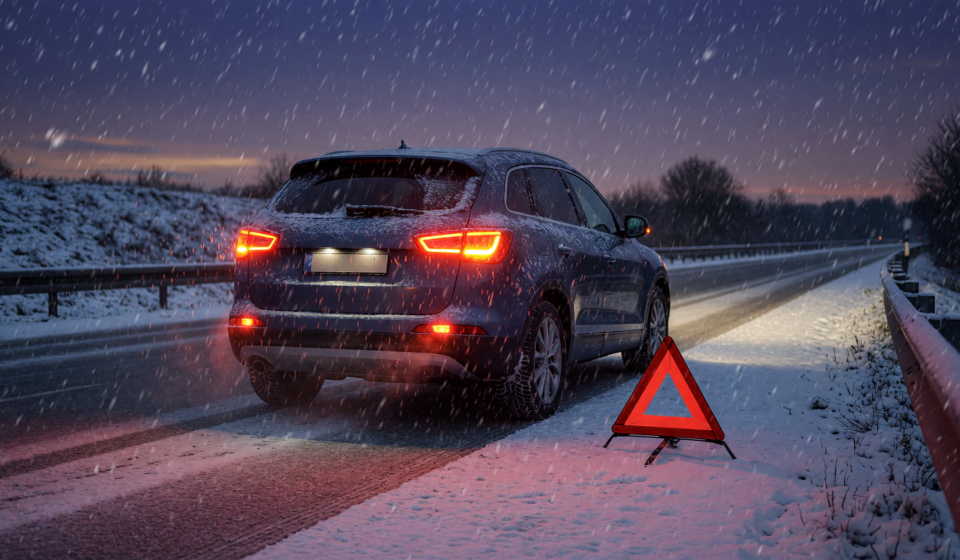
- Make yourself visible: Tie a bright cloth, preferably red, to your antenna or door handle. At night, turn on the interior dome light while the engine runs, and once the snow stops, raise the hood to signal that you need help.
- Run the engine sparingly: Run the motor and heater about 10 minutes each hour to stay warm rather than continuously. This conserves fuel and limits exhaust risk.
- Guard against carbon monoxide: Before running the engine, clear snow away from the exhaust pipe, and crack a downwind window slightly for fresh air. Carbon monoxide is odorless and deadly, and a blocked tailpipe can push it into the cabin.
- Keep your blood moving: Move your arms and legs periodically to maintain circulation, and huddle with passengers under blankets to share warmth.
👉 Shop emergency blanket on Amazon (Ad — as an Amazon Associate, we earn from qualifying purchases.)
Black Ice and Bridges: The Hidden Hazards
Some of winter’s worst surprises are the ones you cannot see. Black ice is a thin, transparent glaze that lets the dark pavement show through, so a road that looks merely wet may be treacherous. It forms most readily in the early morning and after dark, when temperatures hover near freezing.
- Watch bridges and overpasses: They are exposed to cold air above and below, so they freeze before the roadway around them. Treat every bridge as potentially icy near freezing temperatures.
- Beware shaded and low spots: Tree-lined stretches, on-ramps, intersections, and dips hold ice long after open pavement has cleared.
- Read the surface: If spray stops flying off the tires ahead of you or the road takes on a wet-looking sheen in freezing weather, suspect black ice and ease off the gas.
- Do not overreact: On ice, keep the steering wheel steady, avoid sudden braking, and let the car coast through until you reach grippier pavement.
Cold-Weather Essentials for Everyone in the Car
Winter safety is not only about the machine; it is about the people inside it. Dressing and packing for the temperature, not for the heated cabin, means that a breakdown never becomes a medical emergency. Hypothermia and frostbite are real risks whenever the heat fails.
- Dress in layers: Wear or pack warm, layered clothing, a hat, and gloves, even for short trips. Much of your body heat escapes through an uncovered head.
- Pack for passengers: Carry extra blankets and warm gear sized for children, older adults, and anyone with medical needs who feels the cold sooner.
- Bring water and food: Keep drinking water and calorie-dense snacks on hand, since staying fueled and hydrated helps the body generate heat.
- Mind medications: If anyone in the vehicle relies on daily medication, keep a small supply in the kit in case a trip runs long.
The Bottom Line
Winter driving rewards drivers who prepare and punishes those who improvise. Service your vehicle before the cold sets in, stock a real emergency kit, and check the forecast before every trip. On the road, slow down, leave generous space, and keep your inputs smooth so the tires stay in charge. If a skid comes, look and steer where you want to go and stay off the brakes. And if the worst happens and you are stranded, stay with the car, make it visible, run the engine sparingly with the exhaust pipe clear and a window cracked, and wait for help. Do those things and you turn winter’s biggest risks into manageable ones, arriving cold, maybe, but safe.
Disclaimer: This article is provided for general educational purposes only and does not replace professional advice. Road and weather conditions vary; always follow local advisories, official emergency instructions, and your vehicle manufacturer’s guidance. When in doubt, delay travel and consult a qualified mechanic or emergency services.
Sources: NHTSA winter driving tips (Winter Weather Driving Tips: Prepare Your Vehicle); AAA (winter car checklist and recovering from a skid); National Weather Service (What To Do If You’re Caught in a Winter Storm); American Red Cross (winter storm and emergency car kit guidance).