Heat Safety: Preventing Heat Exhaustion and Heatstroke
Heat is the quiet danger of summer. Unlike a storm you can see coming, heat illness builds slowly inside your body until it suddenly overwhelms you, and by then your judgment may already be slipping. Every year, otherwise healthy people collapse on job sites, playing fields, and hiking trails because they pushed through warning signs that seemed minor at the time. The good news is that heat illness is almost entirely preventable, and smart heat exhaustion prevention starts long before you feel the first wave of dizziness or nausea.
This guide walks you through the full spectrum of heat illness, from mild heat cramps to heat exhaustion to life-threatening heat stroke. You will learn how to read the distinguishing signs of each, exactly what first aid to give, and when a situation stops being something you can manage and becomes a 911 emergency. We will also cover the everyday habits that keep you out of trouble, who faces the highest risk, and one deadly mistake that claims lives every summer: leaving children or pets in a parked car. Read it now, before the next heat wave, so the information is already in your head when the temperature climbs.
How Heat Overwhelms the Body
Your body works hard to hold a core temperature near 98.6°F. When you get hot, blood vessels near the skin widen to shed heat, and you sweat so that evaporation can carry warmth away. On a hot, humid day, both systems get pushed to their limits. High humidity slows evaporation, so sweat drips off you without cooling much. Meanwhile, the extra blood pumping toward your skin leaves less for your muscles and brain, which is why you feel weak, lightheaded, and foggy.
Heat illness is a progression. It usually begins with cramps or a rash, moves into heat exhaustion as fluid and salt losses mount, and can end in heat stroke when the body’s cooling system fails outright and core temperature spikes. The transition can happen faster than people expect, especially during hard physical effort. Understanding the stages is what lets you intervene early, while the problem is still easy to fix.
Heat Cramps and Early Warning Signs
Heat cramps are often the body’s first clear protest. According to the CDC, they show up as painful muscle spasms in the abdomen, arms, or legs, usually during or after heavy sweating. They signal that you are losing water and salt faster than you are replacing them. Early warning signs that heat is getting the upper hand include heavy sweating, unusual thirst, fatigue, and a headache that will not quit.
- Stop and rest: Move to a cooler, shaded spot and pause the activity that triggered the cramps.
- Rehydrate with electrolytes: Sip water along with an electrolyte drink or a salty snack every 15 to 20 minutes.
- Skip salt tablets: The CDC advises against them; food and sports drinks restore sodium more safely.
- Seek help if they persist: Get medical attention if cramps last longer than an hour, or if you have heart problems or are on a low-sodium diet.
👉 Shop electrolyte packets on Amazon (Ad — as an Amazon Associate, we earn from qualifying purchases.)
Heat Exhaustion: Signs and First Aid
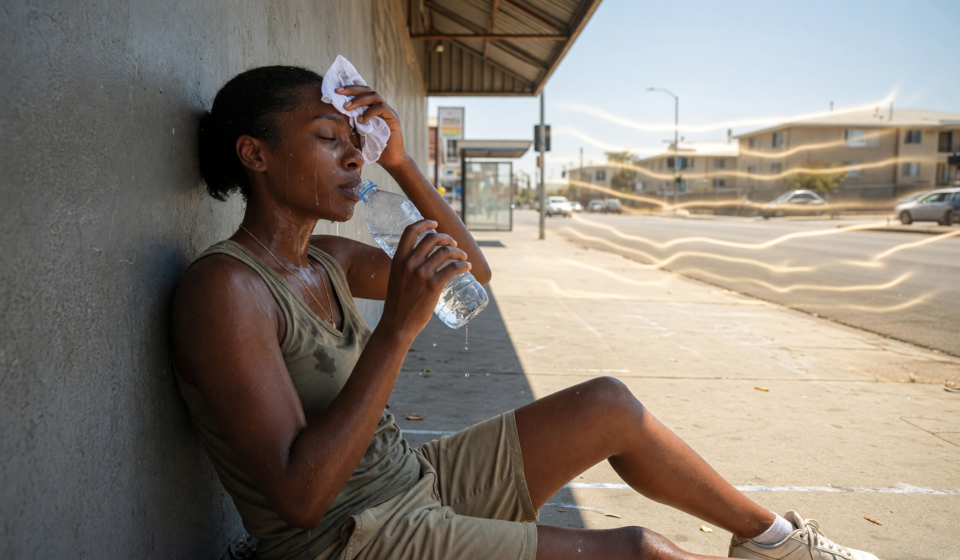
Heat exhaustion is the body’s serious warning that it is losing the cooling battle. The hallmark, per the National Weather Service, is skin that feels cool, pale, and clammy despite the heat, paired with heavy sweating. You may notice a fast but weak pulse, weakness, dizziness, headache, nausea, or even fainting. The person is still sweating and their skin is not burning hot, which is the key contrast with heat stroke.
- Get out of the heat: Move the person to a cool or shaded area, ideally air conditioning.
- Loosen and cool: Remove unnecessary clothing and apply cool, wet cloths to the skin or offer a cool bath.
- Rehydrate slowly: Give frequent sips of cool water if the person is alert and not vomiting.
- Watch closely: Seek immediate medical care if symptoms worsen, last longer than an hour, or the person begins vomiting.
Heat exhaustion is a fork in the road. Handle it right and most people recover within an hour. Ignore it, and it can escalate into heat stroke, so treat it as the urgent signal it is.
Heat Stroke: The Emergency Signs and What to Do
Heat stroke is a life-threatening medical emergency. It happens when the body can no longer cool itself and core temperature climbs to roughly 103°F or higher, according to the National Weather Service. The classic signs are hot, red skin that may be either dry or damp, a rapid and strong pulse, and, most tellingly, a change in mental status: confusion, slurred speech, agitation, or loss of consciousness. That altered mental state is the red flag that separates heat stroke from heat exhaustion.
Call 911 first. If someone shows confusion, collapses, or has hot skin with a very high temperature, treat it as heat stroke. Call 911 immediately, then begin aggressive cooling while you wait. Minutes matter, and delay can be fatal.
- Call 911 without delay: This is an emergency; do not wait to see if the person improves.
- Cool aggressively: Move them to shade, remove outer clothing, and lower their temperature fast with a cold-water or ice bath, wet skin, or cold wet cloths.
- Target the pulse points: Apply cold packs to the head, neck, armpits, and groin to speed cooling.
- Do not force fluids: A confused or semi-conscious person can choke, so hold off on drinks until help arrives.
Prevention Day to Day: Your Best Heat Exhaustion Prevention Plan
The most reliable way to survive extreme heat is to never let your body reach the danger zone in the first place. Effective heat exhaustion prevention is built on a handful of simple, repeatable habits that OSHA and the CDC have promoted for years, summed up by the campaign slogan “Water. Rest. Shade.”
- Hydrate before you are thirsty: Drink water steadily throughout the day rather than gulping it once you feel parched. During heavy sweating, add electrolytes.
- Acclimatize gradually: Give your body one to two weeks to adjust to working or exercising in the heat, building up intensity and duration slowly. Most heat-related deaths on the job happen in the first few days.
- Time it wisely: Schedule hard physical activity for the cooler morning or evening hours and avoid the peak heat of late afternoon.
- Take shade and rest breaks: Step out of the sun regularly to let your core temperature settle before it climbs too high.
- Dress for the heat: Wear lightweight, light-colored, loose clothing, plus a wide-brimmed hat and sunscreen. Sunburn hurts your body’s ability to cool itself.
👉 Shop insulated water bottle or hydration pack on Amazon (Ad — as an Amazon Associate, we earn from qualifying purchases.)
👉 Shop UPF sun shirt or wide-brim hat on Amazon (Ad — as an Amazon Associate, we earn from qualifying purchases.)
Who Is Most at Risk
Heat does not treat everyone equally. Some people run hotter, cool slower, or simply cannot remove themselves from a dangerous situation. Knowing who is vulnerable helps you keep an extra eye out during a heat wave.
- Infants and young children: Their bodies heat up faster than adults’ and they rely on caregivers to move them to safety.
- Older adults: Aging blunts the body’s ability to sense and respond to heat, and chronic conditions or medications can make it worse.
- Outdoor workers: Construction, agriculture, landscaping, and delivery crews spend long hours in direct heat, often while exerting themselves.
- Athletes: Hard effort generates enormous internal heat, and the drive to compete can push people past warning signs.
- People with chronic conditions: Heart disease, obesity, and certain medications reduce the body’s cooling capacity.
The Parked-Car Danger: Never Leave Kids or Pets
A parked car becomes an oven with frightening speed. On a warm day, the interior temperature can rise dozens of degrees within minutes, even with the windows cracked and even when it does not feel that hot outside. Children’s bodies warm several times faster than adults’, which is why a “quick errand” can turn deadly. The rule from safety authorities is absolute: never leave a child or pet in a parked vehicle, not for a minute.
- Make it a habit: Look before you lock, and place a needed item like your phone or bag in the back seat as a reminder.
- Keep cars locked at home: Curious children can climb into an unlocked vehicle on their own and become trapped.
- Act if you see a child in distress: If a child or pet appears to be in danger in a hot car, call 911 right away.
Working Out and Working Outdoors in Heat
Athletes and outdoor workers share the same core challenge: sustained exertion in the heat generates internal warmth on top of the environmental load. For workers, OSHA’s “Water. Rest. Shade.” framework is the backbone of a good plan, along with a buddy system so coworkers can catch early symptoms in one another. Employers should build in acclimatization for new and returning workers, provide cool drinking water within easy reach, and enforce shaded rest breaks.
For athletes and weekend warriors, the same principles apply on a personal scale. Pre-hydrate, carry more water than you think you need, and cool down proactively with a wet towel around the neck at breaks. Learn to recognize the moment when “tired” tips into dizziness, confusion, or a headache that will not fade, and treat that as a hard stop. Pushing through is where healthy people get hurt.
👉 Shop cooling towel on Amazon (Ad — as an Amazon Associate, we earn from qualifying purchases.)
The Bottom Line
Heat illness moves along a predictable path, from cramps to heat exhaustion to heat stroke, and every step gives you a chance to intervene. Heat exhaustion means cool, clammy, sweaty skin with weakness and a fast, weak pulse; get the person out of the heat, cool them, and rehydrate. Heat stroke means hot skin, a very high temperature, and confusion or collapse; that is a 911 emergency where you cool aggressively while help is on the way. The everyday work of hydration, acclimatization, smart timing, light clothing, and shade is what keeps most people from ever reaching those crises. Watch out for kids, older adults, workers, and athletes, and never, ever leave a child or pet in a parked car. A little preparation now is what turns a dangerous heat wave into a manageable one.
Disclaimer: This article is for general educational purposes and is not medical advice. It is not a substitute for professional diagnosis or treatment. If you suspect heat stroke, or if anyone shows confusion, collapses, or has hot skin with a very high body temperature, heat stroke is a medical emergency — call 911 immediately. When in doubt about any heat-related symptoms, seek care from a qualified medical professional.
Sources: Centers for Disease Control and Prevention (CDC), Heat-Related Illnesses; Occupational Safety and Health Administration (OSHA) heat guidance, Water. Rest. Shade.; National Weather Service (NWS), Heat Illness; American Red Cross, heat emergency first aid.