
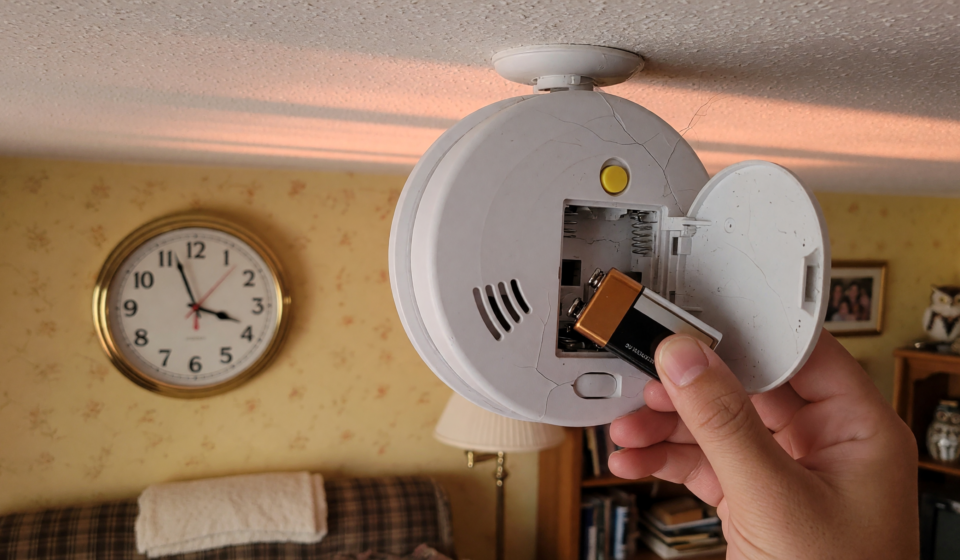
Change Your Clocks This Sunday? Change Your Smoke and CO Alarm Batteries, Too
WASHINGTON — When clocks fall back one hour at 2:00 a.m. on Sunday, November 1, 2026, most of the country gains a little sleep and loses an hour of evening daylight. Fire officials would like you to spend a few minutes of that extra hour on daylight saving time fire safety: use the twice-a-year clock change as your reminder to put fresh batteries in every smoke and carbon monoxide alarm, test each one, and replace any that are too old to trust. The U.S. Consumer Product Safety Commission (CPSC) has promoted the “change your clock, change your battery” habit for years because a working alarm is still the single most effective warning a household gets when seconds matter.
What is happening this weekend
Daylight saving time ends on the first Sunday in November, which this year falls on November 1. Clocks that do not update themselves should be set back one hour before bed on Saturday night. Because the change arrives on a predictable schedule twice a year, safety agencies and local fire departments pair it with a simple maintenance routine. The idea is not that batteries die exactly every six months; it is that a recurring, hard-to-forget date gives people a built-in prompt to check equipment that otherwise sits ignored on the ceiling until it fails.
Heating season is also beginning across much of the United States, which is exactly when home fire and carbon monoxide risks climb. Furnaces, space heaters, fireplaces, and fuel-burning appliances all run harder as temperatures drop, so entering the cold months with alarms you have actually tested is good timing as well as good practice.
Why daylight saving time fire safety matters
The stakes are not abstract. In a November 2022 reminder tied to the clock change, the CPSC estimated that there were about 346,800 residential fires in 2019, associated with roughly 2,490 deaths, about 11,760 injuries, and an estimated $7.38 billion in property losses. Over the longer term the trend is encouraging — the agency noted that residential fires, fire deaths, and fire injuries per household all fell by roughly two-thirds between 1980 and 2019 — and wider use of working smoke alarms is a large part of that progress. A device can only help, though, if it has power and still works.
Carbon monoxide is the quieter half of the problem. The CPSC, citing the Centers for Disease Control and Prevention, points to more than 400 unintentional, non-fire carbon monoxide poisoning deaths in the United States each year, with most occurring from November through February. Carbon monoxide is colorless and odorless, so unlike a fire it gives no sensory warning at all. A working CO alarm is the only reliable way for a household to know the gas is building up.
What you should do
- Replace the batteries. In alarms that use removable batteries, put in fresh ones at least once a year; the clock change is an easy deadline. Sealed 10-year alarms do not need a battery swap.
- Test every alarm. Press the test button on each smoke and CO alarm until it sounds. The CPSC recommends testing monthly, not only at the clock change.
- Cover every level and every bedroom. Install smoke alarms on each level of the home, inside every bedroom, and outside each sleeping area. Install CO alarms on each level and outside sleeping areas.
- Check the age. Replace any smoke alarm that is more than 10 years old. Replace CO alarms on the schedule in the manufacturer’s instructions, commonly every five to ten years.
- Know the two sounds. Make sure everyone in the home can recognize the alarm and knows the escape plan, including a meeting place outside.
What to do if a CO alarm sounds. Get everyone outside to fresh air immediately, then call 911 or the fire department from outside. Do not go back in to find the source yourself — carbon monoxide can incapacitate you before you realize what is happening.
The heating-season hazards to watch
Most winter carbon monoxide tragedies trace back to the same short list of sources: portable generators run too close to or inside a home or garage, charcoal grills or camp stoves used indoors, gas or kerosene space heaters, blocked chimneys and furnace flues, and vehicles left running in an attached garage. A generator should always be operated outdoors, well away from doors, windows, and vents — never in a garage, even with the door open. Fuel-burning space heaters need ventilation and clearance from anything that can burn, and they should be turned off before everyone goes to sleep.
On the job as well as at home
The same hazards that rise at home in the cold months show up on worksites. Carbon monoxide from generators, pressure washers, compressors, and other gasoline-powered equipment is a recurring cause of workplace poisonings, especially in enclosed or partially enclosed spaces where exhaust can accumulate. The Occupational Safety and Health Administration advises employers to keep fuel-burning equipment well maintained, provide ventilation, and use CO monitoring where needed. For crews moving indoors as outdoor jobs wind down for the winter, a working CO monitor belongs on the same checklist as the rest of the gear. The clock change is a convenient reminder to confirm that detection equipment at the shop, in the truck, and at home is all up to date.
Disclaimer. This article is general safety information, not professional, medical, or emergency advice. Always follow the instructions that came with your specific smoke and carbon monoxide alarms and fuel-burning appliances, and contact your local fire department or a qualified professional with questions about installation or placement. In any emergency, leave the building and call 911.
Sources: U.S. Consumer Product Safety Commission — It’s Time to Change Smoke and Carbon Monoxide Alarm Batteries as Daylight Saving Time Ends; U.S. Consumer Product Safety Commission — Change Smoke and Carbon Monoxide Alarm Batteries When Changing Clocks; Centers for Disease Control and Prevention — Carbon Monoxide Poisoning; Occupational Safety and Health Administration — Carbon Monoxide.