
Cold-Weather Rock Climbing: Belay Gloves, Grip and Numb-Hand Safety
You clip the anchor after a long, cold approach, pull out your belay device, and realize you can barely feel your fingers. The rope feels like a stranger in your hand, your knot-tying slows to a crawl, and that quiet voice in the back of your head asks whether you can actually catch a fall right now. Every climber who has chased a crisp autumn or winter send knows this moment. Cold hands are not just uncomfortable; they quietly chip away at the two things belaying depends on most, feeling and control.
This guide breaks down the real safety picture behind cold climbing grip: how falling temperatures degrade your dexterity and grip strength, what belay gloves actually protect you from, how to build a hand-warmth system that still lets you operate a belay device, and how to manage numb hands and the notorious rewarming pain without letting your guard down. We will lean on guidance from the National Weather Service (NWS/NOAA), established medical sources on frostnip and frostbite, and cold-stress research so you can make decisions based on how your body really behaves, not just how tough you feel that day.
Why Cold Climbing Grip Is a Safety Problem, Not Just Discomfort
Belaying is a fine-motor task disguised as a strength task. You are feeding rope smoothly, keeping a brake hand locked, tying and dressing knots, and reacting in a fraction of a second if your partner comes off. All of that depends on sensation and precise finger control, both of which the cold attacks first. When your hands chill, you lose the tactile feedback that tells you how much rope is running through the device and how firmly you are holding the brake strand. That is the core reason cold climbing grip deserves the same respect you give to anchor building or knot checks.
The stakes are simple. A belayer who cannot feel the rope, or whose stiff fingers slow every movement, is a belayer whose margin for error has shrunk. Understanding why that happens is the first step to preventing it.
Frostnip, Frostbite, and Wind Chill: What the Numbers Really Mean
Cold injury sits on a spectrum, and knowing where you are on it matters. Frostnip is the early, reversible stage: skin turns pale or red, feels cold, and may prickle or go numb, but no lasting tissue damage occurs once you rewarm. Frostbite is the dangerous escalation, where skin and the tissue beneath it actually freeze, and it can cause permanent damage. Medical sources like the Mayo Clinic and Cleveland Clinic stress that numbness is a warning sign, not a badge of honor, because a hand you cannot feel is a hand you cannot protect.
Wind is the multiplier most climbers underestimate. The NWS explains that as wind increases, it strips heat from the body and drives down skin temperature faster than a thermometer alone suggests. Their own example is sobering: at an air temperature of 0°F with a 15 mph wind, the wind chill is roughly -19°F, and exposed skin can freeze in about 30 minutes. One crucial caveat from NWS: the actual air temperature has to be below freezing for frostbite to develop, so wind chill describes how fast you lose heat, not a magic lower temperature.
- Frostnip first: pale skin, prickling, and numbness are your early warning to act, not push through.
- Wind matters: a moderate breeze on a belay ledge can move you toward danger far faster than a still day at the same temperature.
- Watch exposed skin: fingertips, thumbs, and the back of the hand chill fastest and are hardest to monitor when you are focused on your partner.
Reality check. Per the National Weather Service, at 0°F with a 15 mph wind, exposed skin can freeze in roughly 30 minutes. A belay can easily last that long. Plan your hand protection for the stance, not just the climb.
How Cold Robs Your Grip and Dexterity
Two things happen when your hands get cold, and both hurt your belay. First, your body defends its core by constricting blood vessels in the extremities, a process called vasoconstriction. Less warm blood reaches your fingers, so they cool, stiffen, and lose sensation. Second, cold muscle and connective tissue simply do not move as quickly or precisely, which is why a cold-stress body of research consistently links falling skin and hand temperature to measurable drops in manual dexterity and grip performance.
For a belayer, that translates into slower, clumsier rope handling, weaker and less reliable braking, and degraded fine control right when a smooth catch matters most. You may not notice the decline because numbness masks it. That is the trap: the colder you get, the less able you are to judge how compromised you already are.
- Vasoconstriction: your body sacrifices finger warmth to protect your core, so hands go first.
- Slower dexterity: knots, clipping, and device manipulation all take longer and demand more attention.
- Weaker grip: braking and rope control lose consistency, narrowing your margin during a catch.
- Blunted feedback: numb fingers hide how much your performance has already dropped.
Belay Gloves: What They Actually Protect Against
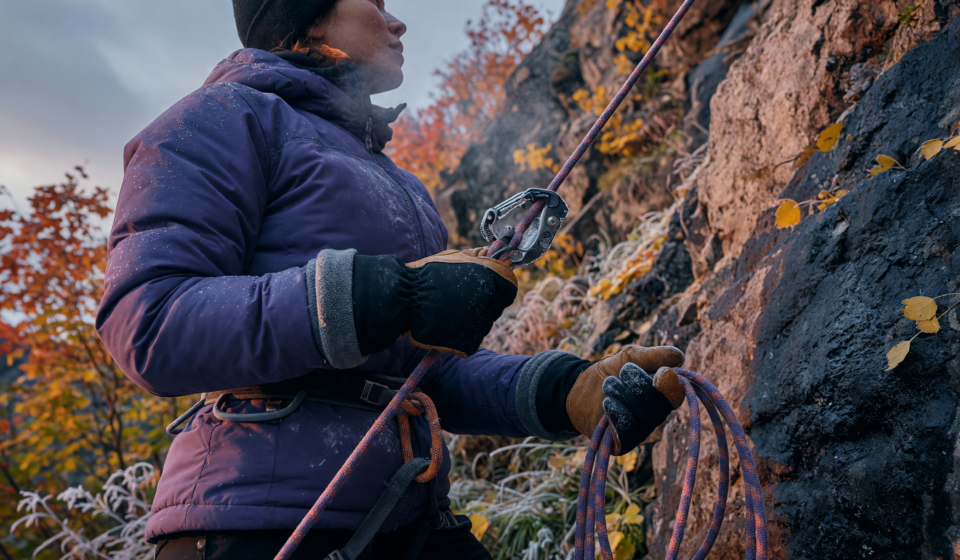
Belay gloves exist for two jobs, and warmth is only one of them. Their original purpose is protecting your hands from friction, heat, and abrasion generated when rope runs across your skin, which is why the palms are almost always leather. Full-grain cowhide or goatskin resists the burn of a fast-moving rope during a hard catch or a lowering, shrugs off abrasion from gritty ropes and sharp rock, and holds up to repeated hard use far better than synthetic fabric alone. In cold weather, a good leather belay glove does double duty by shielding your hands from wind and cold rock while preserving enough feel to run the rope.
The trade-off is dexterity. A thick, heavily insulated glove keeps you warmer but blunts your feel for the rope and makes device manipulation clumsier. The best cold-weather belay glove is the one that keeps your hands functional while still letting you operate your specific belay device confidently, so always test the combination before you rely on it.
- Leather palms: handle rope heat and abrasion that would shred thin synthetic gloves.
- Fit over bulk: a snug, articulated glove preserves the feel a loose, padded one destroys.
- Device compatibility: confirm you can smoothly load, feed, and brake with your actual belay device while gloved.
- Wrist coverage: a cuff or closure keeps wind and snow out of the gap at your sleeve.
👉 Shop leather belay gloves on Amazon (Ad — as an Amazon Associate, we earn from qualifying purchases.)
Building a Cold-Weather Hand System That Still Works
Warm hands rarely come from one perfect glove. They come from a system you can adjust as the day and the task change. The guiding principle is to keep your hands as warm as possible while climbing and belaying, then add insulation aggressively during the long, still moments when you are not moving, because that is when heat drains away. Thin liner gloves can keep your hands functional for delicate tasks, while a warmer over-glove or a dedicated insulated belay glove takes over during a long stance.
- Liner layer: a thin glove that maintains feel for clipping, knots, and device work.
- Belay layer: a warmer leather-palmed glove for the stance, where you are static and losing heat.
- Stay dry: wet gloves lose insulation fast, so keep a dry backup pair sealed in your pack.
- Warm before you go numb: it is far easier to keep warm hands warm than to rescue frozen ones.
👉 Shop liner glove and insulated over-glove system on Amazon (Ad — as an Amazon Associate, we earn from qualifying purchases.)
Supplemental heat sources earn their weight on cold days. Chemical or rechargeable hand warmers tucked into a jacket pocket give you somewhere to reheat between pitches, and a warm belay parka keeps your core happy so your body stops rationing blood to your fingers. Remember that hand warmth starts with core warmth: if your torso is cold, your body will keep clamping down on circulation to your hands no matter how good your gloves are.
👉 Shop hand warmers and insulated belay parka on Amazon (Ad — as an Amazon Associate, we earn from qualifying purchases.)
Managing Numb Hands and the Hot Aches on the Wall
Sooner or later, cold-weather climbers meet the rewarming pain climbers call the hot aches or the screaming barfies, that intense, throbbing burn as blood floods back into cold fingers. It is genuinely disorienting and can be nauseating, and it tends to strike at the worst times, like mid-belay or just as you start a pitch. The pain is your circulation returning, but during that window your hands are unreliable, so plan around it rather than gutting it out with a life on the rope.
The safe move is to never let a numb hand be your only line of defense. If your brake hand goes numb while belaying, back it up. Redundancy is the whole point of good belay practice, and it matters most exactly when your body is compromised.
- Use an assisted-braking device: in cold conditions, a device that helps hold the load reduces how much a numb hand can cost you, though it never replaces an attentive brake hand.
- Rewarm proactively: stuff hands in your armpits or a warm pocket before numbness sets in, not after.
- Time your hot aches: if you can feel the rewarming pain coming, get off belay duty or into a secure stance first.
- Communicate: tell your partner when your hands are compromised so they can slow the pace or wait.
Planning a Cold Day That Protects Your Hands
Most cold-hand emergencies are really planning failures that showed up hours later. Before you leave the car, check the forecast for both temperature and wind, since the NWS wind chill guidance makes clear that a windy stance can push you toward frostbite far faster than a calm one at the same reading. Broader cold-stress guidance from occupational safety agencies like OSHA and NIOSH echoes the same fundamentals for anyone working outdoors in the cold: dress in layers, keep extremities covered, stay dry, and take warming breaks before you are in trouble.
- Read the wind, not just the temperature: a breezy belay ledge changes your timeline dramatically.
- Shorten exposure: plan efficient transitions so nobody stands static in the wind longer than necessary.
- Pick sun and shelter: a sun-warmed, wind-sheltered belay stance is a legitimate safety feature.
- Know when to bail: if hands cannot stay functional, the responsible call is to descend, not to keep climbing on compromised grip.
The Bottom Line
Cold-weather climbing rewards preparation and punishes bravado, and nowhere is that clearer than in your hands. When temperatures drop, your fingers lose feeling, your grip loses power, and your ability to run a belay quietly erodes, often before you notice. Treat leather belay gloves, a flexible layering system, supplemental warmth, and a plan for numb hands as core safety gear, not comfort extras. Respect what the National Weather Service says about wind chill, treat frostnip as the warning it is, and never let a hand you cannot feel be the only thing standing between your partner and the ground. Warm, working hands are what keep the crisp, beautiful days of cold-season climbing on the right side of the line between adventure and accident.
Disclaimer: This article is for general educational purposes only and is not medical, professional, or safety-certification advice. Rock climbing and belaying are inherently dangerous activities that can result in serious injury or death. Always seek qualified instruction, inspect your own equipment, follow manufacturer instructions, and make your own judgments about conditions and risk. Seek medical attention for any suspected frostbite or cold injury.
Sources: National Weather Service / NOAA (wind chill and frostbite guidance); Mayo Clinic and Cleveland Clinic (frostnip and frostbite); U.S. Occupational Safety and Health Administration (OSHA) and the National Institute for Occupational Safety and Health (NIOSH) (cold stress guidance); and peer-reviewed research on the effects of cold on manual dexterity and grip strength.