
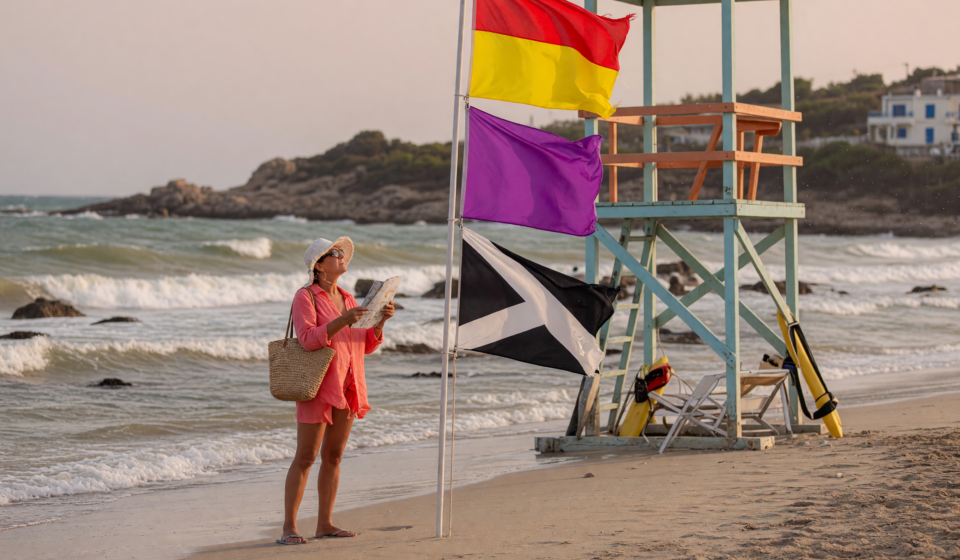
Travel Water Safety Abroad: Flags, Unfamiliar Currents and Local Rules
The water at a foreign beach can look exactly like the water back home, and that is precisely what makes it dangerous. The color is familiar, the sound of the surf is familiar, and the vacation mood tells you to wade right in. But the sandbar you cannot see, the current that runs the wrong way, and the flag flying on the lifeguard tower are all speaking a language you may not have learned yet. Good travel water safety starts with admitting that a beach you have never visited is a stranger, no matter how inviting it looks from your towel.
This guide walks through what actually keeps you safe on unfamiliar coastlines and waterways: how to read beach warning flags, how to survive a rip current instead of fighting it, what a life jacket label really means when you rent gear overseas, and how local rules and lifeguard coverage differ from what you know. Along the way we lean on the agencies that set the standards Americans travel with in mind, including the United States Lifesaving Association (USLA), the National Oceanic and Atmospheric Administration (NOAA), the U.S. Coast Guard (USCG), and the Centers for Disease Control and Prevention (CDC). The goal is not to scare you out of the water. It is to help you enjoy it with your eyes open.
Why Travel Water Safety Deserves Your Attention
Drowning is not a rare, freak event for people who travel. According to the CDC’s guidance for travelers, drowning accounts for roughly 14 percent of deaths of U.S. citizens who die abroad from injury. That number is sobering because the victims are so often strong, healthy adults on vacation, not people who set out to take a risk. The pattern is usually the same: an unfamiliar beach, no lifeguard, water that looked calmer than it was, and sometimes alcohol in the mix. The CDC’s advice is refreshingly plain, so it is worth repeating before anything else.
- Swim where lifeguards are: Choose beaches and pools with trained lifeguards on duty, and swim within the zone they watch.
- Learn the local conditions first: Ask about currents, tides, marine life, and posted rules before you get in, not after.
- Keep alcohol out of the water: The CDC warns that alcohol affects balance, coordination, and judgment, which are the exact things you need in surf.
- Never swim alone: A companion who can call for help changes the outcome of almost every water emergency.
Reading the Flags: A Color Code That Crosses Borders
Beach warning flags are one of the few genuinely international safety languages, but only if you know how to read them. In the United States, the USLA endorses a flag system built on guidelines the International Life Saving Federation developed in 2004, and many popular travel destinations use the same or a very similar scheme. Learning a handful of colors before your trip is one of the highest-value things you can do for your safety.
- Yellow: Medium hazard. Moderate surf or currents are present, so swim with caution.
- Red: High hazard. Rough conditions such as strong surf or dangerous currents are present.
- Double red: The water is closed to the public. This is not a suggestion.
- Purple: Dangerous marine life such as jellyfish or stingrays are present, though this flag is not about sharks specifically.
- Red over yellow: This area is patrolled by lifeguards and marks the supervised swimming zone.
- Black and white quartered: A zone set aside for surfboards and hard watercraft, not swimmers.
One important caveat for travelers: the green “low hazard” flag that many Americans expect is not universal. The International Life Saving Federation chose not to formally adopt a green flag, partly because “safe” is a promise no beach can honestly make. When in doubt, treat the absence of a warning flag as a reason to ask a lifeguard, not as a green light.
Traveler’s tip. Flag meanings can shift slightly from country to country, and the same color may carry a local twist. Photograph the flag key posted at the beach entrance when you arrive, so you can check it against the tower flag every time conditions change.
Rip Currents: The Hazard You Cannot Outswim
If there is one water hazard that catches confident swimmers off guard abroad, it is the rip current: a narrow, fast channel of water flowing away from shore. Rips do not pull you under; they pull you out. The instinct to swim straight back to the beach is exactly what exhausts people, because you are fighting a current that can move faster than an Olympic swimmer. NOAA’s long-running safety message, “Break the Grip of the Rip,” is built around not fighting it at all.
- Stay calm and float: Panic burns energy you cannot spare. Flip onto your back and float to keep your head above water.
- Do not swim against it: A rip is stronger than you are, so swimming straight for shore is a losing race.
- Swim parallel to the beach: Rips are narrow, so swimming along the shoreline usually moves you out of the channel.
- Angle back once you are free: When the pull relaxes, swim toward shore at an angle away from the rip.
- Wave and yell for help: If you cannot escape, face the beach, wave your arms, and call out so a lifeguard can reach you.
Before you swim at an unfamiliar beach, spend a few minutes reading the water. Rip currents often show up as a channel of choppier, darker, or foamier water cutting through the incoming waves, or as a gap where the waves are not breaking. If you are traveling somewhere with a national weather service, check whether it issues a rip current outlook the way NOAA’s National Weather Service does in the United States.
👉 Shop personal swim safety buoy / tow float for open-water swimmers on Amazon (Ad — as an Amazon Associate, we earn from qualifying purchases.)
Life Jackets and PFDs: Labels Change at the Border
When you rent a kayak, book a snorkeling boat, or take a ferry abroad, the life jacket handed to you may not carry the label you are used to. In the United States, the Coast Guard has been moving away from the old Type I through Type V categories toward a performance-based labeling system that is being harmonized with international and Canadian standards. Instead of telling you what a device is for, newer labels use buoyancy performance levels and icons showing what a device is not approved for.
- Look for a performance level: Newer U.S. and international jackets show buoyancy levels such as 50, 70, 100, or 150 rather than a type number.
- Higher numbers mean more flotation: A Level 50 is a minimal buoyancy aid for strong swimmers, while a Level 150 offers offshore flotation and can help turn some wearers face-up.
- Know that approval is jurisdictional: A device certified only by the USCG or only by another country is generally recognized in those waters, so a foreign-approved vest is normal abroad but may not satisfy U.S. rules back home.
- Fit beats rating every time: The best-rated jacket is useless if it rides up over your face, so check the chest strap and size panel before you leave the dock.
Do not assume the operator has done the safety math for you. Inflatable jackets need a charged CO2 cylinder and an intact firing mechanism; foam jackets need working buckles and no crushed, waterlogged panels. If a rented device looks tired, ask for another one. On a boat you have never been on, in water you have never swum, the vest is the one piece of gear standing between a bad moment and a tragedy.
👉 Shop travel-friendly USCG-approved inflatable life jacket / PFD on Amazon (Ad — as an Amazon Associate, we earn from qualifying purchases.)
Unfamiliar Currents, Tides and Cold Water
Rips get the headlines, but they are not the only current that surprises travelers. Tidal currents in inlets and channels can turn a calm morning paddle into a hard slog back, and they reverse on a schedule you may not know. Rivers can carry hidden strainers and undercut banks. And water temperature is its own trap: a lake or sea that feels pleasant on the surface can be cold enough underneath to trigger cold-water shock, which steals your breath and your strength in the first minute.
- Check the tide tables: Know when the tide turns before you swim, paddle, or wade out to a sandbar you could get stranded on.
- Respect cold water: Enter slowly, expect the gasp reflex, and remember that hypothermia can set in faster than distance to shore suggests.
- Scout entry and exit points: Know where you can safely get out before you get in, especially on rocky or steep-banked coastlines.
- Mind the offshore wind: A breeze at your back can push floats, boards, and tired swimmers away from shore quickly.
Local Rules, Lifeguard Coverage and Emergency Numbers
Water rules are local, and they exist because someone learned the hard way. Some beaches ban swimming outside patrolled hours; some ban inflatables because they drift; some require permits or guides for diving and snorkeling. Lifeguard coverage that Americans take for granted at busy beaches simply does not exist at many beautiful destinations, and where it does, the season and hours may be limited. Assume nothing and ask locally.
- Learn the local emergency number: It is not 911 everywhere. Save the destination’s equivalent and the nearest lifeguard or coast rescue contact.
- Obey posted signs even when others do not: A crowded beach is not proof the water is safe, only that many people are gambling.
- Understand the diver-down flag: If you snorkel or dive, know the local flag that tells boats a diver is below, and stay clear of it.
- Confirm the operator’s credentials: For dive trips and boat tours, ask about safety briefings, radios, and how they count heads.
Packing for the Water: Gear That Earns Its Space
You cannot pack a lifeguard, but you can pack a handful of items that meaningfully lower your risk. Sun protection keeps you clear-headed and out of the ER for heat illness; foot protection keeps a coral cut or urchin spine from ending your trip; and high-visibility gear makes you easier to spot from shore or a boat. Think of water gear as safety equipment first and comfort second.
- Water shoes: Protect against hot sand, sharp rocks, coral, and stinging creatures on unfamiliar seabeds.
- Bright swim cap or rash guard: High-visibility colors help lifeguards and boaters see you in chop.
- Reef-safe, water-resistant sunscreen: Sunburn and heat sap the judgment you need in the water, and many destinations now restrict certain sunscreen chemicals.
- A tow float or dry bag: For open-water swimmers, a bright buoy adds visibility and something to grab if you tire.
👉 Shop protective water shoes for rocky and reef beaches on Amazon (Ad — as an Amazon Associate, we earn from qualifying purchases.)
The Bottom Line
Water abroad rewards respect and punishes assumptions. The flags on the tower, the current beneath the surface, the label on your rented vest, and the rules posted at the trailhead are all trying to tell you something, and none of them care whether you are on vacation. Learn the flag colors before you go, promise yourself you will swim parallel to escape a rip, check every life jacket for fit and function, and never let a beautiful view talk you past a double red flag or an empty lifeguard chair. Do those few things and you keep the best part of any trip: coming home to tell the story. Treat every unfamiliar shoreline as a stranger worth getting to know slowly, and the water will stay the highlight of your travels rather than the danger in them.
Disclaimer: This article is provided for general educational purposes only and is not a substitute for professional instruction, local lifeguard guidance, or destination-specific safety information. Water conditions, flag systems, equipment standards, and local rules vary by location and change over time. Always follow the instructions of local authorities and lifeguards, and assess your own abilities before entering any body of water.
Sources: United States Lifesaving Association (USLA), Beach Warning Flags; National Oceanic and Atmospheric Administration (NOAA) and the National Weather Service, Rip Current Safety and “Break the Grip of the Rip”; U.S. Coast Guard (USCG), Personal Flotation Device labeling and approval guidance; Centers for Disease Control and Prevention (CDC), Travelers’ Health guidance on safe swimming and diving.