Children’s Bike Helmets Recalled for Failing the Federal Safety Standard
WASHINGTON, Sept. 10, 2026 — Federal safety regulators announced a new bicycle helmet recall this week, warning that a batch of children’s helmets sold on Walmart.com cannot be trusted to protect a young rider’s head in a crash. The U.S. Consumer Product Safety Commission (CPSC) said the Victgoal-branded helmets fail the mandatory federal standard for bicycle helmets, the latest in a string of low-cost, online-sold helmets pulled from the market in 2026 for the same reason.
What happened
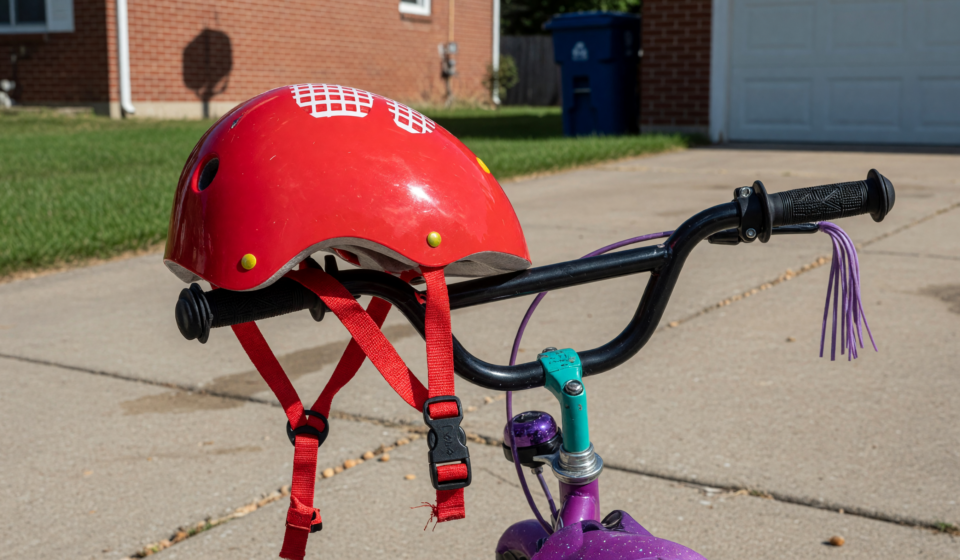
On September 10, 2026, the CPSC and importer Victgoal announced the recall of about 40 red children’s bicycle helmets (recall number 26-749). The affected helmets are size small, designed to fit a head circumference of roughly 19.68 to 21.25 inches, and were manufactured in November 2025. They carry the model designation “HT-006,” a production date of “2025/11,” and lot number “2025A1101,” and feature red padding, black straps with a silver reflective center pattern, a black-and-red buckle, and a black rear adjustment knob.
The helmets were sold on Walmart.com from March through June 2026 for between about $22 and $36. According to the CPSC, they violate the mandatory bicycle helmet standard because of failures in the retention system, positional stability, and certification requirements. In plain terms, the helmet may shift out of place or come off the head, and it was not properly certified to prove it can absorb an impact. No injuries had been reported at the time of the recall, but regulators are not waiting for one to act.
Why this bicycle helmet recall matters for safety
A bicycle helmet is personal protective equipment in the truest sense: its entire job is to manage a single, sudden impact and keep the forces reaching your skull below the threshold that causes serious brain injury. That protection only works if the helmet stays put and if the foam and shell perform the way the federal standard requires. When a helmet fails on retention or positional stability, it can rotate forward or slide off at the exact moment it is needed most, leaving the head exposed.
The certification failure is just as important, even though it sounds like paperwork. Under U.S. law, every bicycle helmet sold in the country must meet the CPSC’s mandatory safety standard (16 CFR Part 1203), which sets requirements for impact attenuation, strap strength, how far down the head the helmet must sit, and labeling. Manufacturers and importers must test to that standard and certify compliance. A helmet that was never properly certified has not demonstrated it can do the one thing it exists to do — and for a child, whose head is more vulnerable, that gap is especially serious.
What you should do
- Stop using the helmet now. If you bought a red Victgoal size-small children’s helmet on Walmart.com between March and June 2026, take it out of rotation immediately and do not let a child wear it.
- Check the markings. Look inside for model “HT-006,” production date “2025/11,” and lot number “2025A1101” to confirm whether your helmet is part of the recall.
- Contact the company for a refund. Email Victgoal at walmart@victgoal.com to arrange a full refund.
- Destroy it before disposal. The CPSC’s remedy asks owners to cut the straps, photograph the destroyed helmet showing the production date, send the photo to the company, and then throw it away so no one else uses it.
- Replace it right away. Do not simply go without. A child who rides needs a helmet that meets the federal standard on every trip.
What to do. Treat a recalled helmet as if it offers no protection at all. Cutting the straps before you throw it out prevents it from being fished out of the trash, handed down, or resold — a small step that keeps the hazard from finding another rider.
A pattern of noncompliant helmets in 2026
The Victgoal action does not stand alone. Throughout 2026, the CPSC has recalled a series of inexpensive bicycle helmets — many sold through large online marketplaces — for failing the same mandatory standard. In March 2026, ProRider recalled roughly 9,546 helmets (recall 26-320), including economy, BMX, and toddler models distributed by community groups and sold online, after they failed impact attenuation, positional stability, labeling, and certification requirements. Earlier, in January 2026, R.X.Y recalled about 170 adult helmets (recall 26-188) sold on Amazon.com for similar impact-attenuation, positional-stability, labeling, and certification failures.
The recurring theme is clear: low-priced helmets, often from lesser-known brands sold online, that never demonstrated compliance with the federal standard. None of these recalls listed reported injuries, which is a credit to regulators catching the products through testing and enforcement rather than after a tragedy. But it is also a reminder that a helmet’s price and appearance tell you nothing about whether it will actually protect you.
Context and what’s next
When you shop for a replacement, you can protect yourself with a few simple checks. Look inside the helmet for a permanent label stating that it meets the U.S. CPSC bicycle helmet standard — compliant helmets are required to carry that certification statement. Make sure the fit is correct: the helmet should sit level and low on the forehead, about two finger-widths above the eyebrows, with the side straps forming a “V” under each ear and the chin strap snug enough that the helmet barely moves when you shake your head. Replace any helmet that has taken a real impact, even if it looks fine, because the protective foam is designed to crush once.
The CPSC continues to test helmets and other consumer products and posts new recalls regularly at cpsc.gov. Consumers can also report an unsafe product or an injury through the agency’s database at SaferProducts.gov, which helps regulators spot dangerous items faster. For a piece of safety gear a family may reach for hundreds of times a season, confirming that a helmet meets the federal standard is one of the highest-value habits a rider — or a parent — can build.
Disclaimer: This article is for general safety information only and is not legal, medical, or professional safety advice. Recall details, unit counts, and remedies are drawn from official notices as published and may be updated by the issuing agency or company; always confirm the current status and instructions directly with the CPSC or the manufacturer before acting.
Sources: CPSC — Victgoal bicycle helmet recall (26-749); CPSC — ProRider bicycle helmet recall (26-320); CPSC — R.X.Y bicycle helmet recall (26-188); eCFR — 16 CFR Part 1203, Safety Standard for Bicycle Helmets.