Summer Cycling Hydration: Bottle Strategy, Electrolytes and Heat Signs
When the temperature climbs and the road shimmers ahead of you, cycling hydration stops being a background detail and becomes the single factor most likely to make or break your ride. Heat multiplies the fluid you lose, effort accelerates it, and by the time your legs feel heavy and your head starts to pound, you are already playing catch-up. A summer ride that felt easy in June can turn into a survival slog in July simply because you underestimated how fast your body was shedding water and salt.
The good news is that smart cycling hydration is not complicated, and it does not require expensive gadgets or laboratory sweat testing to get right. It comes down to a few durable habits: drinking on a schedule instead of waiting for thirst, replacing the sodium you lose on hot and long rides, carrying enough fluid for the route in front of you, and knowing the warning signs that separate ordinary fatigue from a genuine heat emergency. This guide walks through each piece so you can build a plan that keeps you riding strong through the hottest months of the year.
Why Heat and Effort Dehydrate You So Fast
Cycling in the heat stacks two dehydrating forces on top of each other. Hard pedaling generates a large amount of internal heat, and your body’s primary cooling system is sweat evaporating off your skin. On a hot, dry day, or when you are working hard on a climb, you can lose fluid faster than you might guess. Cyclists have an extra wrinkle compared with runners: the breeze created by riding evaporates sweat almost instantly, so you often do not feel drenched even when your losses are significant. That “dry” feeling fools a lot of riders into drinking too little.
Even modest fluid loss has a measurable cost. As dehydration sets in, blood volume drops, your heart has to work harder to pump, and your ability to shed heat declines. The practical result is a higher heart rate at the same effort, a perceived jump in difficulty, and a slow erosion of power. The American College of Sports Medicine notes in its position stand on exercise and fluid replacement that significant dehydration degrades both performance and your ability to regulate body temperature, which is exactly why summer riders need a deliberate plan rather than a hope for the best.
👉 Shop insulated cycling water bottles on Amazon (Ad — as an Amazon Associate, we earn from qualifying purchases.)
Cycling Hydration: How Much Should You Drink?
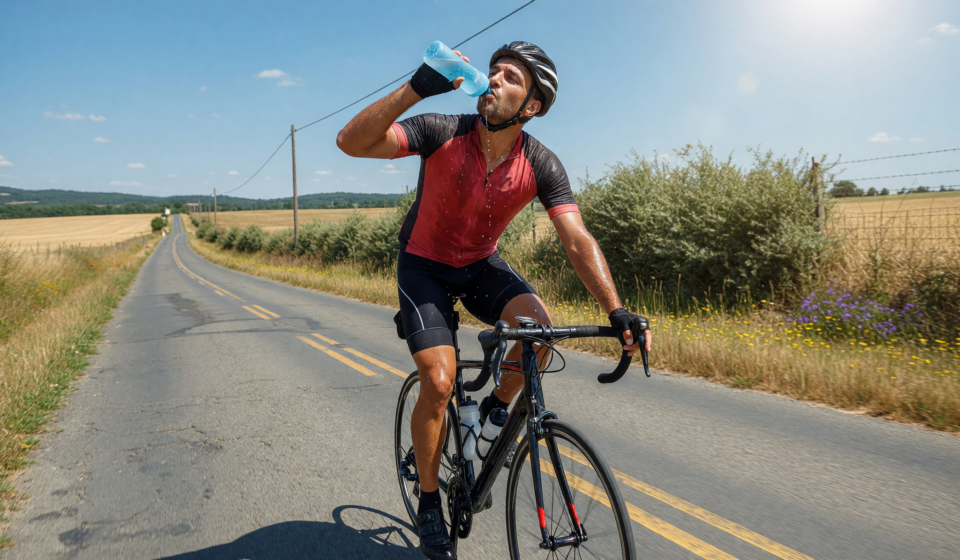
There is no single number that fits every rider, because sweat rates vary enormously with body size, fitness, temperature, humidity, and intensity. That said, a useful starting point for many cyclists is roughly one standard bottle per hour, then adjusting up in heat or on hard efforts. On a cool, easy spin you may need less; on a hot climbing day you may need considerably more. Treat that one-bottle figure as a baseline to calibrate from, not a fixed prescription.
The most important behavioral rule is to drink before you feel thirsty. Thirst is a lagging signal that usually kicks in after you are already somewhat behind, so waiting for it means chasing a deficit for the rest of the ride. Build these habits into your routine:
- Sip on a schedule: Take a few mouthfuls every 10 to 15 minutes rather than draining a bottle all at once when you finally notice you are dry.
- Start topped off: Arrive at the ride well hydrated. Pale-yellow urine before you clip in is a simple, reliable green light.
- Learn your own rate: Weigh yourself before and after a ride in similar conditions. A drop on the scale is mostly fluid, and it tells you roughly how much you failed to replace.
- Scale to the day: Heat, humidity, and hard efforts all push your needs higher, so plan to carry and drink more when the forecast is brutal.
Electrolytes and Sodium: More Than Just Water
Sweat is not just water. It carries electrolytes, and sodium is the one lost in the largest amount. On a short, cool ride, plain water and a normal diet handle your needs just fine. But as rides get longer and hotter, replacing sodium becomes part of the job. The American College of Sports Medicine recommends that fluids consumed during prolonged exercise contain sodium, both to help replace what sweat carries away and to encourage your body to hold onto the fluid you are drinking.
Practically, that means reaching for an electrolyte drink mix or sports drink once a ride stretches past about an hour of hard effort, or any time you are riding in serious heat. Some riders are “salty sweaters” who leave white crusty residue on their kit and jersey; if that is you, you likely need more sodium than average. Signs that your electrolyte balance is slipping include muscle cramps, an unusually heavy or flat feeling, and persistent fatigue that water alone does not fix.
👉 Shop endurance electrolyte drink mix on Amazon (Ad — as an Amazon Associate, we earn from qualifying purchases.)
Bottles vs. Hydration Pack: Choosing Your System
How you carry fluid matters as much as how much you carry. The two main options each have clear strengths, and plenty of riders switch between them depending on the ride.
- Bottles in cages: The classic road setup. Bottles are easy to refill, easy to clean, let you run one plain water and one electrolyte mix, and add no weight to your back. The trade-off is limited capacity, usually two bottles on a standard frame.
- Hydration pack: A bladder pack carries far more fluid and lets you sip hands-free through a hose, which is a real advantage on technical mountain-bike terrain or long backcountry routes with no resupply. The trade-offs are a warmer back, more sweat, and more effort to clean.
For most summer road rides, insulated bottles keep fluid cooler and are simpler to manage. For long gravel adventures, mountain biking, or any route where refills are scarce, a hydration pack buys you range and peace of mind. Many riders combine both: bottles for electrolyte mix and easy access, a pack for backup water on the biggest days.
👉 Shop a cycling hydration pack on Amazon (Ad — as an Amazon Associate, we earn from qualifying purchases.)
Planning Water on Your Route
Carrying enough fluid is only half the equation; the other half is knowing where you can refill. Two bottles will not carry a rider through a four-hour summer epic, so plan your resupply before you leave the driveway. A little forethought here is the difference between a comfortable ride and a grim crawl home on an empty bottle.
- Map your stops: Identify gas stations, cafes, parks, and public water fountains along the route, and note how far apart they are.
- Carry for the gap: Make sure your capacity covers the longest stretch between reliable refill points, not just the average.
- Bring a backup plan: Cash or a card, and knowledge of where a convenience store sits, can rescue a ride when a fountain turns out to be shut off.
- Pre-cool your fluid: Cold drinks are more palatable in heat, so you drink more. Freezing one bottle overnight gives you cool fluid deep into the ride.
👉 Shop secure bike bottle cages on Amazon (Ad — as an Amazon Associate, we earn from qualifying purchases.)
Spotting Dehydration and Heat Illness
Knowing the warning signs lets you act before a bad situation becomes dangerous. Early dehydration tends to show up as thirst, a dry mouth, headache, dizziness, dark or infrequent urination, and a general sense that your legs have nothing left. Catch it early by drinking, easing your pace, and getting into shade, and you can usually turn things around.
Heat illness is more serious and progresses along a spectrum. According to the Centers for Disease Control and Prevention, heat exhaustion involves symptoms such as heavy sweating, headache, nausea, dizziness, weakness, irritability, thirst, and an elevated body temperature. If you or a riding partner show these signs, stop immediately, move to shade or air conditioning, remove excess gear, sip fluids, and cool the body with water. Heat stroke is the critical escalation: the CDC lists confusion, altered mental status, slurred speech, seizures, loss of consciousness, hot skin that may be dry or sweating, and a very high body temperature, which can climb dangerously fast.
Heat stroke is a life-threatening medical emergency. If a rider becomes confused, disoriented, stops sweating, or loses consciousness, call 911 immediately and begin cooling the body while you wait for help. Do not wait to see if it passes.
The single most important distinction to remember on the road: heat exhaustion is a signal to stop and cool down, while heat stroke, marked by confusion or collapse, is a 911 call. When in doubt, treat it as the emergency and get professional help moving.
The Over-Hydration Trap: Hyponatremia
Drinking more is not always safer. The flip side of dehydration is exercise-associated hyponatremia, a genuinely dangerous condition that comes from drinking too much plain water. When you flood your system with large volumes of water and little sodium, especially over long rides, the sodium concentration in your blood becomes diluted. During prolonged exercise the kidneys cannot clear the excess fast enough, and the resulting low blood sodium can cause nausea, headache, confusion, and in severe cases swelling of the brain that can be fatal.
The confusing part is that hyponatremia and dehydration can look similar early on, with headache and nausea in both. The protective strategy, echoed by sports-medicine sources such as the Gatorade Sports Science Institute, is to avoid drinking far beyond your losses and to include sodium in your fluids on long or hot rides rather than chugging endless plain water. Match your intake to your sweat rate, use an electrolyte mix when rides stretch long, and do not force down water past the point of comfort. Balance, not maximum volume, is the goal.
The Bottom Line
Good summer cycling hydration is a plan, not a reflex. Start every ride well hydrated, drink on a schedule before thirst arrives, and use roughly a bottle an hour as your baseline while adjusting up for heat and hard efforts. Add sodium through an electrolyte mix once rides get long or the day gets hot, choose a carrying system that matches your route, and map your refills so you never run dry. Above all, learn the warning signs: cool down at the first hint of heat exhaustion, treat confusion or collapse as a 911 emergency, and remember that drowning yourself in plain water carries its own risk. Get the balance right, and the heat becomes just another variable you have already planned for.
Disclaimer: This article is for general informational purposes only and is not medical advice. Individual hydration needs vary widely, and heat-related illness can be life-threatening. Consult a qualified healthcare professional for guidance specific to your health, and call 911 in a suspected medical emergency.
Sources: Centers for Disease Control and Prevention (CDC), Heat-Related Illnesses; American College of Sports Medicine (ACSM), Position Stand on Exercise and Fluid Replacement; Gatorade Sports Science Institute, Hyponatremia in Athletes; National Weather Service and USA Cycling heat-safety and hydration guidance.