OSHA Heat Rule Heads Toward a December 2026 Supplemental Proposal
WASHINGTON — The long-debated OSHA heat rule in 2026 is still a proposal, not a finished regulation, and the federal government’s latest regulatory agenda now points to a fresh round of rulemaking rather than a quick finish. According to the Office of Information and Regulatory Affairs, the Occupational Safety and Health Administration’s “Heat Injury and Illness Prevention in Outdoor and Indoor Work Settings” standard (RIN 1218-AD39) remains in the proposed rule stage, with a supplemental notice of proposed rulemaking targeted for December 2026 and final action listed for October 2027. Those dates are planning estimates, and OSHA has not committed to a firm effective date.
For anyone who works, supervises, or outfits crews in the heat — from construction and warehousing to agriculture, kitchens, and manufacturing — the takeaway is simple: there is still no federal heat-specific standard on the books. What exists today is a detailed proposal, a public record built from hearings and comments, and OSHA’s continued authority to cite dangerous heat exposure under the General Duty Clause.
What the OSHA heat rule proposes in 2026
OSHA published the proposed rule in the Federal Register on August 30, 2024. It would apply broadly to employers across general industry, construction, maritime, and agriculture where the agency has jurisdiction, covering both indoor and outdoor work. At its core, the proposal is built around two temperature trigger points measured by heat index, each unlocking a different set of employer obligations.
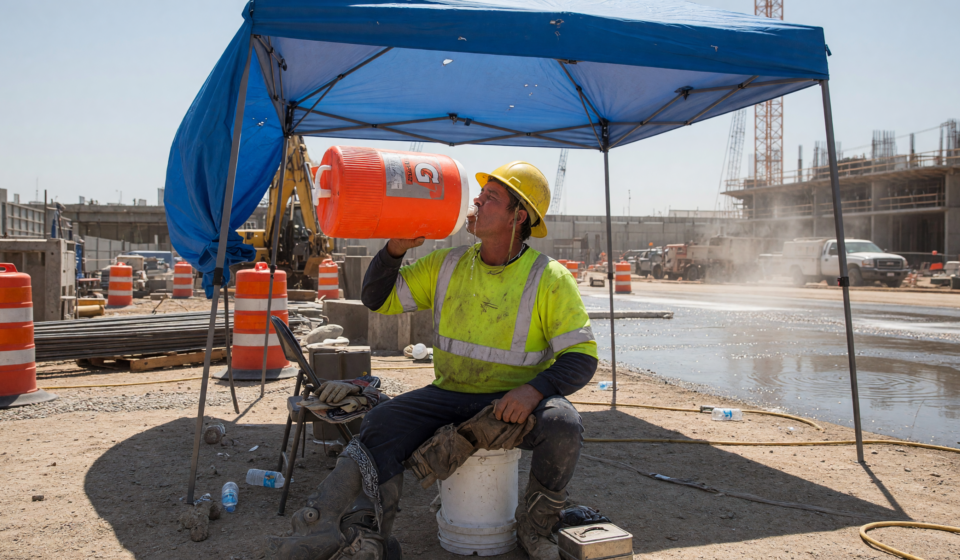
- Initial heat trigger — 80°F heat index: Employers would provide cool drinking water in readily accessible locations, paid rest breaks as needed, indoor cooling or fans, an acclimatization schedule for new and returning workers, and access to shade or a cool-down area.
- High heat trigger — 90°F heat index: Additional measures would kick in, including hazard alerts on hydration and breaks, a system to observe workers for signs of heat illness, and mandatory paid 15-minute rest breaks at least every two hours in a cooled space.
- Written plan: Covered employers would develop a heat injury and illness prevention plan to evaluate and control heat hazards at each worksite.
- Training and records: The proposal would require worker and supervisor training on heat risks and response, plus recordkeeping tied to the plan.
These figures come from the proposed regulatory text and OSHA’s own summaries. Because they sit inside a proposal, the specific thresholds, water quantities, and break intervals could change before anything becomes enforceable — which is precisely what a supplemental proposal is designed to allow.
Why it matters for safety
Heat is a serious and often underestimated workplace hazard. It can escalate quickly from cramps and exhaustion to heat stroke, and it also raises the odds of other incidents when workers become fatigued, dizzy, or disoriented around equipment, vehicles, or heights. A dedicated standard would, in OSHA’s words, “more clearly establish enforceable employer obligations for protecting workers from excessive heat,” replacing today’s case-by-case reliance on the General Duty Clause with defined triggers and steps.
Just as important for employers is the enforcement picture around the proposal. OSHA’s National Emphasis Program on heat — the initiative that drove targeted inspections of high-risk workplaces — was extended through April 8, 2026, and the agency has not publicly announced a renewal beyond that date. Whether or not the emphasis program continues, heat-related inspections and General Duty Clause citations remain possible, so hazard controls should not wait on a final rule.
What it means for you
For workers, the practical protections that reduce heat illness are well established regardless of regulatory timing: drink water before you feel thirsty, take rest breaks in shade or cooled areas, ease back into full exertion after time away, and speak up early if you or a coworker feels faint, nauseated, or stops sweating. Knowing the warning signs of heat exhaustion and heat stroke saves lives.
For employers and safety managers, the proposed structure is a reasonable blueprint to adopt voluntarily now, even before it is finalized. A written heat plan, an acclimatization schedule for new hires and returning crews, reliable access to cool water, scheduled breaks, and trained supervisors who can spot early symptoms are all defensible practices that align with where the rule is heading. Several states already run their own heat standards, so multi-state operations may face requirements regardless of the federal timeline.
Clothing and gear play a supporting role, too. Breathable, moisture-wicking fabrics, light colors, cooling accessories, and proper hydration supplies can help crews stay within safe limits during peak heat — practical additions that complement, but never replace, water, rest, and shade.
Bottom line. There is no federal heat standard in force yet. OSHA’s proposal is advancing toward a supplemental version expected in December 2026, with a final rule not anticipated before October 2027 — and even those dates are estimates that could slip.
What happens next and the timeline
Here is where the rulemaking stands based on the public record:
- August 30, 2024: OSHA publishes the proposed rule in the Federal Register.
- January 14, 2025: Initial public comment period closes.
- June 16 – July 2, 2025: OSHA holds an informal public hearing.
- October 30, 2025: Post-hearing comment period closes.
- December 2026 (targeted): Supplemental notice of proposed rulemaking, per the Unified Agenda.
- October 2027 (targeted): Final action listed on the regulatory agenda.
A supplemental proposal typically signals that an agency has substantially revised its approach or that significant time has passed since the original notice, and it usually reopens a comment window. That means stakeholders would likely get another chance to weigh in before any standard is finalized. It also means employers should treat December 2026 and October 2027 as moving targets: regulatory agenda dates are estimates, and previous administrations have missed them. We will update this story as OSHA acts.
Disclaimer: This article is a news summary for general information and is not legal or compliance advice. Rule status, dates, and requirements can change. Always consult the official rulemaking record and the final published text, and seek qualified counsel for decisions affecting your workplace.
Sources: OIRA Unified Agenda, RIN 1218-AD39 (Heat Injury and Illness Prevention); OSHA — Heat Injury and Illness Prevention Rulemaking; Federal Register — Proposed Rule (Aug. 30, 2024).