
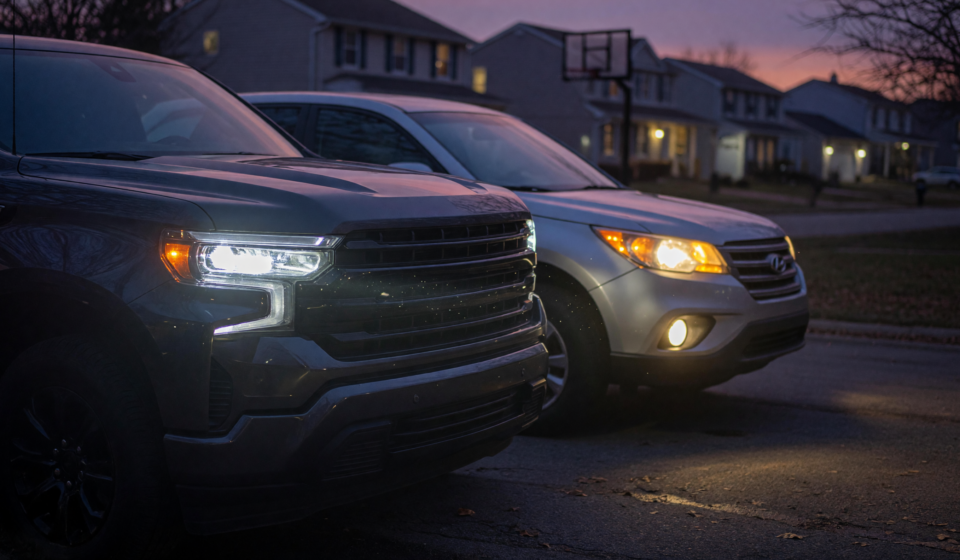
Ford Recalls 41,748 Trucks and SUVs Over Headlights That Can Dim or Fail
DEARBORN, Mich. — Ford Motor Company is recalling 41,748 trucks and SUVs across the United States because their headlights can dim or go dark, a defect that can quietly erase the margin of safety every driver depends on after sunset. The Ford headlight recall, filed with the National Highway Traffic Safety Administration (NHTSA) as campaign 26V606 and reported widely in early October 2026, covers certain 2026 Super Duty pickups and 2025–2027 Expedition SUVs whose LED headlamp assemblies may contain contaminated LED chips. The agency warns that a loss of exterior lighting reduces how well a driver can see the road and how easily other motorists can see the vehicle, raising the risk of a crash.
What happened
According to Ford’s defect report submitted to NHTSA on September 22, 2026, the problem traces back to the facility of a sub-supplier that produces the LED chips used inside the headlamp assemblies. Those chips can be contaminated during manufacturing, and over time the contamination can cause the lamps to dim or stop working altogether. On Super Duty trucks, that can mean diminished or inoperative daytime running lights and parking lamps; on both the Super Duty and Expedition models built with LED reflector headlamps, it can mean weak or dead low beams, high beams, or both.
The recalled vehicles were built across a span running from mid-2025 into the summer of 2026. By model, the campaign covers 17,512 F-250 Super Duty trucks, 10,295 F-350 Super Duty trucks, 523 F-450 Super Duty trucks, and 120 F-550 Super Duty trucks from the 2026 model year, plus 13,298 Ford Expedition SUVs from the 2025 through 2027 model years. Ford has assigned the action its own reference number, 26C43, and the components were produced by the Tier 1 supplier Flex-N-Gate. Ford says no crashes or injuries had been reported in connection with the defect at the time the recall was filed.
Why the Ford headlight recall matters for safety
Headlights are among the most underappreciated pieces of safety equipment on any vehicle. They do two jobs at once: they let you see hazards far enough ahead to react, and they let everyone else — oncoming drivers, pedestrians, cyclists, and roadside workers — see you coming. When output drops, both jobs degrade together. That is why this Ford headlight recall invokes Federal Motor Vehicle Safety Standard No. 108, the federal rule that governs how bright and reliable vehicle lighting must be.
The timing compounds the concern. With daylight saving time ending November 1, millions of commuters will suddenly be driving home in the dark, and the long nights of late fall and winter are when visibility-related crashes climb. A headlamp that fails intermittently, or that dims gradually, is especially dangerous because a driver may not notice the loss until they are already in a low-light situation. The one piece of good news built into the defect: Ford says a dashboard indicator light will illuminate for drivers whose low or high beams become inoperative, giving an early warning that something is wrong.
What you should do
If you own one of the affected trucks or SUVs — or you are not sure — a few minutes of checking now can prevent a dangerous surprise on a dark highway later.
- Check your VIN: NHTSA expects to have the recalled vehicle identification numbers searchable by October 26, 2026. Enter your 17-character VIN at the agency’s recall lookup tool to confirm whether your specific vehicle is included.
- Watch for the warning light: Ford says a dashboard indicator will light up if a low or high beam stops working. Do not ignore it, and do not assume a single working headlight is good enough.
- Inspect your lights yourself: Before driving at night, walk around the vehicle with the headlights on and confirm that both low beams, high beams, daytime running lights, and parking lamps are bright and steady.
- Schedule the free repair: Dealers will inspect both headlamp assemblies at no charge and replace any that fail the inspection with parts free of the contamination. There is no cost to the owner.
- Keep an eye on your mailbox: Ford expects to begin mailing owner notification letters between November 6 and November 13, 2026, in a phased rollout. You do not have to wait for the letter to contact a dealer.
What to do. If a headlight on your Ford looks dim, flickers, or goes out, or the dashboard warning illuminates, treat it as a safety issue, not a cosmetic one. Avoid night driving in that vehicle until it is inspected, and call a Ford or Lincoln dealer or Ford’s recall line at 1-866-436-7332 to arrange the free fix.
Context and what’s next
Lighting defects have become a recurring theme in federal vehicle recalls, and they rarely make the dramatic headlines that fire or steering failures do. Yet poor visibility is a factor in a large share of nighttime crashes, and the consequences fall hardest on the people outside the vehicle — pedestrians and roadway workers chief among them. For anyone who works near traffic, from utility crews to flaggers in high-visibility PPE, a vehicle with failing headlights is a direct hazard, which is why a dimming-headlamp recall belongs in the same safety conversation as hard hats and reflective vests.
Dealers are scheduled to be notified between October 26 and October 30, 2026, and the remedy — a free inspection and, where needed, replacement of the affected headlamp assemblies — is already defined, so owners should not face a long wait for parts guidance. Owners who believe their vehicle is affected but who have trouble getting it serviced can file a complaint with NHTSA, which monitors whether manufacturers complete recall repairs. As always, the single most effective step is the simplest one: confirm your VIN, look at your lights, and get the repair booked before the darkest months of the year set in.
Disclaimer: This article is for general safety information only and is not a substitute for official guidance from Ford or federal regulators. Vehicle counts, dates, and remedy details are drawn from the manufacturer’s recall report and may be updated as the recall proceeds. Always verify whether your specific vehicle is affected using your VIN and follow the instructions in your official owner notification letter.
Sources: NHTSA Part 573 Safety Recall Report 26V606 (Ford Motor Company); Fox Business: Ford recalls more than 40,000 trucks and SUVs over visibility risk; NHTSA Recalls VIN lookup tool.