
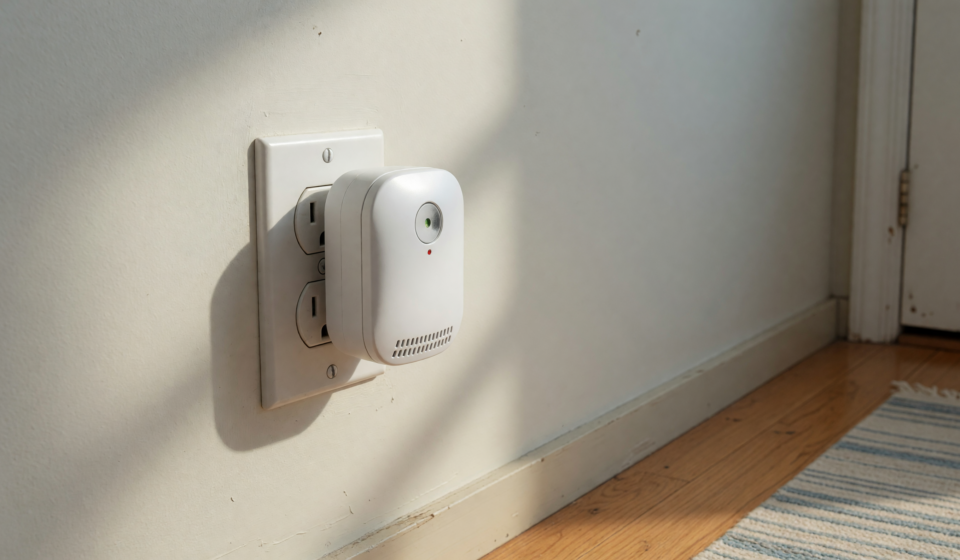
CPSC Warns: Toss These 4-in-1 Carbon Monoxide Detectors That Can Fail to Alarm
WASHINGTON — On August 20, 2026, the U.S. Consumer Product Safety Commission (CPSC) issued an urgent carbon monoxide detector warning, telling households to stop using and immediately dispose of a widely sold plug-in alarm that can fail to sound when carbon monoxide is present. The warning covers about 376,974 “4 in 1” Plug in Natural Gas and Carbon Monoxide Detectors, model KH158, sold online under more than a dozen different brand names. Because carbon monoxide is invisible and odorless, a detector that stays silent removes the only warning many families would ever get.
What happened
The CPSC said the KH158 detectors “can fail to alert consumers to the presence of hazardous carbon monoxide.” The agency has received 91 reports of the units failing to alarm during gas or carbon monoxide leaks. The detectors were sold through Amazon.com, eBay.com, AliExpress, microcenter.com, and snapklik.com between June 2024 and July 2026, at prices ranging from about $13 to $140. The same device reached buyers under many different labels — brand names cited include ARIKON, ELECOIN, FLUNGSKY, Hembisen, KH Alert, JNHCD, Sooguard, and NICGOL, among others — so the alarm on a shelf may not say “KH158” anywhere obvious, even though the model number identifies it.
Unlike most safety actions, this is a warning rather than a recall. The manufacturer, Shenzhen Kanghua Shengshi Industrial Co., Ltd., doing business as KH Alert, has not agreed to recall the detectors. That means there is no refund program and no replacement offer from the company. The CPSC issued the warning independently and is urging the public to act on their own.
Why this carbon monoxide detector warning matters for safety
Carbon monoxide, or CO, is often called the silent killer for good reason. It has no color, no smell, and no taste, and it is produced any time fuel burns incompletely — from furnaces, water heaters, gas ranges, fireplaces, portable generators, and vehicles left running in attached garages. At low levels it causes headaches, dizziness, nausea, and confusion that people easily mistake for the flu; at higher levels it can render a person unconscious and kill within minutes. A working alarm is frequently the only thing standing between a sleeping household and a fatal exposure.
That is what makes a detector that does not alarm uniquely dangerous. A home with no detector at least offers no false comfort. A home with a KH158 unit plugged into the wall gives its occupants a reason to believe they are protected while providing no protection at all. The failure does not just leave a gap — it can actively discourage the family from noticing a problem or installing a device that works. That combination of low price, broad online distribution under many names, and a false sense of security is exactly why the CPSC escalated to a public warning.
What you should do
- Stop using it now. If you have a plug-in 4 in 1 natural gas and carbon monoxide detector, check for model KH158 on the housing or packaging. The CPSC says to stop using and dispose of these products immediately rather than continuing to rely on them.
- Do not resell or pass it along. The agency also urges consumers not to purchase or sell these detectors. Handing a failed alarm to a neighbor, tenant, or family member simply moves the hazard.
- Replace it the same day. Because there is no refund or replacement from the manufacturer, plan to buy a new, working carbon monoxide alarm right away. Do not leave your home unprotected in the gap.
- Install on every level. Place CO alarms on each floor of the home and near sleeping areas so an alarm can wake everyone at night.
- Report a problem. If your detector failed to alarm during a known leak, file a report at SaferProducts.gov to help the CPSC track the hazard.
What to do. Treat any KH158 alarm as if it is not there. Unplug it, replace it today with a UL 2034 listed carbon monoxide alarm, and test the new unit with its onboard button before you count on it.
How to choose a detector you can trust
When you replace a KH158 unit, look for alarms that meet the UL 2034 standard for single- and multiple-station carbon monoxide alarms — the mark that tells you a detector has been tested to sound at defined CO concentrations and times. The CPSC recommends installing a CO alarm on every level of the home, choosing battery-operated models or units with battery backup so protection continues during a power outage, and testing alarms regularly. Combination smoke-and-CO alarms are fine as long as they carry the appropriate listings. Replace the entire unit at the end of its service life, which is typically printed on the back and is often five to ten years depending on the model.
It is also worth pairing detectors with prevention. Have fuel-burning appliances and chimneys inspected each year, never run a generator, grill, or camp stove indoors or in an attached garage, and never warm up a car in a closed garage. Detectors are the last line of defense; keeping combustion equipment maintained and vented is the first.
Context and what’s next
The KH158 warning is part of a broader pattern the CPSC has flagged in recent years: cheaply made gas and carbon monoxide alarms sold through online marketplaces under rotating brand names, sometimes reaching hundreds of thousands of buyers before problems surface. Similar warnings have been issued for other imported combination detectors that failed testing. When a foreign manufacturer declines to cooperate with a recall, the agency’s main tool is a public warning like this one, which is why the responsibility to remove the product falls largely on consumers and retailers.
For readers, the practical takeaway is durable well beyond this single model. Carbon monoxide safety does not depend on any one alarm brand; it depends on having a properly listed, working detector on every level of your home and replacing any device you cannot verify. If you are not certain your alarm meets a recognized standard, the safest move is to treat it as suspect and upgrade.
Disclaimer: This article is for general safety information only and is not a substitute for the official recall or warning notice. Product details, unit counts, and remedies can change as investigations continue. Always confirm the current status and instructions directly with the CPSC and the manufacturer before acting.
Sources: CPSC Warning, Aug. 20, 2026; CPSC Recalls & Product Safety Warnings; Medical Daily coverage.