Ford Recalls 741,195 Trucks and SUVs Over Rollaway Risk — Set Your Parking Brake
WASHINGTON, July 2026 — Ford has issued a large Ford rollaway recall covering 741,195 pickups and SUVs after federal safety regulators flagged a transmission defect that can leave a vehicle in gear even after the driver shifts to Park. Filed with the National Highway Traffic Safety Administration (NHTSA) under campaign number 26V402, the recall targets a fault in the transmission’s park mechanism that can allow a parked vehicle to roll away if the driver has not set the electronic parking brake. Ford says the fix involves a software update and a dealer inspection, but until repairs are complete, the company and NHTSA are urging owners to take one simple precaution every single time they park.
What happened
According to the recall documents, a transmission valve body separator plate can restrict fluid flow to the park valve. In plain terms, that can let the parking pawl — the small mechanical component that locks the transmission when you shift into Park — briefly engage while the vehicle is still moving, and it can also keep the transmission from fully holding in Park once stopped. The result is a vehicle that may not stay put on its own. If the driver relies only on shifting to Park and does not apply the parking brake, the vehicle can move unexpectedly, a hazard commonly described as a rollaway.
The recall spans several popular models across multiple model years: 2018–2021 Ford Expedition and Lincoln Navigator, 2020–2021 Ford Explorer and Lincoln Aviator, and 2021 Ford F-150 trucks. Ford has reported dozens of related claims to regulators — including allegations of property damage and a smaller number of alleged injuries — though the company has not linked the defect to any fatalities. Because the affected vehicles include some of the best-selling trucks and SUVs on American roads, the total number of units involved is substantial.
Why this rollaway recall matters for safety
Rollaway incidents are dangerous precisely because they happen when people least expect them. A driver steps out to open a gate, unload groceries, or check a trailer hitch, trusting that a vehicle “in Park” will stay in Park. When it does not, a multi-ton truck or SUV can begin moving on its own — and the person most at risk is often standing right beside or behind it. On even a slight incline, an unsecured vehicle can pick up enough speed in seconds to injure a bystander, strike another vehicle, or roll into a structure.
The concern is amplified in worksite and fleet settings, where large Ford trucks and SUVs are staples. Crews frequently exit and re-enter vehicles on uneven ground, near coworkers, and around heavy equipment. A vehicle that will not reliably hold in Park introduces a struck-by hazard that no amount of high-visibility clothing can fully cancel out. For anyone who manages a fleet or supervises a jobsite, this recall is a reminder that vehicle safety systems are part of the overall hazard picture, right alongside personal protective equipment and traffic-control planning.
What you should do
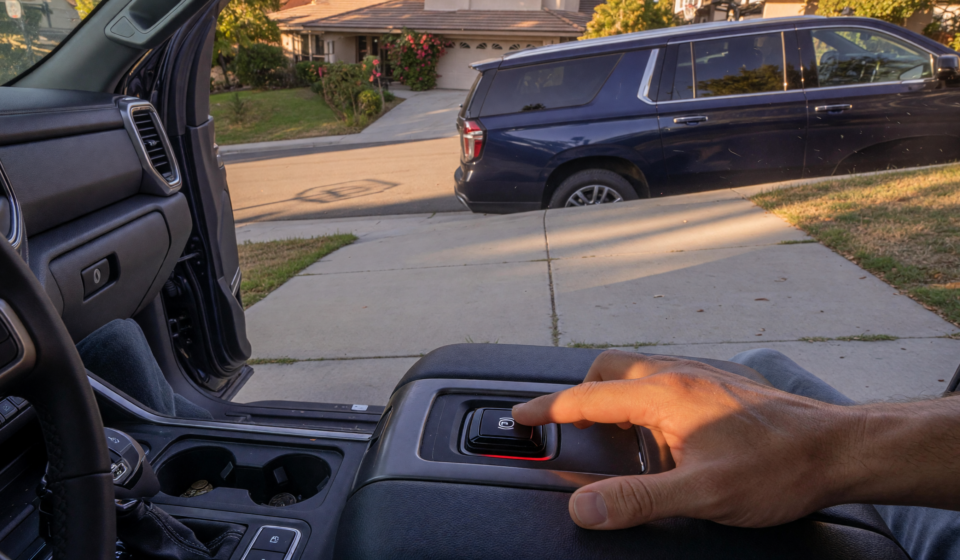
The good news is that the single most effective protection is something you can start doing today, at no cost: use the parking brake every time you park, no matter how flat the ground looks. Both Ford and NHTSA emphasize that applying the electronic parking brake keeps the vehicle secured even if the transmission park function does not hold.
- Check your VIN: Enter your Vehicle Identification Number at NHTSA.gov/recalls to confirm whether your specific vehicle is included in campaign 26V402.
- Always set the parking brake: Make it a habit for every stop until your vehicle is repaired — this is the primary safeguard against a rollaway.
- Watch for warning signs: Harsh or unusual shifting, a wrench or warning light, or any sensation that the vehicle moves after you shift to Park should prompt a call to your dealer.
- Never assume “Park” is enough: Do not leave passengers, pets, or valuables unattended relying on the transmission alone, and avoid parking on slopes where possible.
- Contact the right people: Ford’s customer service line for recall questions is 1-866-436-7332, and NHTSA’s Vehicle Safety Hotline is 1-888-327-4236.
What to do right now. If you drive a 2018–2021 Expedition or Navigator, a 2020–2021 Explorer or Aviator, or a 2021 F-150, set your parking brake every time you stop — even on level ground — and check your VIN at NHTSA.gov/recalls to see whether recall 26V402 applies to you.
Context and what’s next
Ford has told regulators that interim notification letters will begin reaching owners in early August 2026, explaining the defect and reiterating the parking-brake guidance. The company plans to have dealers update the powertrain control module software, inspect the transmission, and replace any damaged park-system components at no charge to the owner. According to the recall timeline, the permanent remedy is not expected to be fully available until 2027, which is why the parking-brake habit is so important in the meantime.
This action is part of a broader pattern of vehicle recalls in 2026, and Ford has publicly framed its rising recall numbers as the product of a more aggressive strategy to identify and fix hardware and software problems quickly. For consumers, the practical takeaway is straightforward: recalls are only effective when owners act on them. Historically, a meaningful share of recalled vehicles are never brought in for repair, which leaves known hazards on the road for years. Confirming your VIN and scheduling the free repair once parts are available is the surest way to close the loop.
Rollaway recalls also underscore a broader safety principle that applies far beyond any one automaker: mechanical and electronic safeguards can fail, so building in a backup habit — like always engaging the parking brake — protects you when a primary system does not perform as designed. That layered, “don’t rely on a single point of failure” mindset is exactly the approach that keeps people safe around vehicles, machinery, and the worksite every day.
Disclaimer: This article is for general safety information only and is not legal, medical, or professional automotive advice. Recall details, model coverage, and repair timelines can change; always verify your vehicle’s status directly with the manufacturer and NHTSA using your VIN, and follow official guidance for your specific vehicle.
Sources: Fox Business; NHTSA Recalls; WardsAuto; Autoblog.