
Roadside Emergency Kit: What Every Driver Should Carry
Nobody plans to break down. Yet flat tires, dead batteries, and sudden stalls happen to careful drivers every single day, often miles from the nearest exit and rarely at a convenient hour. The difference between a stressful inconvenience and a genuinely dangerous situation frequently comes down to one thing: whether you took ten minutes to assemble a proper roadside emergency kit before you needed it. A well-stocked kit sitting in your trunk lets you signal traffic, restart a stubborn battery, patch a tire, treat a cut, and stay warm while you wait for help, all without depending on a passing stranger or a cell signal you may not have.
This guide walks through exactly what belongs in your kit and why, drawing on breakdown and preparedness guidance from the National Highway Traffic Safety Administration (NHTSA), AAA, and the American Red Cross. We will cover the safety and visibility gear that comes first, the tools for jump starting and tire trouble, first aid and personal supplies, the comfort and survival items that matter on a long wait, the safe step-by-step protocol for an actual breakdown, seasonal add-ons for winter, and how to decide between buying a pre-made kit or building your own. By the end, you will have a clear, prioritized checklist you can act on this weekend.
Why Every Car Needs a Roadside Emergency Kit
A roadside emergency kit is not a luxury for road-trippers or a niche item for off-roaders; it is basic insurance for anyone who drives. When your vehicle stops working on the shoulder of a busy highway, you become far more exposed than you are in normal traffic. You may need to make yourself visible to fast-moving cars, keep a dead phone alive long enough to call for a tow, or stay warm through a cold night if help is delayed. Roadside assistance can take an hour or more to reach you in rural areas or during severe weather, and in that window a few well-chosen supplies do the work that no app can.
The goal of a kit is simple: buy yourself safety, self-sufficiency, and time. The items below are grouped by function so you can build in layers, starting with the gear that protects your life and working outward to the tools and comforts that make a breakdown manageable rather than miserable.
The Core Checklist: Safety and Visibility First
Before anything else, your kit needs to make you and your stopped vehicle visible. Most roadside injuries involve a disabled car being struck by passing traffic, so the items that alert other drivers are the ones that matter most.
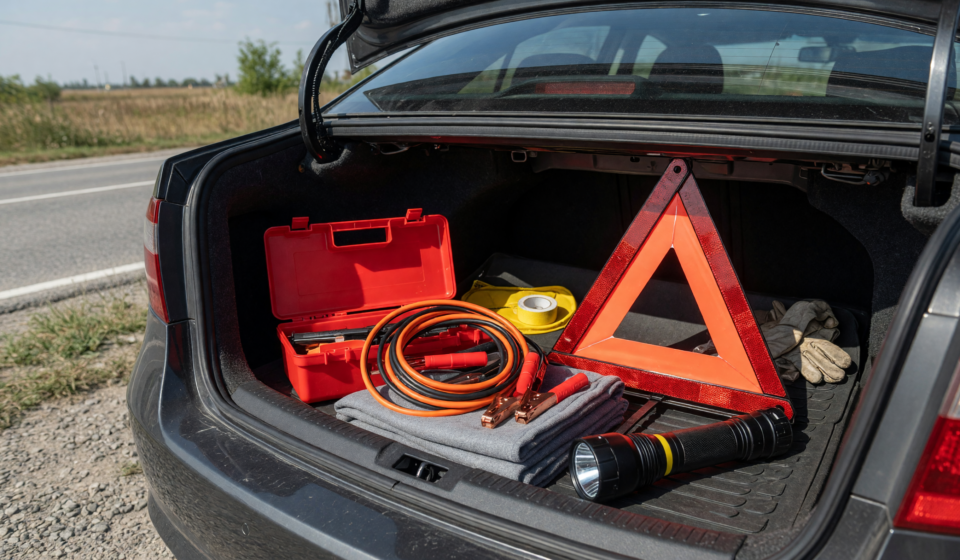
- Reflective warning triangles or flares: Set these out behind your vehicle to warn approaching traffic. Triangles are reusable and safe around fuel; flares burn bright but should be handled with care.
- Flashlight with spare batteries: A dependable flashlight lets you inspect the car, signal for help, and work safely after dark. Keep fresh batteries stored separately so it never fails you.
- High-visibility vest: If you must step out near traffic, a reflective vest makes you dramatically easier to see, day or night.
- Duct tape and work gloves: Gloves protect your hands during roadside repairs, and duct tape handles countless quick fixes, from a loose hose to a cracked light housing.
👉 Shop reflective warning triangle kit on Amazon (Ad — as an Amazon Associate, we earn from qualifying purchases.)
Jump Starting and Tire Tools
Two of the most common breakdowns, a dead battery and a flat tire, are also the most fixable on the spot if you carry the right gear. You do not need a mechanic to get moving again in many cases; you need the tools and a few minutes.
- Jumper cables or a portable jump starter: Cables let a good Samaritan revive your battery, but a self-contained portable jump starter frees you from needing a second car at all. Modern lithium units are compact and often double as a power bank.
- Tire pressure gauge: A cheap gauge helps you catch a slow leak before it strands you and confirm your spare is properly inflated.
- Tire sealant or a plug/repair kit: A can of sealant or a simple plug kit can temporarily seal a small puncture so you can reach a repair shop.
- Basic tools: Keep a functional jack, a lug wrench that fits your wheels, and a small multi-tool or wrench-and-screwdriver set for minor adjustments.
👉 Shop portable jump starter on Amazon (Ad — as an Amazon Associate, we earn from qualifying purchases.)
First Aid and Personal Items
A breakdown can coincide with a minor injury, or you may simply be the first on the scene of someone else’s trouble. The Red Cross recommends a well-stocked first-aid kit as a core part of any vehicle emergency supply, and a few personal items round out your readiness.
- First-aid kit: Look for adhesive bandages, gauze, antiseptic wipes, medical tape, gloves, and a pair of scissors. Add any personal or prescription medications you may need.
- Phone charger and power bank: A charged phone is your lifeline to roadside assistance and emergency services. A power bank keeps it alive even if your car cannot.
- Cash and important contacts: Small bills and a written list of key phone numbers help when your phone dies or a card reader is down.
- Pen, paper, and documents: Keep your insurance card, registration, and roadside assistance membership details accessible and note down details after any incident.
Comfort and Survival Items
If help is delayed, comfort supplies become survival supplies. The Red Cross advises keeping water and non-perishable food in your vehicle, along with warmth, because a wait that stretches into hours changes what your body needs.
- Drinking water: Store bottled water for everyone who typically rides with you, including pets. Aim for enough to stay hydrated through a long roadside wait.
- Non-perishable snacks: Energy bars, nuts, and dried fruit keep well and steady your energy while you wait, especially with children aboard.
- Blanket and warm layers: An emergency blanket or a warm throw and spare hat and gloves guard against cold if you cannot run the engine for heat.
- Rain poncho and wipes: A poncho keeps you dry during a repair in bad weather, and moist wipes or paper towels handle the inevitable mess.
Safety note. If you run your engine to stay warm while stopped, make sure the exhaust pipe is clear of snow, mud, or debris, and crack a window slightly. A blocked tailpipe can allow deadly carbon monoxide to build up inside the cabin.
What to Do When You Break Down: The Safe Protocol
Having the right gear only helps if you follow a safe sequence when trouble strikes. Guidance from NHTSA and AAA points to the same core steps, all built around keeping you clear of moving traffic.
- Get the vehicle safely off the road: As soon as you sense a problem, signal and move onto the shoulder or, better, well off the roadway. Choose a straight, visible stretch rather than a blind curve if you have any choice.
- Turn on your hazard lights: Activate your four-way flashers immediately so approaching drivers can see that you are stopped and disabled.
- Set out reflective triangles: Once traffic is clear, place warning triangles or flares behind the vehicle to give oncoming cars advance notice.
- Decide whether to stay inside: If you are on a busy highway or fast shoulder, it is often safest to stay buckled inside the vehicle with your seatbelt on rather than standing next to traffic. Exit only on the side away from traffic when you must.
- Call for help: Contact roadside assistance, a tow service, or emergency services, and share your exact location using mile markers or your phone’s location features.
The through-line of every step is the same: traffic is the real hazard, not the breakdown itself. Slow down, make yourself visible, and put distance between your body and passing vehicles.
Winter and Seasonal Add-Ons
Cold weather raises the stakes of any breakdown, and AAA recommends adapting your kit for winter driving. When temperatures drop and roads turn slick, a few extra items can be the difference between a delay and an emergency.
- Ice scraper and snow brush: Clear windows and lights so you can see and be seen before you even pull back onto the road.
- Small shovel: A compact or folding shovel lets you dig out around tires if you get stuck in snow.
- Traction aid: Sand, cat litter, or traction mats give your tires grip on ice and packed snow.
- Extra warmth: Add a heavier blanket, hand warmers, and spare cold-weather clothing, since a stalled car cools quickly once the engine is off.
- Full tank habit: In winter, keep your fuel level higher than usual so you can run the heater periodically while you wait for help.
👉 Shop LED flashlight/power bank on Amazon (Ad — as an Amazon Associate, we earn from qualifying purchases.)
Pre-Made Kit vs. Building Your Own, and Keeping It Maintained
You have two good paths to a stocked trunk. A pre-made roadside emergency kit is the fastest route: it bundles the essentials, usually including jumper cables, a flashlight, gloves, and basic first-aid supplies, into one case you can buy and forget. It is ideal if you want reliable coverage without hunting down individual pieces.
Building your own takes more effort but lets you tailor the kit to your vehicle, your climate, and your family. Many drivers do both: they start with a pre-made kit and add a portable jump starter, more water, and seasonal gear. Whichever route you choose, a kit is only useful if it works when you need it.
- Check it seasonally: Twice a year, swap out expired food and medications, test the flashlight and jump starter, and confirm batteries still hold a charge.
- Rotate for the season: Add winter gear as the cold sets in and pull it back out in spring to make room for extra water in summer heat.
- Keep it accessible: Store the kit where you can reach it without unloading the trunk, and make sure everyone who drives the car knows it is there.
👉 Shop roadside emergency kit on Amazon (Ad — as an Amazon Associate, we earn from qualifying purchases.)
The Bottom Line
A breakdown is rarely a matter of if, but when, and the drivers who handle it calmly are almost always the ones who prepared in advance. Start with the visibility and safety gear that protects you from traffic, add the tools to handle a dead battery or flat, layer in first aid and a charged phone, and round it out with water, snacks, and warmth for the wait. Adapt the kit for winter, keep it maintained, and store it where you can reach it. Ten minutes of preparation today buys you real safety and peace of mind on every drive that follows.
Disclaimer: This article is provided for general educational purposes only and does not replace professional roadside, medical, or automotive advice. In any breakdown or emergency, prioritize your safety, get off the road, and call for professional help before attempting repairs.
Sources: National Highway Traffic Safety Administration (NHTSA); AAA; American Red Cross; National Safety Council.