Training in the Heat: Hydration Strategy and Acclimatization Timelines
The first genuinely brutal day of summer training rarely announces itself. You lace up feeling fine, the workout starts like any other, and then somewhere in the middle of it the heat quietly takes over: your heart rate climbs for no reason, your pace slows, and the finish line feels twice as far away. That collapse in performance is not weakness or a bad night’s sleep. It is basic physiology, and it is exactly why heat training hydration and a smart acclimatization plan matter more than any single workout you will do all season.
This guide walks through what actually happens to your body when you push hard in the heat, and how to work with that reality instead of against it. We will cover acclimatization (the days-long process that rebuilds your tolerance), sweat rate and how to measure your own, the role of sodium and electrolytes, the danger of drinking too much, and how to read the environment using tools like Wet Bulb Globe Temperature (WBGT). The recommendations here lean on US agencies and professional bodies, including OSHA, NIOSH, the National Athletic Trainers’ Association (NATA), and the American College of Sports Medicine (ACSM).
Why the Heat Hits Harder Than You Expect
When you exercise, your working muscles generate a large amount of heat. Your body’s main defense is to move that heat to the skin and shed it, mostly by sweating. The problem is that your heart is now doing two jobs at once: pumping blood to muscles to keep you moving, and pumping blood to the skin to cool you down. In hot weather those demands compete, and something has to give. That is why the same effort that feels easy in spring can feel punishing in July.
Add humidity and the situation gets worse. Sweat only cools you when it evaporates, and humid air is already saturated, so the sweat drips off your skin instead of pulling heat away with it. You lose the fluid without getting the cooling benefit. This is the core reason heat and humidity together are far more dangerous than dry heat alone, and it is why standards use combined measures rather than plain air temperature.
What Acclimatization Actually Changes
Acclimatization is the process by which repeated, controlled heat exposure teaches your body to handle heat far more efficiently. It is not toughness or willpower; it is a set of measurable physiological adaptations that make the same workout feel dramatically easier after a week or two. The changes are why an athlete who has trained through a full summer can shrug off conditions that would flatten someone flying in from a cool climate.
- You sweat sooner and more: Your body starts cooling earlier in a session and produces more sweat, so heat comes off faster.
- Your sweat gets “saltier-smart”: Adapted sweat glands conserve sodium, so you lose fewer electrolytes for the same volume of sweat.
- Your plasma volume expands: More blood volume means your heart works less for each beat, so heart rate at a given effort drops.
- Your core temperature runs lower: For the same workload, you simply do not heat up as much, which buys you a bigger safety margin.
The Acclimatization Timeline: What to Expect Day by Day
Here is the good news and the catch in one sentence: most of the adaptation happens fast, but only if you build up gradually. NIOSH guidance for workers new to heat recommends starting with no more than about 20 percent of the normal workload on day one and increasing by no more than roughly 20 percent each following day. People who already have recent heat experience can move faster, on the order of 50 percent on day one, then 60, 80, and 100 percent over the next few days. Under both approaches, meaningful acclimatization typically develops over roughly one to two weeks.
Athletic guidance follows the same logic. NATA’s preseason heat-acclimatization guidelines for secondary school athletics spread the buildup across about a two-week window, with single practices before any double-practice days, gradual introduction of equipment and protective gear, and required recovery time between sessions. The common thread across agencies is unmistakable: ramp intensity, duration, and gear slowly rather than all at once.
Use it or lose it. Acclimatization fades when you leave the heat. NIOSH notes that a few days off, like a weekend, is usually fine, but being away for a week or more can cause a significant loss of adaptation. The upside is that it often comes back within two to three days of returning to hot conditions, especially if you stayed fit.
Building Your Heat Training Hydration Plan
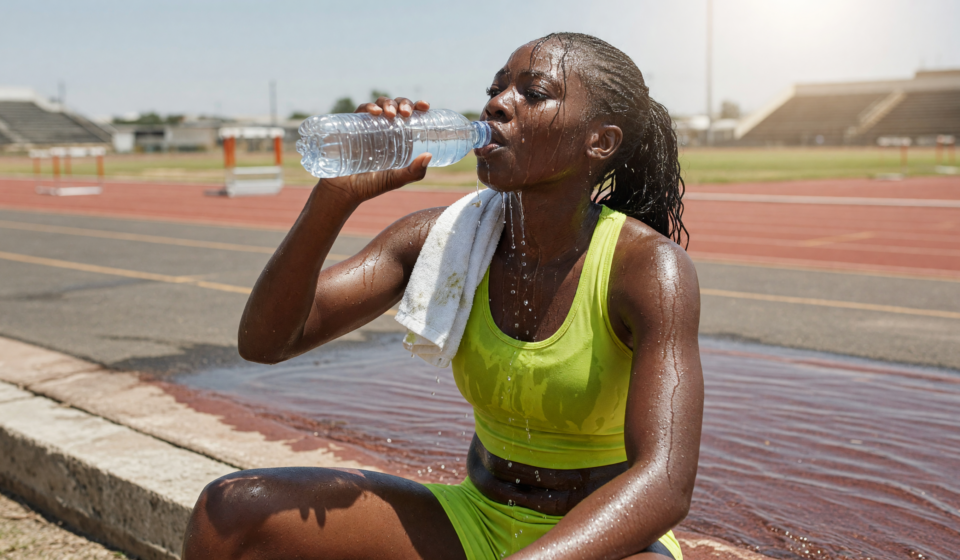
A workable heat training hydration plan has three parts: arrive hydrated, drink on a plan during the session, and replace what you lost afterward. Showing up already short on fluid is one of the most common and avoidable mistakes; if your urine is dark before you even start, you are behind. During exercise, the goal is to drink enough to limit losses without forcing down more than your body can use. Afterward, rehydration is about volume plus sodium, because water alone is not always enough to fully restore balance.
- Start topped off: Hydrate in the hours before training so you begin the session in balance, not chasing a deficit.
- Drink to a schedule: Sip at planned intervals rather than waiting for thirst, which lags behind actual fluid loss.
- Keep fluid within reach: Access matters. If a drink is hard to get to, you will drink less than you should.
- Rehydrate with sodium: Pairing fluid with sodium after training helps you retain what you drink and stimulates thirst so you keep going.
👉 Shop insulated hydration pack or high-capacity water bottle on Amazon (Ad — as an Amazon Associate, we earn from qualifying purchases.)
Know Your Own Sweat Rate
Generic advice like “drink eight ounces every fifteen minutes” ignores a basic fact: sweat rates vary enormously from person to person and day to day. The Korey Stringer Institute notes that individual sweat rates can range from roughly one to three liters per hour depending on the athlete and the conditions. That is a threefold difference, which means a plan built for someone else may leave you badly under- or over-hydrated.
You can estimate your own rate cheaply. Weigh yourself without clothing before a roughly one-hour session, train without drinking (or carefully track anything you do drink), then weigh again afterward. A common reference point is that about 2.2 pounds of body-weight loss equals roughly one liter of fluid lost. Do this across a few different weather conditions and you will start to see your personal pattern, which is worth more than any generic chart. Body weight and urine color together give you a simple, no-equipment read on where you stand.
👉 Shop moisture-wicking training apparel and cooling towel on Amazon (Ad — as an Amazon Associate, we earn from qualifying purchases.)
Electrolytes, Sodium, and the Overdrinking Trap
Sweat is not just water; it carries sodium and other electrolytes, and some people (“salty sweaters”) lose noticeably more than others. For short, easy sessions, plain water is usually fine. But as duration and sweat losses climb, replacing sodium becomes important, both for performance and for holding onto the fluid you drink. This is where a sports drink or an electrolyte mix earns its place, particularly in long, hot outdoor efforts.
There is a flip side that gets far less attention: you can drink too much. Overdrinking plain water during long events can dilute the sodium in your blood, a potentially serious condition known as exercise-associated hyponatremia. The practical takeaway from ACSM’s guidance on fluid replacement is to aim for balance, replacing losses without pouring in fluid far beyond what you are sweating out. More is not automatically safer, and thirst plus a sensible plan usually beats forcing down water by the gallon.
👉 Shop electrolyte drink mix or hydration tablets on Amazon (Ad — as an Amazon Associate, we earn from qualifying purchases.)
Reading the Environment and Watching Your Training Partners
Air temperature alone is a poor guide to heat risk because it ignores humidity, radiant heat from the sun, and wind. That is why occupational and athletic standards lean on Wet Bulb Globe Temperature (WBGT), which folds those factors into a single number that better reflects the real strain on your body. OSHA and NIOSH also offer a free Heat Safety Tool app that uses the heat index to flag risk levels and suggest precautions, which is a low-effort way to sanity-check conditions before you head out.
OSHA’s long-running “Water. Rest. Shade.” message is deliberately simple because the fundamentals are simple: drink regularly, take real breaks, and get out of the sun to cool down. Just as important is the buddy system. Early heat illness can cloud judgment, so the person in trouble is often the last to notice. Train with people who know the warning signs, watch each other, and treat symptoms like confusion, stumbling, or stopping sweating as emergencies, not moments to push through.
- Check conditions first: Use WBGT or a heat-index tool to gauge risk instead of guessing from the thermometer.
- Schedule smarter: Shift hard sessions to cooler parts of the day when conditions allow.
- Build in shade and rest: Plan cooling breaks into the workout rather than treating them as failure.
- Never train alone in extreme heat: A partner who can recognize trouble is a genuine safety measure.
👉 Shop WBGT meter or portable heat-stress monitor on Amazon (Ad — as an Amazon Associate, we earn from qualifying purchases.)
Gear That Helps You Train Smarter, Not Harder
Gear will never replace acclimatization or hydration, but the right kit removes friction and helps you follow your plan. Light-colored, moisture-wicking clothing supports evaporation instead of trapping heat, while cooling towels and vests give you a way to drop core temperature during breaks. A hydration pack or an easy-to-reach bottle makes drinking on schedule effortless, and a simple environmental read from an app or meter keeps you honest about the day’s risk.
Think of equipment as a way to protect the fundamentals. If a piece of gear makes it easier to drink often, cool down quickly, or judge conditions accurately, it is doing real work. If it just adds bulk or a false sense of security, it is not. The best setup is the one that quietly nudges you toward good habits every single session.
The Bottom Line
Training in the heat is not about proving how much you can suffer; it is about giving your body the time and support it needs to adapt safely. Build up gradually over one to two weeks, respect that adaptation fades when you step away from the heat, and let your own sweat rate, not a generic rule, drive how much you drink. Pair fluid with sodium on the long, hot days, avoid the trap of drinking far more than you lose, and use simple tools like WBGT and the buddy system to stay ahead of trouble. Do those things consistently and the heat stops being an opponent and becomes just another training variable you know how to manage.
Disclaimer: This article is for general educational purposes only and is not medical advice. Individual heat tolerance, hydration needs, and health conditions vary. Consult a physician or qualified sports-medicine professional before beginning heat training, and seek emergency care immediately for signs of heat illness such as confusion, fainting, or the collapse of the ability to sweat.
Sources: Occupational Safety and Health Administration (OSHA), “Heat – Water. Rest. Shade.” and Heat Illness Prevention Campaign; National Institute for Occupational Safety and Health (NIOSH), Heat Stress Acclimatization recommendations; OSHA-NIOSH Heat Safety Tool; National Athletic Trainers’ Association (NATA), Preseason Heat-Acclimatization Guidelines for Secondary School Athletics and Fluid Replacement position statement; American College of Sports Medicine (ACSM), position stand on Exercise and Fluid Replacement; Korey Stringer Institute (University of Connecticut), hydration and sweat-rate resources.