
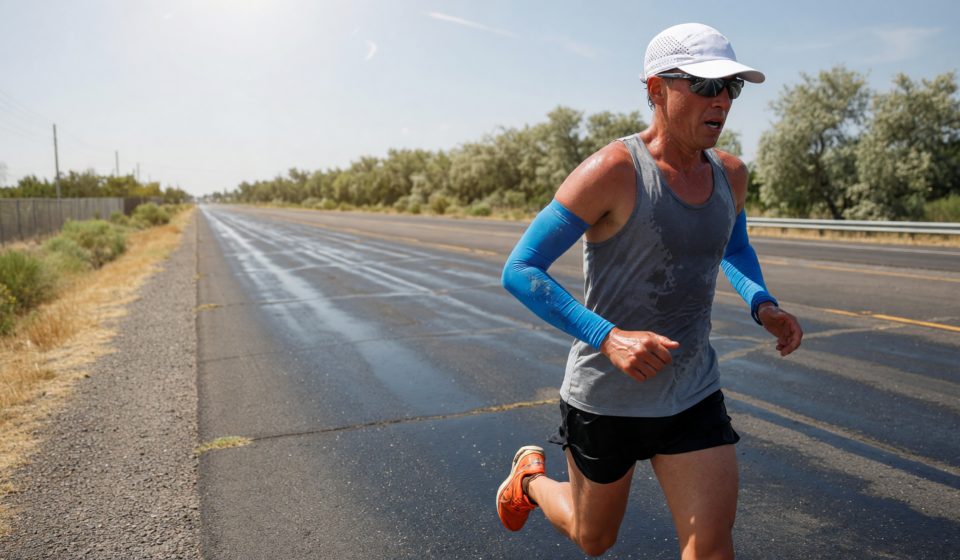
Hot-Weather Running Gear: Vented Caps, Cooling Sleeves and Salt Tabs
There is a specific moment, somewhere past the second mile on a July afternoon, when the heat stops being background noise and becomes the whole run. Your pace drifts, your shirt is soaked, and the salty crust on your temples tells you that you are losing more than just water. Smart hot weather running is not about toughing it out. It is about respecting how your body sheds heat and giving it every advantage you can, starting with the gear on your head, arms, and in your pocket.
This guide walks through three pieces of warm-season kit that punch above their weight: vented caps, cooling sleeves, and salt tabs. We will explain the WHY behind each one in plain English, lean on US agencies and standards where they exist, and help you separate genuinely useful features from marketing gloss. The goal is simple: keep you cooler, keep your sun exposure down, and keep your electrolytes in a sane range so your summer miles feel less like survival and more like running.
Why Heat Is the Runner’s Real Opponent
When you run, your working muscles generate a large amount of heat, and your body’s main defense is sweat. As sweat evaporates off your skin, it carries heat away. That evaporative cooling is remarkably effective in dry air and much weaker in humid air, which is why a muggy 85-degree day can feel far more punishing than a dry 95-degree one. The National Weather Service captures this combination with the heat index, and its HeatRisk tool flags days when heat becomes dangerous for health, not just uncomfortable.
The stakes are real. The Centers for Disease Control and Prevention and the National Athletic Trainers’ Association both treat exertional heat illness as a spectrum, running from heat cramps and heat exhaustion up to heatstroke, which is a medical emergency. Good gear will not override bad judgment, but it does two useful things: it helps your cooling system work better, and it reduces the heat load you take on in the first place.
- Evaporation is king: Anything that keeps sweat evaporating freely, rather than trapping it, helps you cool.
- Sun adds load: Direct sunlight radiates heat onto your skin, so shading exposed areas lowers your total heat burden.
- Fluids and salt matter: You sweat out both water and sodium, and replacing them thoughtfully protects performance and safety.
Vented Caps: Shade Without the Sauna
A running cap does two jobs at once. The brim shades your face and eyes, and the crown shields the top of your head, one of the areas most exposed to direct overhead sun. The catch is that a solid, dense hat can trap heat and sweat against your scalp, turning a helpful accessory into a personal sauna. That is where venting comes in.
A well-designed hot-weather cap uses mesh panels, laser-cut perforations, or an open-weave crown so that air moves through and sweat vapor escapes. Look for a sweatband that channels moisture away from your eyes and a light color that reflects rather than absorbs sunlight. If sun protection is a priority, check whether the fabric carries a UPF rating, which we cover in detail below.
- Mesh or perforated panels: These let hot air and sweat vapor escape instead of pooling against your head.
- Light colors: Pale fabrics reflect more sunlight and stay cooler than dark ones in direct sun.
- Low-profile brim: A soft, packable brim shades your face without acting like a heat trap.
- Secure but gentle fit: An adjustable or elastic band should hold on downhill without leaving a throbbing headache.
👉 Shop vented running cap on Amazon (Ad — as an Amazon Associate, we earn from qualifying purchases.)
Cooling Sleeves and What UPF Actually Means
Cooling sleeves seem counterintuitive at first: why add fabric on a hot day? The answer is that a thin, moisture-wicking sleeve can actually keep your arms cooler than bare skin in strong sun. It works by holding a little moisture against the fabric surface, where it evaporates and pulls heat away, while simultaneously blocking direct ultraviolet radiation. Splash water on the sleeves at an aid station and you get a burst of evaporative cooling that bare skin cannot match.
This is where the UPF label earns its keep. UPF, or Ultraviolet Protection Factor, is the textile equivalent of SPF for sunscreen. In the United States, sun-protective fabrics are commonly tested under the AATCC 183 method and labeled according to ASTM D6603, which sets the categories you see on hangtags. The Skin Cancer Foundation recommends UPF-rated clothing as a reliable, sweat-proof layer of sun defense that does not wash off like lotion.
- UPF 15 to 24 (Good): Blocks roughly 93 to 96 percent of UV radiation.
- UPF 25 to 39 (Very Good): Blocks about 96 to 97.5 percent of UV.
- UPF 40 to 50+ (Excellent): Blocks 97.5 percent or more, the top tier under ASTM D6603.
- Wet-and-go cooling: Dampening the sleeves boosts evaporative cooling on the hottest stretches.
One honest caveat: a sleeve only protects the skin it covers, and stretching or wetting a fabric can lower its effective UPF. Sunscreen still belongs on your face, neck, and any skin the sleeves leave bare.
👉 Shop UPF cooling arm sleeves on Amazon (Ad — as an Amazon Associate, we earn from qualifying purchases.)
Salt Tabs and the Sodium Question
That white residue on your cap and shirt is dried sweat sodium. On long, hot efforts you can lose a meaningful amount of sodium along with your fluids, and sodium plays a central role in fluid balance, nerve signaling, and muscle function. Salt tabs, sometimes called electrolyte or sodium capsules, are a compact way to replace some of that loss without carrying a cooler of sports drink.
Here is the nuance that gets lost in marketing. The National Athletic Trainers’ Association emphasizes that fluid and electrolyte needs are highly individual, driven by your sweat rate and how salty your sweat is. Just as important, NATA and the CDC warn about exertional hyponatremia, a dangerous drop in blood sodium that happens when runners drink large volumes of plain water without replacing sodium. Salt tabs are one tool for balancing that equation on longer efforts, not a license to chug water endlessly.
Reality check. More is not better with sodium or water. Both NATA and the CDC frame hydration as a matter of matching intake to your individual losses, and overdoing plain water can trigger hyponatremia. Salt tabs are a supplement, not a strategy on their own.
- Match the effort: Casual 30-minute runs rarely need salt tabs; multi-hour heat efforts are where they shine.
- Know your sweat: Heavy, salty sweaters who leave gritty residue tend to benefit more than light sweaters.
- Pair with fluids: Sodium helps your body hold and use the water you drink, so take tabs with fluid, not instead of it.
- Check with a professional: Anyone managing blood pressure or a heart or kidney condition should talk to a clinician before loading sodium.
👉 Shop electrolyte salt tablets on Amazon (Ad — as an Amazon Associate, we earn from qualifying purchases.)
Read the Heat Before You Lace Up
The best piece of hot-weather gear is often information. Before a summer run, glance at more than the temperature. The National Weather Service heat index folds in humidity to estimate how hot it actually feels, and its HeatRisk map uses a color-coded scale to signal when heat poses a health threat. Many organized races also monitor Wet Bulb Globe Temperature, a more complete measure that accounts for humidity, wind, and radiant sun, and adjust or cancel events when it climbs too high.
- Time it right: Early morning and late evening usually offer the lowest heat index of the day.
- Seek shade and breeze: Shaded, breezy routes cut radiant heat and boost evaporation.
- Acclimatize gradually: The CDC notes that heat acclimatization takes one to two weeks of progressive exposure, so ease into summer training.
- Know the warning signs: Dizziness, nausea, confusion, or chills in the heat are cues to stop, cool down, and get help.
Fabric, Fit, and Color
Your cap and sleeves are part of a system, and the rest of your kit should follow the same logic. Choose technical fabrics that wick moisture to the surface and dry quickly, so evaporation keeps working. Cotton, by contrast, soaks up sweat and stays heavy and warm against your skin. A loose, airy cut lets air circulate, while light colors reflect the sun instead of absorbing it.
- Wicking synthetics or blends: They move sweat to the fabric surface where it can evaporate.
- Loose and light: Airflow across the skin accelerates cooling far more than a tight fit.
- Flat seams and body glide: Wet fabric plus miles equals chafing, so mind seams and lubricate hot spots.
- UPF where it counts: A UPF-rated shirt or sleeve extends sun protection to your torso and arms.
👉 Shop lightweight UPF running shirt on Amazon (Ad — as an Amazon Associate, we earn from qualifying purchases.)
Building a Simple Hot-Weather Kit
You do not need to buy everything at once. Start with the pieces that address your biggest weakness, whether that is sun exposure, overheating, or cramping late in long runs. A functional warm-season setup is refreshingly simple, and most of it fits in a small vest or waist belt.
- A vented cap: Shade for your face and scalp with airflow built in.
- UPF cooling sleeves: Sun cover plus wet-and-go evaporative cooling for your arms.
- Fluids you will actually drink: A handheld bottle or hydration vest so water is never an excuse.
- Salt tabs for the long ones: Sodium backup for multi-hour heat efforts, paired with fluid.
- Sunscreen and sunglasses: Cover the skin your gear cannot, and protect your eyes from glare.
The Bottom Line
Summer running rewards preparation. A vented cap keeps the sun off your head while letting heat escape, UPF cooling sleeves shade your arms and turn a splash of water into real relief, and salt tabs help you hold your electrolytes steady on the longest, hottest efforts. None of it replaces good judgment, checking the heat index, easing into the season, and knowing when to back off, but the right gear stacks the odds in your favor. Dress for the heat, respect it, and those brutal July miles start to feel a whole lot more like running and a whole lot less like a fight.
Disclaimer: This article is for general educational purposes only and is not medical advice. Individual hydration, sodium, and sun-protection needs vary. Consult a qualified healthcare professional before making changes to your training, hydration, or supplement routine, especially if you have any underlying health conditions.
Sources: Centers for Disease Control and Prevention (CDC) guidance on heat illness and acclimatization; National Athletic Trainers’ Association (NATA) position statements on exertional heat illness and fluid replacement; National Weather Service / NOAA heat index and HeatRisk resources; ASTM D6603 and AATCC 183 standards for UPF sun-protective textile labeling and testing; Skin Cancer Foundation guidance on sun-protective clothing.