Deer-Vehicle Collisions: Avoiding Crashes During Fall Rut Season
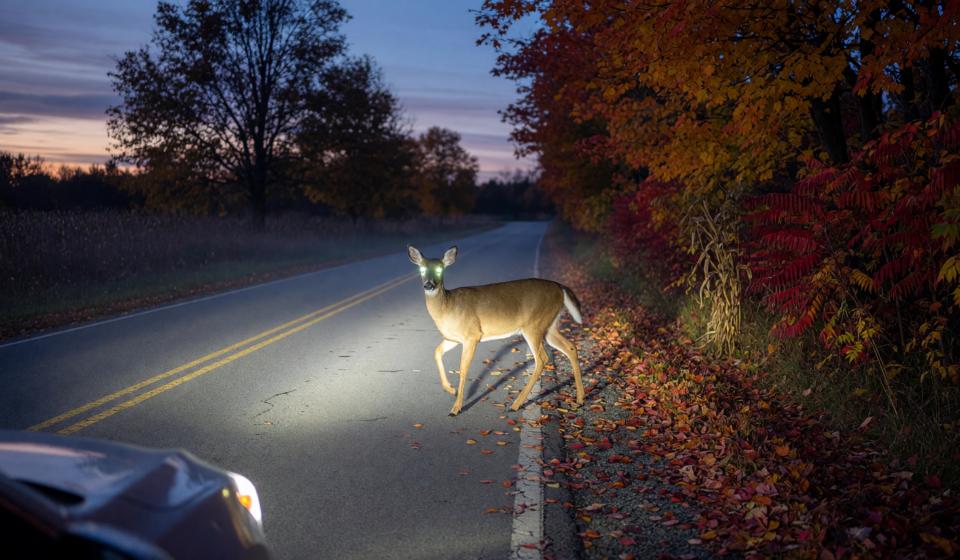
You crest a low hill on a two-lane road just after sunset in mid-October, headlights sweeping the tree line, when a whitetail materializes in your lane as if it stepped out of the dark itself. It happens every autumn to thousands of American drivers, because fall is when deer are on the move and least predictable. Smart deer collision avoidance is not about luck or reflexes alone. It is a set of habits, a little roadside gear, and a clear plan for the moment a deer appears, and this guide walks you through all three.
In the pages ahead we cover why the fall rut makes October through December the most dangerous stretch of the year, when and where deer are most likely to cross, and the single most important rule every driver should memorize: do not veer for deer. We also walk through the roadside safety gear worth keeping in your trunk, the correct sequence of steps if you do strike an animal, and how reporting and insurance typically work afterward. Everything here leans on guidance from the Insurance Institute for Highway Safety, the National Safety Council, and insurer crash data, so you can act with confidence when it counts.
Why Fall Rut Season Puts Deer in Your Lane
Deer are creatures of instinct, and in autumn that instinct overrides their usual caution. The rut, or mating season, drives bucks to chase does across long distances, sending animals sprinting through areas they would normally avoid, including open roadways. Overlapping with this is hunting season, which pushes deer out of wooded cover and keeps them moving at odd hours. The result is a well-documented spike in collisions. Both the Insurance Institute for Highway Safety and State Farm identify October through December as the peak window for deer-vehicle crashes nationwide.
Understanding the biology helps you anticipate the risk instead of simply reacting to it. During the rut, a deer that clears the road in front of you may be followed seconds later by another in hot pursuit, oblivious to traffic. This is why the season demands a different level of attention than summer driving, especially on rural highways and suburban roads that border fields, water, or forest edges.
When and Where Deer Are Most Likely to Cross
Timing matters as much as season. Deer are most active in the low-light hours, and crash data consistently points to dawn and dusk as the riskiest times of day. These are also the hours when your own visibility is poorest and when the glare of a low sun or deep shadow can hide an animal until it is nearly on top of you. If your commute or errands fall in these windows during autumn, treat every wooded stretch as a potential crossing.
- Dawn and dusk: Peak deer movement and the hardest light for drivers to see clearly.
- Marked crossing zones: Yellow deer-crossing signs mark documented corridors, not decoration. Slow down where you see them.
- Edges and transitions: Places where fields meet forest, or roads run beside creeks and rivers, funnel deer toward pavement.
- Herd behavior: Deer rarely travel alone. If one crosses, assume more are behind it and keep scanning.
The Golden Rule: Do Not Veer for Deer
If there is one thing to take from this guide, it is this. When a collision with a deer looks unavoidable, the safest choice is almost always to brake firmly, stay in your lane, and keep the vehicle under control. Swerving to miss an animal is how drivers end up in oncoming traffic, off an embankment, or wrapped around a tree, and those outcomes are far more likely to injure or kill people than striking the deer itself. State Farm has built an entire public safety message, “Don’t Veer for Deer,” around this exact point, and the National Safety Council echoes it.
Remember this. A controlled impact with a deer is survivable and usually a matter of vehicle damage. Losing control of your car to avoid one is what turns a fender bender into a fatality. Brake hard, hold your line, and let go of the instinct to swerve.
Grip the wheel firmly with both hands, brake as hard as conditions and the traffic behind you allow, and stay straight. If you have time and no one is tailgating, a sharp horn blast may startle the animal off the road. What you should never do is jerk the wheel into the next lane or the shoulder on pure reflex.
Driving Habits That Improve Deer Collision Avoidance
Good defensive driving shrinks your odds of ever facing that split-second decision. Most of these habits cost nothing and simply ask you to adjust how you drive during the fall months, particularly at night and in rural areas where deer density is highest.
- Use your high beams: On dark roads with no oncoming traffic, high beams extend your sight distance and can catch the telltale reflection of a deer’s eyes well ahead.
- Scan the shoulders: Watch the edges of the road, not just the lane ahead. Deer usually appear from the sides.
- Ease off the gas: Reducing speed in known deer country gives you more time to react and shortens your stopping distance.
- Buckle up, every trip: Seat belts remain your single best protection in any crash, deer-related or not, a point every agency from NHTSA to the National Safety Council reinforces.
- Stay off the shoulder for wildlife: Do not rely on unproven gadgets like deer whistles in place of attentive driving and lower speeds.
👉 Shop reflective safety vest for roadside emergencies on Amazon (Ad — as an Amazon Associate, we earn from qualifying purchases.)
Roadside Gear Worth Keeping in Your Trunk
If you do strike a deer, a disabled car on a dark rural road at dusk is a genuinely dangerous place to be, arguably more dangerous than the collision itself. Other drivers cannot see you well in exactly the conditions that caused the crash. A small kit of high-visibility and warning equipment lets you make yourself and your vehicle conspicuous while you sort out the situation. Think of it as the safety-gear equivalent of a spare tire: rarely needed, invaluable when it is.
- High-visibility vest: A fluorescent, retroreflective vest makes you visible in headlights the moment you step out of the car. Look for garments built to the ANSI/ISEA 107 high-visibility standard.
- Reflective warning triangles: Placed behind your vehicle, triangles alert approaching traffic long before they reach you. They need no batteries and work in any weather.
- LED flares or beacons: Modern electronic flares give you a bright, flicker-free warning light without the fire risk of old-style road flares.
- Headlamp or flashlight: Hands-free light lets you inspect damage, read documents, and stay visible while keeping both hands free.
- First aid kit: A basic kit covers minor injuries until help arrives, and belongs in every vehicle year-round.
👉 Shop reflective roadside warning triangle and LED flare kit on Amazon (Ad — as an Amazon Associate, we earn from qualifying purchases.)
When you shop for a vest, the label matters. Garments certified to ANSI/ISEA 107, the American standard for high-visibility apparel administered by the International Safety Equipment Association, are engineered so that the fluorescent background and retroreflective striping actually perform in low light. A Class 2 or Class 3 vest offers the coverage most drivers want for standing near moving traffic in the dark.
👉 Shop ANSI/ISEA 107 Class 2 or Class 3 high-visibility vest on Amazon (Ad — as an Amazon Associate, we earn from qualifying purchases.)
What to Do in the Seconds and Minutes After a Strike
If you do hit a deer, the priority shifts immediately from avoiding the crash to staying safe on the roadside. A calm, deliberate sequence protects you and everyone else on the road while you get your bearings.
- Get to a safe spot: If the car is drivable, pull well onto the shoulder and switch on your hazard lights.
- Stay in the car if traffic is heavy: On a busy road, remaining buckled inside with hazards on can be safer than stepping out.
- Make yourself visible: When it is safe to exit, put on your high-visibility vest and set out triangles or LED flares behind the vehicle.
- Keep away from the animal: An injured deer can be unpredictable and dangerous. Do not approach it. Call local authorities or a non-emergency line to report it.
- Call for help if needed: Dial 911 for injuries or a blocked roadway, and document the scene with photos for your insurer once you are safe.
👉 Shop compact roadside emergency kit with first aid supplies on Amazon (Ad — as an Amazon Associate, we earn from qualifying purchases.)
Reporting, Insurance, and Cleaning Up
Deer-vehicle collisions are common enough that insurers and state agencies have clear processes for them, and knowing the basics ahead of time removes a lot of stress. Damage from striking an animal is generally handled under the comprehensive portion of an auto policy rather than collision coverage, though specifics vary by insurer and state, so it is worth checking your own policy before the season starts.
- Report the crash: Notify police or your state’s designated line if there is significant damage, injury, or a carcass blocking the road.
- Document everything: Photograph vehicle damage, the roadway, and the scene while details are fresh.
- Call your insurer promptly: Early reporting speeds the claim and clarifies what your coverage includes.
- Know the salvage rules: Some states allow drivers to keep a deer carcass with a permit or tag. Check local regulations before removing an animal.
Insurers such as State Farm publish annual animal-collision data, and the volume of claims each year runs into the millions nationwide, a reminder that these crashes are routine rather than rare. Treating a deer strike as a manageable, well-understood event, rather than a catastrophe, helps you make level-headed decisions in the moment.
The Bottom Line
Fall rut season is predictable, and predictability is the driver’s advantage. From October through December, deer are moving at dawn and dusk in far greater numbers, so slow down in wooded and rural areas, use your high beams, scan the shoulders, and buckle up every single time. If a deer steps into your path, brake hard and hold your line, because veering is what turns a survivable impact into a serious wreck. Keep a high-visibility vest, warning triangles, and a light in your trunk so that if the worst happens, you can make yourself seen on a dark roadside. None of this is complicated, and all of it works. Drive the season with intention, and you dramatically tilt the odds in your favor.
Disclaimer: This article is provided for general educational purposes only and does not constitute driving, legal, insurance, or safety-compliance advice. Deer behavior, road conditions, state reporting requirements, and insurance coverage vary widely. Always follow local traffic laws, your vehicle manufacturer’s guidance, and the instructions that accompany any safety equipment, and consult your insurer regarding your specific policy.
Sources: Insurance Institute for Highway Safety (IIHS), animal-collision fatality data; Insurance Information Institute (III), Facts + Statistics: Deer vehicle collisions; State Farm, “Don’t Veer for Deer” and annual animal-collision claims data; National Safety Council (NSC), deer-collision safety guidance; National Highway Traffic Safety Administration (NHTSA), seat belt and defensive-driving guidance; ANSI/ISEA 107 high-visibility safety apparel standard (International Safety Equipment Association).