Gravel and Commuter Tire Choice: Grip for Leaf-Covered Roads
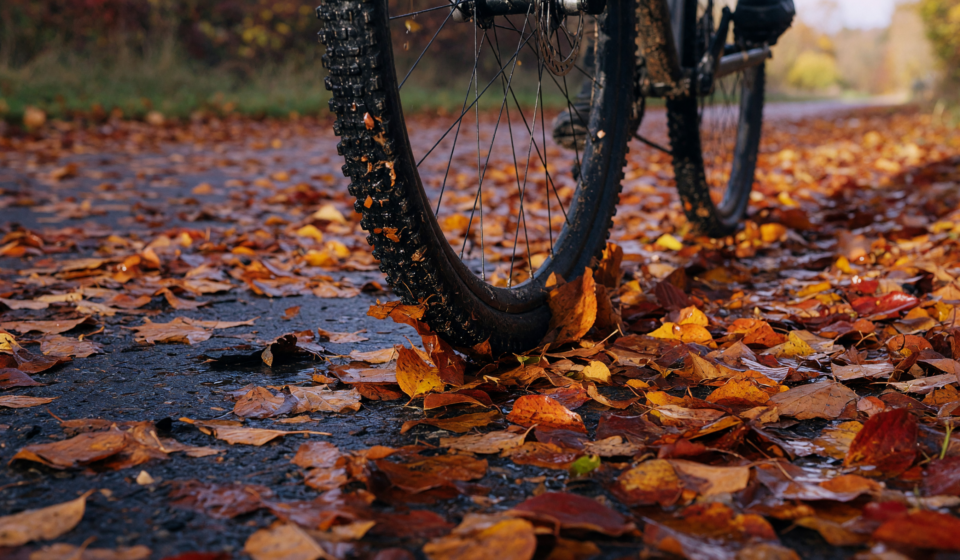
There is a specific moment every fall rider knows: you lean into a familiar corner, the front wheel goes light for a heartbeat, and a patch of wet, matted leaves reminds you that pavement you trust in July behaves like a different surface in October. Damp leaves sit on top of the road like a lubricated film, hiding the texture your tires rely on. Improving your cycling tire grip for these conditions is less about buying the most aggressive tire on the shelf and more about matching casing, tread, width, and pressure to the slick, unpredictable surfaces of a leaf-covered commute or gravel loop.
This guide walks through what actually generates traction on a bicycle, why wet leaves are so treacherous, and how to read the numbers already molded into your tires and rims. We will cover tread patterns, tire casing and construction, tire pressure, tire width and the ETRTO/ISO sizing system, tubeless setups, and the visibility and braking rules the U.S. Consumer Product Safety Commission (CPSC) sets for bikes sold in America. The goal is simple: help you make confident, informed choices so your autumn rides stay planted, predictable, and safe.
Why Wet Leaves Steal Your Traction
Grip on a bicycle comes from friction between the rubber and the road, plus the mechanical interlock of tread against a rough or loose surface. Dry asphalt has microscopic texture that your tire keys into. A layer of wet leaves erases that texture. The leaf acts as a slick interface, and the moisture trapped underneath prevents the tire from ever touching the pavement it needs. Worse, decomposing leaves release tannins and oils that make the film even more slippery, and a pile of them can hide potholes, painted lines, or storm grates entirely.
The practical takeaway is that no tire fully solves a thick carpet of wet leaves. Physics wins. What good tire choice does is widen your margin: it buys you a fraction more warning before the wheel breaks loose and a bit more control when it does. Combine that with smart riding, staying upright through leaf patches, braking before the corner rather than in it, and easing off sudden inputs, and you turn a white-knuckle season into a manageable one.
Reading Tread Patterns for Slick Roads
Tread on a bicycle tire does a very different job than tread on a car tire. Bicycle tires are narrow and lightly loaded, so at road speeds they do not hydroplane the way a car does; a smooth or lightly textured tire can actually grip wet pavement better because more rubber contacts the road. Knobs earn their keep only when the surface is loose or soft enough for them to bite into, such as mud, dirt, or gravel. On hard pavement covered in wet leaves, aggressive knobs can squirm and reduce the contact patch rather than help.
- Slick or file tread: Best for pavement and hardpack. A fine, shallow texture maximizes rubber-to-road contact, which is what you want on leaf-slicked asphalt.
- Semi-knobby (center-slick, side knobs): A smooth center rolls fast and grips wet pavement, while shoulder knobs dig in when you lean the bike into loose corners. A strong all-around choice for mixed autumn commutes.
- Full knobby: Reserve these for genuine dirt, mud, and loose gravel. On wet pavement the knobs flex and offer less predictable grip.
- Siping and micro-texture: Small cuts and patterning in the rubber help clear a thin water film on smooth surfaces and add a little bite.
For a rider splitting time between paved streets and leaf-strewn gravel paths, a semi-slick or lightly filed tread is usually the sweet spot. It keeps you fast and grippy on the road while giving the shoulders something to work with when you tip the bike into a loose corner.
👉 Shop gravel/commuter semi-slick tires on Amazon (Ad — as an Amazon Associate, we earn from qualifying purchases.)
Casing and Rubber Compound: Where Grip Really Lives
Tread pattern gets the attention, but casing and rubber compound quietly do most of the work. The casing is the woven fabric body of the tire, and its suppleness determines how well the tire conforms to the ground. A supple, high-thread-count casing molds around bumps and debris, keeping more rubber in contact with the surface. A stiff, heavily reinforced casing rolls over the top of texture and can feel skittish on slick, uneven ground.
- Thread count (TPI): Higher thread-per-inch casings are generally more supple and conform better, improving grip and comfort. Lower TPI casings are tougher but stiffer.
- Rubber compound: Softer compounds grip better in the wet and cold but wear faster. Many wet-weather and cold-weather tires use compounds tuned to stay pliable as temperatures drop in fall.
- Puncture protection: A protection belt under the tread guards against flats from hidden glass and thorns in leaf litter, at a small cost in suppleness and rolling ease.
- Temperature sensitivity: Rubber stiffens as it gets cold, which reduces grip. A compound rated for cooler conditions holds traction better on chilly October mornings.
Field note. If you can only upgrade one thing before leaf season, choose a supple casing with a wet-tuned compound over a knobbier tread. The casing keeps rubber on the road; that is what saves you when a corner turns greasy.
Tire Pressure: The Free Upgrade Most Riders Skip
Air pressure is the cheapest and most powerful grip adjustment you have, and it costs nothing but a few minutes with a pump. Lower pressure lets the tire flatten slightly under load, enlarging the contact patch and letting the casing conform to the surface. On wet leaves and loose gravel, a larger, more compliant contact patch translates directly into more traction and a calmer, less nervous ride. Over-inflated tires skip across texture and feel harsh and vague exactly when you need feedback most.
The CPSC requires that the manufacturer’s recommended inflation pressure be molded onto the sidewalls of inflatable bicycle tires, in letters at least one-eighth inch high, so the range you should stay within is printed right where you need it. Treat the maximum as a ceiling, not a target. For wet-leaf conditions, many riders run toward the lower end of the recommended range to gain grip, then adjust based on their weight, tire width, and how the bike feels. Wider tires allow lower pressures without pinch flats, which is a big part of why they corner so confidently in the fall.
- Stay in the molded range: Never exceed the maximum printed on the sidewall, and use it as your hard limit.
- Lower for grip: Dropping pressure within the safe range enlarges the contact patch and softens the ride over slick, uneven surfaces.
- Match pressure to width: Wider tires run lower pressures safely; narrow tires need more air to avoid pinch flats.
- Check often in fall: Cold air is denser, so pressure drops as temperatures fall. Verify with a gauge before rides, not by thumb feel.
👉 Shop floor pump with accurate gauge on Amazon (Ad — as an Amazon Associate, we earn from qualifying purchases.)
Width and the ETRTO Sizing System
Tire width has trended wider for good reason. A wider tire at lower pressure delivers a bigger contact patch and more comfort without a meaningful speed penalty on rough surfaces. For autumn commuting and gravel, something in the mid-30s to mid-40s of millimeters is a versatile range that balances rolling ease with the confidence a larger footprint provides on wet leaves and loose edges. The limit is your frame and fork clearance, so always confirm what your bike can fit before sizing up.
To buy the right size, learn to read the ETRTO/ISO 5775 markings on your tire and rim. The ETRTO (European Tyre and Rim Technical Organisation) system, standardized internationally as ISO 5775, expresses a tire as width in millimeters and bead-seat diameter, for example 40-622, where 622 is the classic 700C diameter. This number pairing is the reliable way to guarantee a tire and rim are compatible, far more dependable than legacy labels like “700x38C.” Matching the bead-seat diameter is non-negotiable for a safe fit.
- Read the ISO number: The two-part figure (width-diameter, such as 40-622) tells you exactly what fits your rim.
- Confirm frame clearance: Leave room for the tire plus mud and leaf debris; a tire that fits when clean can pack up when wet.
- Mind the internal rim width: Tire makers publish a recommended rim-width range; a mismatch changes the tire’s shape and handling.
- Wider is usually calmer: Within your clearance limits, a slightly wider tire adds stability and grip in the wet.
Tubeless Setups for Autumn Confidence
Going tubeless is one of the most meaningful upgrades for wet-season riding. Without an inner tube, you can safely run lower pressures without the pinch-flat risk that comes from a tube getting mashed against the rim. That lower pressure is exactly what buys you grip on leaf-covered roads. Liquid sealant inside the tire also plugs small punctures on the fly, a real benefit when fallen leaves hide the glass and thorns that cause flats.
Tubeless does ask more of your setup. You need tubeless-compatible tires and rims, proper tape, valves, and sealant that must be refreshed periodically as it dries out. Seating the bead can take a strong charge of air. For many commuters and gravel riders, though, the payoff in lower pressures, fewer flats, and better traction is well worth the extra maintenance, especially through the messy months.
👉 Shop tubeless sealant and valve kit on Amazon (Ad — as an Amazon Associate, we earn from qualifying purchases.)
Visibility and Braking: What U.S. Rules Require
Autumn shortens the daylight, and low sun and gray afternoons make riders harder to see just as roads get slicker. Bicycles sold in the United States must meet the CPSC’s requirements under 16 CFR Part 1512, which mandate a set of reflectors: a front reflector, a red rear reflector, pedal reflectors, and side or wheel reflectors so you are visible from multiple angles at night. These are a legal minimum for a new bike, not a complete lighting solution. Active lights, a steady white front and red rear, do far more to make you visible in fall gloom, and many states legally require a headlight for riding after dark.
Braking matters even more when traction is scarce. The same CPSC standard sets stopping-performance requirements; for example, a hand-brake bicycle must be able to stop within 15 feet from 15 miles per hour under its test conditions. On wet leaves your real-world stopping distance stretches well beyond any dry-pavement figure, so brake earlier, brake gently, and favor smooth, progressive pressure over grabbing a fistful of lever. Well-maintained brakes and fresh pads give you the modulation you need to slow down without locking a wheel on a slick surface.
- Meet the CPSC minimum: Keep the required reflectors intact and clean, front, rear, pedal, and wheel or side reflectors.
- Add active lights: A steady front and rear light beats reflectors alone in fall’s low light; check your state’s after-dark headlight law.
- Brake before the leaves: Do your slowing on clean, dry pavement, then coast through the slick patch upright.
- Service your brakes: Fresh pads and properly set brakes give the modulation that prevents wheel lock-up in the wet.
The Bottom Line
Leaf-covered roads reward the rider who understands the whole system rather than chasing one magic tire. Choose a supple casing with a wet-tuned compound, a semi-slick or lightly filed tread, and a width your frame can clear, then confirm the fit with the ETRTO number on your rim. Run the lowest safe pressure the sidewall allows, consider going tubeless to push that pressure lower still, and back it all up with active lights and well-serviced brakes. None of this defeats physics on a thick carpet of wet leaves, but together these choices widen your margin and let you ride the season with confidence instead of dread. Set your bike up thoughtfully, ride smoothly, and let good equipment do the quiet work of keeping you upright.
Disclaimer: This article is provided for general educational purposes only and does not constitute safety, legal, or professional advice. Tire performance varies by product, surface, weather, and rider. Always follow the pressure and fitment specifications molded on your tires and rims, consult a qualified bicycle mechanic for installation and setup, and check the traffic and lighting laws in your state before riding.
Sources: U.S. Consumer Product Safety Commission (CPSC), Bicycle Requirements Business Guidance and 16 CFR Part 1512 (tire inflation-pressure marking, reflector requirements, and braking-performance requirements); ISO 5775 / ETRTO bicycle tire and rim sizing designations; National Highway Traffic Safety Administration (NHTSA) bicyclist safety guidance.