
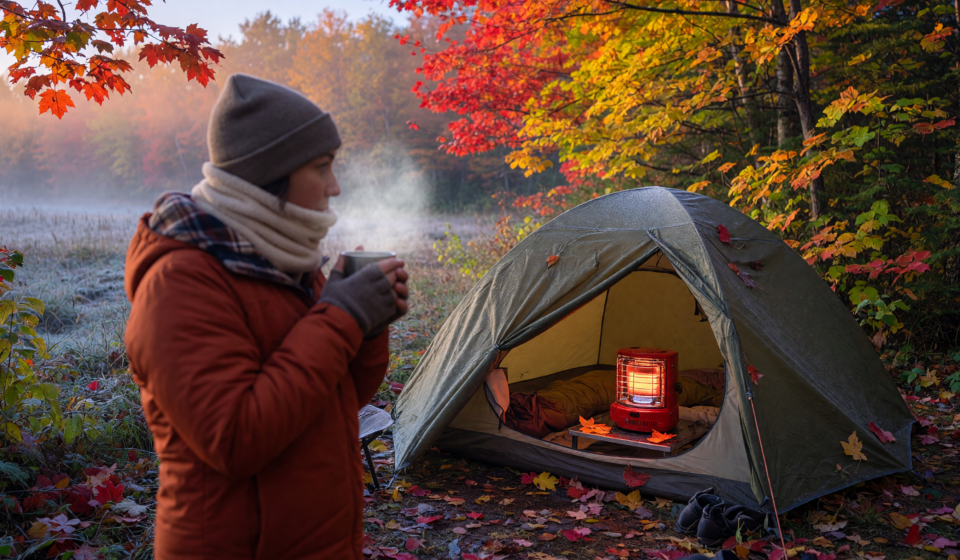
Fall Camping Safety: Layering, Tent Heaters and Cold-Night Gear
The sun drops behind the ridge, the fire settles to embers, and within an hour the temperature has fallen twenty degrees. That crisp, golden afternoon you hiked in on is gone, and the tent that felt cozy at dusk now feels like a refrigerator with a zipper. Autumn is arguably the best time of year to be outside, but it is also the season that catches experienced campers off guard, which is exactly why fall camping safety deserves more thought than a summer weekend ever does.
This guide walks through the gear and habits that keep cold nights comfortable instead of dangerous. We will cover the three-layer clothing system, why cotton works against you, how to use a tent heater without risking carbon monoxide poisoning, how to build a warm sleep system, and how to recognize the early signs of hypothermia before they become an emergency. None of this requires a big budget, just the right choices in the right order.
Why Fall Nights Turn Dangerous Faster Than You Expect
The danger of autumn is not extreme cold; it is the swing. Daytime highs can feel like summer while overnight lows dip toward freezing, and most people pack for what they felt at the trailhead. The U.S. Centers for Disease Control and Prevention notes that hypothermia can set in even at cool temperatures above 40 degrees Fahrenheit when a person becomes chilled by rain, sweat, or wind. In other words, you do not need a blizzard to be at risk. You need damp clothing, a stiff breeze, and a few careless hours after dark.
Fall also brings shorter daylight and wetter ground. Setting up camp in the dark, cooking with cold hands, and crawling into a bag you never warmed up all stack the odds against you. The good news is that every one of these problems has a simple, deliberate fix.
Fall Camping Safety Starts With Smart Layering
The single most reliable tool for staying warm is not a jacket, it is a system. Outdoor educators and retailers alike teach the three-layer approach because it lets you add or shed insulation as your activity and the weather change, instead of swinging between sweaty and shivering.
- Base layer: Sits against your skin and moves sweat away from it. Merino wool or synthetic fabrics wick moisture and keep you dry, which is the whole game in cold weather.
- Mid layer: Traps body heat. Fleece or a lightweight down or synthetic puffy creates the insulating air pocket that actually keeps you warm.
- Shell layer: Blocks wind and rain. A windproof, water-resistant outer shell stops the breeze from stripping away the heat your other layers worked to build.
The key habit is to adjust before you sweat, not after. Shed a layer on the uphill and add it back at the top. Damp-from-sweat is nearly as dangerous as damp-from-rain once the sun goes down.
👉 Shop merino wool or synthetic base layer sets on Amazon (Ad — as an Amazon Associate, we earn from qualifying purchases.)
Why Cotton Is the Enemy on Cold Nights
Backcountry guides have a blunt saying: cotton kills. It sounds dramatic, but the physics are simple. Cotton absorbs moisture and holds it against your skin, and wet fabric pulls heat out of your body far faster than dry fabric does. A sweat-soaked cotton T-shirt or a pair of damp jeans becomes a cooling system exactly when you need the opposite.
This matters most in fall because the temperature swing means you will almost certainly sweat during the day and then sit still as it drops at night. The CDC specifically lists sweat and rain as chilling factors that can trigger hypothermia in mild conditions. Swap cotton for wool or synthetics head to toe, including socks and underwear, and you remove one of the most common and avoidable cold-weather risks.
Remember. The goal on a cold night is to stay dry first and warm second, because you cannot stay warm if you are wet. Dampness from rain, sweat, or ground moisture is the thread running through nearly every cold-weather emergency.
Tent Heaters and the Carbon Monoxide Truth
A little heat can transform a cold night, and portable propane heaters are popular for exactly that reason. But this is the area where fall campers make the most dangerous mistakes, because the risk is invisible and silent. Any fuel-burning device, whether a heater, stove, lantern, or grill, produces carbon monoxide, an odorless, colorless gas that can be deadly in an enclosed space.
The U.S. Consumer Product Safety Commission is unambiguous: do not use portable heaters or lanterns while sleeping in enclosed areas such as tents, campers, and vehicles. The CPSC reports that people die every year from carbon monoxide poisoning tied to fuel-burning camping equipment, and it warns that the risk is even higher at high altitude. The most treacherous part is how the symptoms disguise themselves.
- Early symptoms: Headache, dizziness, weakness, and nausea that the CPSC notes are easily mistaken for a cold or the flu.
- As exposure builds: Vomiting, sleepiness, and confusion, which are especially dangerous because a drowsy camper simply falls asleep and never wakes.
- The trap: Because the gas has no smell, there is no warning to run. If you feel flu-like while using any fuel-burning gear, get to fresh air immediately.
A battery-powered carbon monoxide detector is cheap insurance and belongs in every tent or camper where any fuel is burned, even briefly. It is the one device that gives you the warning your nose cannot.
👉 Shop portable battery-powered carbon monoxide detector on Amazon (Ad — as an Amazon Associate, we earn from qualifying purchases.)
Choosing and Using an Indoor-Safe Heater
If you want warmth inside a tent, the safest path is a heater specifically built and certified for indoor use, combined with strict habits. The CPSC has highlighted that portable heaters equipped with an oxygen depletion sensor can help protect campers, because the sensor shuts the unit off automatically before oxygen drops to a hazardous level. Look for models tested and certified by a recognized safety laboratory, and read the manufacturer’s tent-use guidance rather than assuming.
- Oxygen depletion sensor (ODS): Automatically cuts the fuel if oxygen in the space falls too low. Treat it as a backup, not a license to run the heater while you sleep.
- Tip-over shutoff: Kills the flame instantly if the heater is knocked over, which matters in a cramped tent full of gear and sleeping bags.
- Ventilation: Crack a vent or window even with an indoor-safe unit. Airflow is what keeps carbon monoxide from accumulating in the first place.
- Never overnight: Use a heater to take the chill off before bed, then turn it off. Warm gear, not an open flame, should get you through the night.
👉 Shop indoor-safe portable propane tent heater with ODS on Amazon (Ad — as an Amazon Associate, we earn from qualifying purchases.)
Building a Sleep System That Actually Holds Heat
Most cold nights are lost from below, not above. The ground pulls warmth out of your body far faster than the air, so a sleeping bag alone is only half a system. The other half is what you put between yourself and the earth.
- Sleeping pad R-value: R-value measures how well a pad resists heat loss to the ground. Higher numbers mean more insulation, and fall camping usually calls for more than a thin summer pad provides.
- Temperature-rated bag: Choose a bag rated a bit colder than the forecast low. A rating is a survival number, not a comfort promise, so give yourself margin.
- Warm it up: Do jumping jacks or eat a snack before bed. Your bag traps the heat you bring into it; it does not generate any of its own.
- Dry sleep clothes: Change out of anything damp and into dry base layers and clean socks reserved just for sleeping.
A knit hat matters more than people expect, since a lot of heat escapes from an uncovered head. And a hot-water bottle tucked into the foot of the bag is an old trick that still works beautifully.
👉 Shop insulated sleeping pad and cold-rated sleeping bag on Amazon (Ad — as an Amazon Associate, we earn from qualifying purchases.)
Recognizing Hypothermia Before It Becomes an Emergency
Knowing the warning signs is the last line of defense, especially because a person slipping into hypothermia often does not realize it. The CDC lists a clear set of adult warning signs, and everyone in your group should know them and watch one another for them.
- Early signs: Shivering, exhaustion or feeling very tired, and cold, pale skin.
- Progressing signs: Confusion, fumbling hands, memory loss, slurred speech, and drowsiness.
- The danger sign: When shivering stops but the person is still cold, the situation is getting worse, not better.
If someone shows these signs, get them into shelter, remove wet clothing, and warm the core with dry layers, blankets, and warm drinks if they are alert. The CDC advises that a body temperature below 95 degrees Fahrenheit is a medical emergency requiring immediate attention. When in doubt, treat it as serious and seek help.
The Bottom Line
Fall camping rewards you with quiet trails, fewer bugs, and some of the best scenery of the year, and none of it has to come with a cold-weather scare. Stay dry with wool and synthetic layers, ditch the cotton, warm your tent safely and never sleep beside an open flame, insulate yourself from the ground, and learn the signs of hypothermia so you can act early. Do those five things and the season becomes what it should be: the best camping of the year. Pack deliberately, respect the temperature swing, and let the cold be a backdrop to the trip rather than the story of it.
Disclaimer: This article is provided for general educational purposes only and is not a substitute for professional medical advice, manufacturer instructions, or the guidance of qualified outdoor professionals. Always read and follow the directions and warnings that come with any heater, stove, or other gear, and seek emergency care for suspected carbon monoxide poisoning or hypothermia.
Sources: U.S. Consumer Product Safety Commission (CPSC), Carbon Monoxide Information Center guidance on portable heaters and camping equipment and news releases on oxygen depletion sensor heaters; U.S. Centers for Disease Control and Prevention (CDC), guidance on preventing hypothermia and cold-weather illness.