Pedestrian Visibility After Daylight Saving: Gear for Darker Commutes
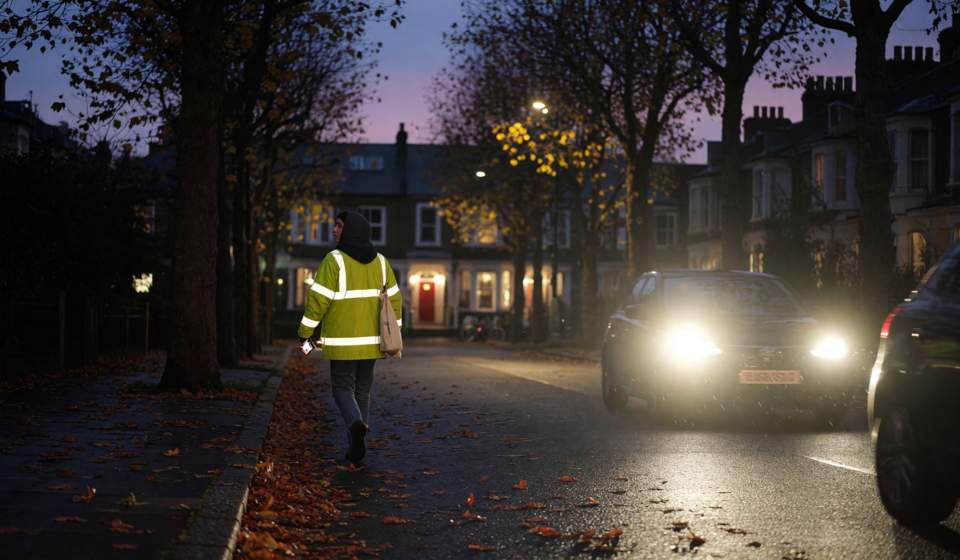
The first Monday after the clocks fall back always feels the same. You leave the office at the usual hour, step outside, and the sky that was bright last week is now a deep, headlight-streaked gray. Nothing about your route changed, but the light did, and drivers who used to see you clearly now catch you late. That single-hour shift is exactly when pedestrian visibility stops being an abstract idea and becomes the thing standing between you and a two-ton vehicle. This guide is about closing that gap on purpose, before the season does it for you.
Below, we walk through what actually happens to drivers’ eyes after dark, why fluorescent color and retroreflective material do two completely different jobs, and how the U.S. high-visibility standard, ANSI/ISEA 107, defines the gear that professionals trust. You will learn how to think about pedestrian visibility in real driving conditions, what to look for in a vest, jacket, or set of accessories, and where a headlamp or reflective band earns its place. The goal is simple: help the people behind the wheel see you sooner, from farther away, so they have time to react.
Why the Fall Time Change Is So Hard on Walkers
The problem is not the darkness itself. It is the sudden shift of darkness onto a commute that used to happen in daylight. When the clocks move back in autumn, the evening rush hour is pushed into low light almost overnight, and that is precisely the window when the most people are walking near traffic. The Insurance Institute for Highway Safety has noted that changing the clocks tends to move risk around rather than remove it: turning the clocks back is associated with more fatal crashes involving pedestrians and bicyclists in the weeks that follow, even as it eases risk for vehicle occupants. The common thread, according to IIHS, is changing light conditions during key travel periods.
- Timing collision: The busiest walking hours suddenly overlap with the darkest part of the commute.
- Adaptation lag: Both drivers and pedestrians spend a few weeks behaving as if it is still light out.
- Nighttime concentration: Most pedestrian deaths already occur in the dark, so shifting more foot traffic into darkness compounds an existing problem.
What Actually Happens to a Driver’s Eyes After Dark
It helps to picture the road from the driver’s seat. At night, a driver is essentially looking down a cone of headlight, and everything outside that cone is guesswork. Contrast collapses: a person in dark clothing blends into a dark background until they are dangerously close. Glare from oncoming headlights, wet pavement, and windshield grime all shrink the distance at which a driver can pick out a human shape. The Federal Highway Administration has made nighttime visibility a national focus precisely because the gap between how far headlights reach and how far a driver can actually recognize a pedestrian is where so many crashes happen.
The takeaway for you as a walker is counterintuitive but important: being lit is not the same as being seen. You want to give the driver’s eyes something that pops out of the background early, from the edges of the headlight beam, while there is still time and distance to slow down.
Fluorescent Color and Retroreflection Do Two Different Jobs
This is the single most useful thing to understand about visibility gear, and most people get it half right. Bright fluorescent fabric and retroreflective striping are not interchangeable. They solve different problems at different times of day, which is why the best gear combines both.
- Fluorescent background material: The vivid yellow-green, orange-red, and red fabrics work by converting invisible ultraviolet light into visible light, making you glow against the surroundings. This is a daytime and twilight tool, and it does very little in full dark.
- Retroreflective material: This bounces a car’s headlight beam straight back toward the driver’s eyes, so you light up brilliantly the instant a beam hits you. This is your nighttime tool, and it is nearly useless without a light source aimed at you.
- Why you need both: Dawn, dusk, and the mixed-light hours around the fall time change are exactly when neither one alone is enough. Combined-performance materials cover the whole range.
Remember this. Fluorescent color gets you seen in daylight and twilight; retroreflective striping gets you seen in a headlight beam at night. If your commute crosses both, you need a garment that carries both.
How ANSI/ISEA 107 Defines High-Visibility Gear
In the United States, the reference standard for high-visibility safety apparel is ANSI/ISEA 107, developed by the International Safety Equipment Association and administered through the American National Standards Institute. It was written for occupational wear, but its logic is a useful buying guide for anyone who walks near traffic, because it spells out how much bright fabric and reflective material a garment must carry to perform. The standard sorts gear by Type and by Class.
- Type O (Off-Road): For controlled settings away from public traffic, such as warehouse yards. It carries only Class 1 performance.
- Type R (Roadway): For workers exposed to moving traffic and public roadways, available in Class 2 and Class 3.
- Type P (Public Safety): For first responders such as police and fire personnel, available in Class 2 and Class 3, often cut shorter for access to equipment worn at the waist.
- Class 2 vs. Class 3: Class 3 requires more fluorescent background and retroreflective material than Class 2, and is intended for higher-speed traffic and situations where a person may not be able to give the road their full attention.
For a regular pedestrian commuter, a Type R Class 2 or Class 3 garment is a sensible target. It is built to be seen next to moving vehicles, and the label tells you it has met a measurable, U.S. performance benchmark rather than just looking bright on a store shelf.
👉 Shop ANSI/ISEA 107 Class 2 or Class 3 high-visibility vest on Amazon (Ad — as an Amazon Associate, we earn from qualifying purchases.)
Building a Wardrobe for Darker Commutes
You do not need to look like a road crew to be safe, but you do need to be deliberate. Think in layers that match how dark your specific route gets and how fast the traffic moves. A vest thrown over a work jacket is a fine start; a dedicated reflective jacket is better if you walk in rain or cold, because wet, dark outerwear is one of the hardest things for drivers to pick out.
- Core garment: A high-visibility vest or jacket that carries both fluorescent fabric and 360-degree retroreflective striping so you read from every angle.
- Placement matters: Reflective material on the ankles, knees, and wrists creates “biomotion,” the up-and-down movement that human eyes recognize as a walking person faster than a static blob of light.
- Color choice: Fluorescent yellow-green tends to stand out well in the mixed foliage and pavement of everyday streets; orange can be a better pick against green backdrops.
- Coverage over brightness: A little reflectivity in the right places often beats a lot of it in the wrong places.
👉 Shop reflective ankle bands and wrist bands for biomotion on Amazon (Ad — as an Amazon Associate, we earn from qualifying purchases.)
Lights and Accessories That Earn Their Place
Retroreflective gear needs a light aimed at you to shine, which is great when a car is approaching but leaves gaps at intersections, mid-block crossings, and moments when no headlights are pointed your way. Active lighting fills those gaps by making you a light source in your own right, not just a reflector.
- Headlamp or chest light: A forward-facing light helps you see the path and, just as important, marks your position to anyone nearby.
- Rear-facing red light: A small blinking red light clipped to a bag or belt tells drivers approaching from behind exactly where you are.
- Clip-on and wearable LEDs: Lightweight, rechargeable lights on a jacket zipper or shoe give you all-angle presence without adding bulk.
- Steady vs. blinking: Blinking draws attention, but a steady light can be easier for a driver to judge distance against, so many walkers run one of each.
👉 Shop rechargeable clip-on LED safety light and headlamp on Amazon (Ad — as an Amazon Associate, we earn from qualifying purchases.)
Habits That Multiply Your Visibility
Gear is only half the equation. The way you move through the dark decides whether all that reflective material ever gets the chance to work. A few small habits stretch your margin of safety further than any single product.
- Cross where drivers expect you: Use marked crosswalks and intersections; a reflective vest cannot fully compensate for stepping out where no one is looking.
- Make eye contact: Before crossing, confirm the driver has actually seen you rather than assuming your gear did the work.
- Walk facing traffic: Where there is no sidewalk, facing oncoming vehicles lets you and the driver see each other sooner.
- Keep gear clean and intact: Grime and wear dull both fluorescent fabric and retroreflective striping, so replace pieces that have gone dim or frayed.
The Bottom Line
The fall time change does not create new danger out of nowhere; it takes an ordinary walk and drops it into the dark before anyone has adjusted. You can meet that shift head-on by dressing for how drivers actually see. Pair fluorescent color for twilight with retroreflective striping for full dark, look for the ANSI/ISEA 107 label so you know the gear performs, add lights to cover the angles that reflection misses, and place bright material where your body moves. Do that a week before the clocks fall back rather than a week after, and you turn the most dangerous stretch of the year into just another commute. The drivers still have to do their part, but you will have given them every reason to see you sooner.
Disclaimer: This article is for general educational purposes only and does not constitute safety, legal, or professional advice. High-visibility apparel reduces but does not eliminate risk, and no gear can guarantee that a driver will see you. Always follow local traffic laws and use your own judgment. Confirm current requirements and product certifications with the relevant standards bodies and manufacturers before relying on any specific item.
Sources: International Safety Equipment Association (ISEA) and the American National Standards Institute (ANSI/ISEA 107 High-Visibility Safety Apparel standard); Insurance Institute for Highway Safety (IIHS) reporting on daylight saving time and crash risk; U.S. Federal Highway Administration (FHWA) Nighttime Visibility for Safety initiative; National Highway Traffic Safety Administration (NHTSA) pedestrian safety guidance.