Summer Soccer Heat Protocols: Shin Guards, Cleats and Water Breaks
It is the middle of an August two-a-day, the turf is radiating heat you can feel through your cleats, and a midfielder who was sprinting hard five minutes ago has gone quiet on the sideline. Coaches and parents who have spent time around summer fields know this moment, and they know that the difference between a scary afternoon and an ordinary one usually comes down to preparation that happened long before kickoff. Heat is the opponent that never appears on the roster, and it does not wait for the second half.
This guide walks through summer soccer safety from the ground up, covering the three areas that matter most when the temperature climbs: water and cooling breaks, shin guards, and cleats. You will learn how to read the heat using the tools that U.S. governing bodies rely on, how to structure hydration so it actually keeps players in the game, what the NOCSAE shin guard standard means for the gear in your bag, and how to pick and fit equipment for hot-weather surfaces. The goal is not to memorize a chart, but to understand the why behind each protocol so you can make good calls in real conditions.
Why Summer Heat Is Soccer’s Quiet Opponent
Soccer is a running sport with few natural stoppages, which is exactly what makes it demanding in the heat. A field player can cover several miles in a match, generating body heat faster than the body can shed it when the air is hot and humid. When sweat cannot evaporate efficiently, core temperature creeps upward, and that is the pathway to exertional heat illness. The Centers for Disease Control and Prevention and the National Athletic Trainers’ Association both classify exertional heat stroke as one of the leading causes of preventable death in young athletes, which is why the sport’s safety culture treats heat with the same seriousness as a hard tackle.
Two factors make young players especially vulnerable. First, athletes who are not yet acclimatized to heat, such as players returning from a summer off, take one to two weeks of gradual exposure before their bodies adapt. Second, kids and teens may not recognize or report early warning signs, pushing through symptoms because they want to stay on the field. Protocols exist precisely because we cannot rely on a tired player to make that judgment call alone.
Reading the Heat: WBGT and the Flag System
The single most important shift in modern heat safety is moving away from the simple air-temperature reading on your phone. The standard that sports-medicine professionals use is Wet Bulb Globe Temperature (WBGT), a composite measurement that accounts for air temperature, humidity, wind, and radiant heat from the sun. Because humidity is what stops sweat from cooling you, WBGT gives a far more honest picture of heat stress than temperature alone. A relatively mild 85-degree day can carry serious risk if the humidity is high.
U.S. Soccer’s Recognize to Recover program publishes WBGT-based guidelines that translate readings into color-coded action levels, and the Korey Stringer Institute has led much of the research behind region-specific thresholds. The thresholds are set slightly differently depending on the climate an athlete is accustomed to, but the framework is consistent everywhere.
- Green: Good conditions for normal activity, with standard hydration breaks built into the session.
- Yellow: Less-than-ideal conditions that call for longer and more frequent water breaks and closer monitoring of players.
- Orange: Moderate risk that limits total session length and adds mandatory breaks, with high-risk athletes watched closely.
- Red: High risk that sharply shortens sessions, removes extra conditioning, and maximizes rest and hydration.
- Black: Extreme conditions under which play should be canceled or delayed until the WBGT drops.
An affordable handheld WBGT meter, or a reading from a certified athletic trainer, turns these bands from theory into a decision you can make on the spot. Checking the reading on the field itself matters, because a shaded parking lot and a full-sun turf field can differ dramatically.
Water Breaks and Cooling Breaks: Timing That Works
A water break is not just a pause; it is a planned intervention. Recognize to Recover guidance is built around giving players unlimited access to fluids and scheduling breaks that get longer and more frequent as the WBGT rises. The idea is to replace fluid before a player feels thirsty, since thirst is a lagging indicator that often shows up after mild dehydration has already set in.
There is an important distinction between two kinds of stoppage. A water break is a short pause to drink. A cooling break, the same concept FIFA used during the 2014 World Cup in Brazil, is a longer stoppage of roughly three minutes, typically around the 30th minute of each half in hot matches, giving players time to move into shade, drink, and actively lower body temperature. For elevated conditions, guidance points to a cooling break for each half once WBGT crosses a defined threshold.
- Schedule ahead: Decide break timing based on the WBGT reading before the session, not in the moment when players are already struggling.
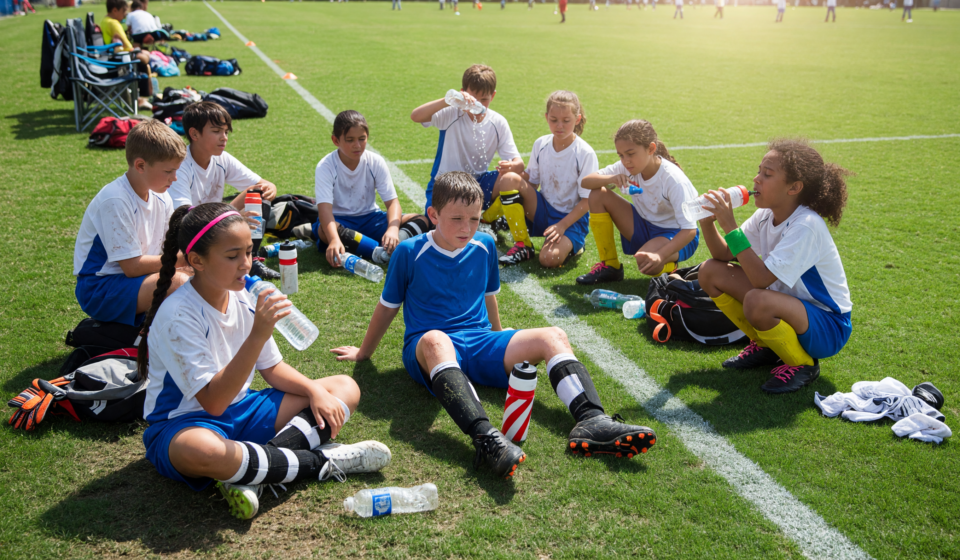
- Use shade actively: Move players out of direct sun during every break, even a short one, because radiant heat load drops immediately in the shade.
- Keep cold water on hand: Chilled fluids are more palatable, so athletes tend to drink more of them.
- Have a cooling plan for emergencies: The gold-standard response to suspected heat stroke is rapid cooling, and cold-water immersion or dousing should be ready before anyone needs it.
👉 Shop insulated water bottles and cooling towels for the sideline on Amazon (Ad — as an Amazon Associate, we earn from qualifying purchases.)
Shin Guards: The NOCSAE Standard and a Proper Fit
Heat protocols keep players upright, but shin guards keep them intact. The shin is poorly padded by nature, and a mistimed challenge or a stray cleat can cause fractures or deep contusions. This is where equipment standards earn their keep. The National Operating Committee on Standards for Athletic Equipment (NOCSAE) maintains standard ND090, the performance specification for newly manufactured soccer shin guards, which sets impact-attenuation requirements that a compliant guard must meet.
For anyone playing under National Federation of State High School Associations (NFHS) rules, this is not optional. NFHS soccer rules require that shin guards bear the NOCSAE seal, be age-appropriate for the wearer, and be worn under the socks with the sock covering the guard. Looking for that stamp is the simplest way to know a guard has been tested rather than merely marketed as protective.
- Check for the NOCSAE seal: A visible NOCSAE mark indicates the guard meets the ND090 performance standard required for high school play.
- Size by coverage: A guard should sit roughly two inches below the knee and extend down toward the top of the boot, protecting the length of the shin.
- Consider ankle protection for younger players: Full-length guards with ankle guards help protect against the unpredictable contact common in youth games.
- Prioritize a snug, stable fit: A guard that slides around leaves gaps and chafes, so straps or a compression sleeve that hold it in place matter as much as the shell.
Summer adds one more wrinkle: sweat. A guard held on by a slippery, saturated sleeve can migrate during play, so breathable backing and secure straps are worth prioritizing in hot weather.
👉 Shop NOCSAE-certified youth and adult soccer shin guards on Amazon (Ad — as an Amazon Associate, we earn from qualifying purchases.)
Cleats for Summer Surfaces
Summer changes the ground under a player’s feet, and the wrong cleat can create its own set of problems. Firm, dry natural grass and synthetic turf behave very differently from the soft, wet pitches of spring, and matching the outsole to the surface protects both traction and joints.
- Firm ground (FG): The default choice for dry natural grass in summer, with molded studs that grip without digging in too deep.
- Artificial ground (AG) and turf (TF): Designed for synthetic surfaces, which get punishingly hot and hard in summer sun; their shorter, more numerous studs spread load and reduce the risk of a stud catching.
- Soft ground (SG): Built for wet, muddy fields and generally the wrong tool for a baked summer pitch, where long metal studs can over-grip.
Beyond the studs, fit and materials matter more in the heat. Feet swell over a long, hot session, so leaving a small amount of room and choosing breathable uppers helps prevent blisters, which thrive in the damp environment of a sweaty boot. On very hot turf, remember that the surface temperature can run far above the air temperature, so checking that footwear and socks manage heat and moisture is part of a real summer setup.
👉 Shop firm-ground and turf soccer cleats for summer play on Amazon (Ad — as an Amazon Associate, we earn from qualifying purchases.)
Hydration and Recognizing Heat Illness
Hydration is a routine that starts before the whistle, not a rescue you attempt after a player wilts. NATA guidance emphasizes arriving well-hydrated, drinking on a schedule during activity, and replacing fluids and electrolytes afterward. For sessions lasting longer than about an hour in the heat, a sports drink with sodium can help replace what is lost in sweat, while water is fine for shorter efforts.
Know the signs. Confusion, stumbling, slurred speech, or a player who stops sweating in extreme heat are red flags for exertional heat stroke, a medical emergency. The recognized response is to call 911, begin rapid whole-body cooling immediately, and cool first before transporting. Minutes matter more than almost any other factor in survival.
Milder heat illness shows up as heavy sweating, muscle cramps, headache, nausea, dizziness, or unusual fatigue. The right move is to stop play, get the athlete into shade, remove excess equipment, and provide fluids while monitoring them closely. When in doubt, sit the player down; there is no game important enough to gamble on.
Building a Summer Soccer Safety Protocol
Good outcomes come from systems, not heroics. A team that writes down its heat plan and rehearses it removes guesswork from the hottest, most stressful moments. The best protocols borrow directly from the frameworks that governing bodies and the OSHA and CDC heat-safety campaigns already recommend for outdoor activity.
- Measure, do not guess: Take a WBGT reading on the field and apply the Recognize to Recover action level for that number.
- Acclimatize gradually: Ease players into full intensity over the first one to two weeks of summer training rather than starting at full load.
- Write the break schedule down: Post the hydration and cooling-break plan so every coach and parent knows it before the session begins.
- Stage emergency cooling: Keep ice, water, and a cooling method ready on-site, and make sure at least one adult knows the heat-stroke response.
- Inspect gear regularly: Confirm shin guards still bear the NOCSAE seal and fit, and that cleats match the surface and the swollen feet of a long summer session.
The Bottom Line
Summer soccer rewards the teams that respect the conditions. Reading the heat with WBGT instead of a guess, scheduling water and cooling breaks before anyone is struggling, trusting NOCSAE-certified shin guards that actually fit, and matching cleats to a hot, firm surface are not separate chores; they are one connected habit of preparation. Do them consistently and the hard afternoons become manageable, players stay in the game, and the only thing anyone remembers about the heat is that the team was ready for it. Build the protocol once, practice it often, and let it carry you through the hottest weeks of the season.
Disclaimer: This article is provided for general educational purposes only and does not constitute medical, safety, or professional advice. Heat-illness prevention and equipment needs vary by individual, climate, and level of play. Always follow the current guidelines of your league and governing bodies, and consult a qualified athletic trainer or medical professional for decisions about player health and safety.
Sources: U.S. Soccer Recognize to Recover (Environmental Conditions and Heat Guidelines); National Operating Committee on Standards for Athletic Equipment (NOCSAE) standard ND090 for soccer shin guards; National Federation of State High School Associations (NFHS) soccer rules on shin guards; National Athletic Trainers’ Association (NATA) position statements on exertional heat illness and hydration; Korey Stringer Institute; U.S. Centers for Disease Control and Prevention (CDC) and OSHA heat-safety guidance.