
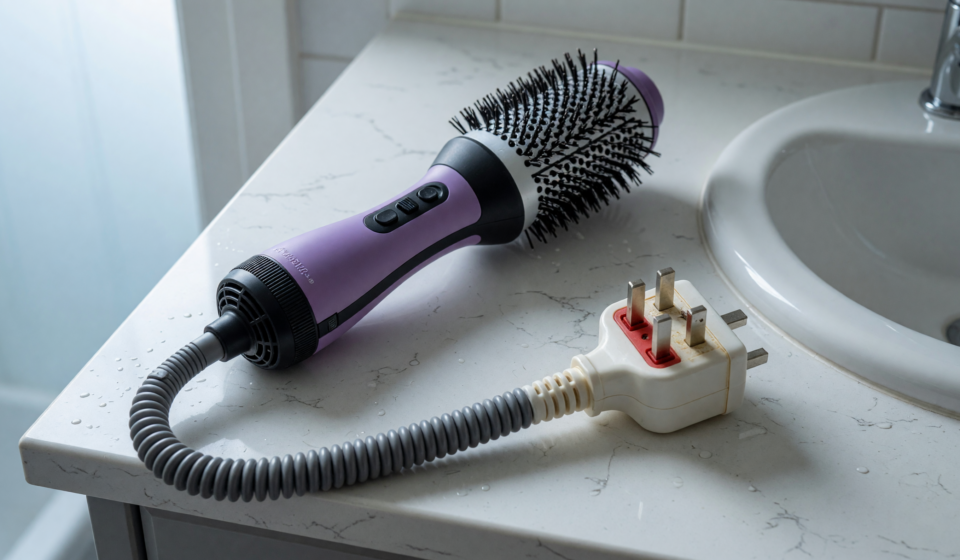
Hair Dryer Brushes Recalled Over Missing Electrocution Protection
The U.S. Consumer Product Safety Commission has issued a fresh round of actions against cheap, online-only hair dryer brushes, and the latest hair dryer brush recall notices point to the same dangerous flaw over and over: a missing safety part that is supposed to stop a plugged-in appliance from electrocuting you if it falls into water. On September 10, 2026, the CPSC announced recalls of Junkins “DHASUWT” and Guang Zhou “Wantefully” hair dryer brushes, both because they lack an integrated immersion protection device. Those recalls follow an August 13, 2026 CPSC safety warning about additional brushes sold under the Zuoxukeji, Jowenia, and TruPart names after the sellers ignored the agency’s requests to recall them. For a product people routinely use inches from a sink full of water, that missing part is not a minor detail.
What the hair dryer brush recall covers
The two September recalls involve small quantities of nearly identical products, both carrying model number XR-8801. Junkins recalled about 1,738 of its DHASUWT hair dryer and blow dryer brushes (recall number 26-750), which were sold on Amazon.com from October 2024 through June 2026 for about $27. The CPSC says these units not only lack immersion protection but have already generated 10 reports of the brush smoking or catching fire, though no injuries have been reported. Guang Zhou recalled roughly 2,295 of its Wantefully 2-in-1 hair dryer and styler brushes (recall number 26-754), sold on Amazon.com in February and March 2026 for about $30. Those brushes can also overheat, and there has been one report of a unit overheating and melting, again with no injuries reported so far.
The earlier CPSC warning is a different kind of action. When a company will not agree to a voluntary recall, the agency can warn the public directly. That is what happened on August 13, 2026 (warning number 26-704), when the CPSC told consumers to immediately stop using hair dryer brushes sold on Walmart.com under the Zuoxukeji and Jowenia names and on eBay.com under the TruPart name, priced between roughly $15 and $30. According to the CPSC, the Chinese sellers had been unresponsive to the agency’s requests for a recall. The common thread across every one of these notices is the same: no integrated immersion protection device.
Why a missing part makes a hair dryer deadly
An immersion protection device is a small circuit interrupter built into the plug or the appliance body. It constantly watches for the tiny current imbalance that occurs when electricity finds an unintended path to ground — for example, through water — and it cuts power in a fraction of a second. On a compliant hair dryer, you can usually see it: a bulky, block-shaped plug with small “test” and “reset” buttons, carrying the certification mark of a recognized testing laboratory. Without that part, a hair dryer that lands in a sink, tub, or basin of water while plugged in can energize the water and anyone touching it.
This is not a new or theoretical hazard. The protection has been required for decades under the UL 859 safety standard, with a stronger requirement covering both the “on” and “off” switch positions taking effect January 1, 1991. In 2011, the CPSC made compliance a federal requirement by adding non-conforming hand-supported hair dryers to its Substantial Product Hazard List. The rule worked dramatically. CPSC historical data show electrocution deaths tied to hair dryers fell from an average of roughly 15 to 16 per year in the early 1980s to fewer than one per year today, even as tens of millions of units are sold annually. The recalled and warned-about brushes represent products that slipped that decades-old safety net, mostly through online marketplaces.
Why it matters for safety
Hair dryer brushes are used exactly where the danger lives: at a bathroom vanity, an arm’s length from a filled sink, often on a wet countertop, sometimes by teenagers or children. A product that looks and works like a normal styling tool but skips the one component designed for that environment gives no warning until the worst moment. The fire and overheating reports layered on top of the electrocution risk make the picture worse, because a device that can smoke or melt is failing in more than one way.
- Electrocution and shock: Without immersion protection, a drop into water while plugged in can be fatal.
- Fire and burns: The Junkins brushes drew 10 smoking-or-fire reports; the Wantefully brushes can overheat and melt.
- Hard to spot: The products look like ordinary name-brand styling tools and were priced normally, between about $15 and $30.
- Marketplace gap: Several sellers ignored recall requests entirely, so no company is contacting buyers — the burden falls on you.
What you should do now
If you own any of the named brushes — DHASUWT, Wantefully, Zuoxukeji, Jowenia, or TruPart — or any inexpensive hair dryer brush bought from an online marketplace, stop using it and unplug it now. Check the plug before you use any hair dryer or hair dryer brush: if it does not have the bulky block-shaped plug with test and reset buttons and a recognized testing-lab certification mark, treat it as unsafe.
What to do. Unplug the brush and stop using it immediately. For the recalled Junkins and Guang Zhou units, cut the power cord and email a photo of the destroyed product for a full refund (Junkins at DHASUWT_recall@163.com; Guang Zhou at wantefully@163.com). For the warned-about Zuoxukeji, Jowenia, and TruPart brushes, the CPSC says to unplug, cut the cord, and throw the device away — and do not resell or give it away.
Context and what’s next
These notices are part of a broader pattern the CPSC has flagged repeatedly in 2025 and 2026: low-cost styling tools sold through Amazon, Walmart, eBay, and TikTok Shop that fail the immersion protection requirement, sometimes marketed under a rotating set of brand names but sharing the same model number and the same defect. Because many of the sellers are overseas and unresponsive, direct-warning actions are likely to continue, and shoppers cannot assume that a listing on a major marketplace has been vetted for this safety feature.
The practical takeaway is simple and durable: the plug tells the story. Any hand-held hair dryer or hair dryer brush sold in the United States is supposed to carry that immersion protection plug, and if yours does not, it should not be anywhere near water. When in doubt, buy from established brands and retailers that clearly identify the safety certification, and report a suspect product to the CPSC at SaferProducts.gov.
Disclaimer: This article is for general safety information only and is not legal, medical, or product-specific advice. Recall details, unit counts, and remedies can change as agencies update their notices. Always confirm the current status and instructions for any recall directly with the U.S. Consumer Product Safety Commission and the manufacturer before acting.
Sources: CPSC – Junkins DHASUWT recall (26-750); CPSC – Guang Zhou Wantefully recall (26-754); CPSC – Consumer warning (26-704); Medical Daily – immersion protection explainer.