Blue Bird Recalls 5,125 School and Transit Buses Over a Brake-Line Fire Risk
Just weeks before the new school year begins, one of America’s largest bus builders has issued a safety recall that hits close to home for millions of families. On July 24, 2026, Blue Bird filed a school bus brake recall with the National Highway Traffic Safety Administration (NHTSA) covering 5,125 Vision buses because a small metal pin can rub through a hydraulic brake line, leak fluid, and raise the risk of a fire and lost braking. It is the kind of quiet mechanical defect that gives a driver little warning, which is exactly why it matters for anyone who rides, drives, or waits at the curb for one of these buses.
What happened
NHTSA opened two related campaigns for the defect. Campaign 26V466 covers 5,096 Blue Bird Vision school buses, and campaign 26V467 covers 29 Vision transit buses built on the same platform, for a combined 5,125 vehicles. Both cover model years 2022 through 2027. According to the recall documents, an exhaust hanger cotter pin (part number 00120194) can migrate out of position and come into contact with the hydraulic brake line. Over time and vibration, that contact can wear through the line and allow brake fluid to leak out.
The consequences run in two directions. Brake fluid dripping onto hot exhaust components raises the risk of a fire. At the same time, losing fluid degrades braking performance and lengthens the distance a heavy bus needs to stop. Blue Bird traced the root cause to a supplier-provided clevis and cotter pin kit that did not match the released engineering design, combined with normal build variation on the line that let the pin drift into the brake line’s path. Notably, the summary warns that the only alert a driver may get is a sudden loss of brake pressure, with no dashboard light or gradual fade to signal trouble ahead.
Why this school bus brake recall matters for safety
A yellow school bus is one of the safest ways for a child to travel, and that reputation is built on layers of engineering and inspection. A brake defect strikes at the heart of that system. Unlike a passenger car, a loaded school bus carries dozens of children and weighs many tons, so any loss of stopping power translates into a much longer distance before the vehicle comes to rest. On a hilly route, at a rail crossing, or approaching a stop where kids are gathering, a few extra feet can be the difference between a routine morning and a tragedy.
The fire angle deserves equal attention. Brake fluid is flammable, and an engine or exhaust bay reaches temperatures more than high enough to ignite it. A fire that starts in a moving bus full of children is a worst-case scenario for any transportation director, which is why NHTSA and manufacturers treat fluid-on-hot-surface defects with urgency. The timing compounds the concern: districts across the country are pulling buses out of summer storage and running pre-service inspections right now, so the window to catch this defect before students board is narrow.
What you should do
Responsibility here falls mainly on fleet operators and school districts, but drivers, mechanics, and even parents have a role in making sure no affected bus slips through.
- Fleet managers: Cross-check your Blue Bird Vision inventory against NHTSA campaigns 26V466 and 26V467. Any 2022–2027 Vision school or transit bus should be verified by VIN before it returns to a route.
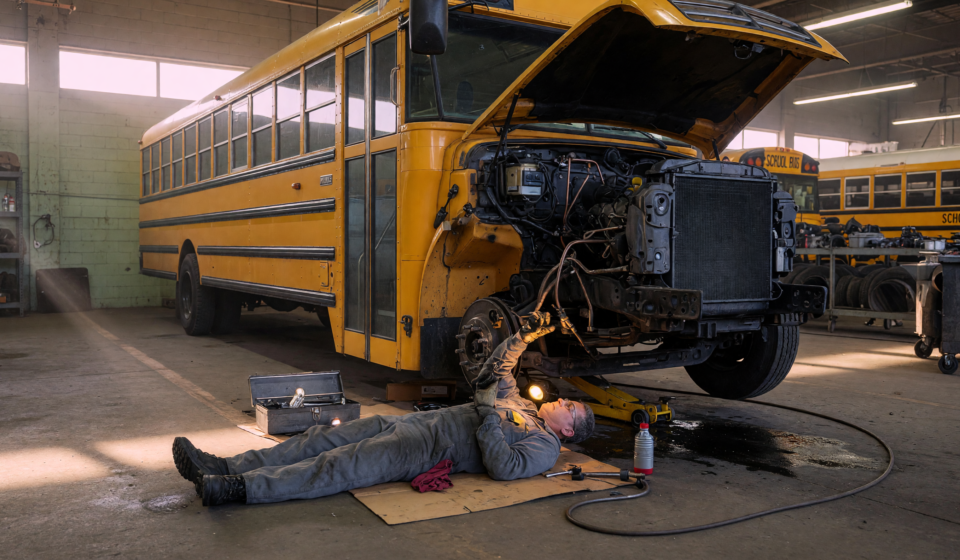
- Maintenance staff: Inspect the exhaust hanger cotter pin and the nearby hydraulic brake line for any sign of contact, chafing, or fluid weeping, and prioritize buses scheduled for early back-to-school service.
- Drivers: Treat any change in brake feel, a low or soft pedal, or the smell of hot fluid as an immediate stop-and-report condition rather than something to finish the route with.
- Parents: You cannot inspect a bus yourself, but you can ask your district’s transportation office whether its Blue Bird fleet is affected and whether the free repair has been completed.
What to do. Look up your bus by VIN at nhtsa.gov/recalls or check the campaign number with your Blue Bird dealer. The fix is free: dealers will replace the exhaust hanger cotter pin at no charge and replace the brake line as well if it shows contact damage. Do not delay putting an affected bus back into student service until that repair is confirmed.
Context and what’s next
The remedy is straightforward and inexpensive, which is often the case with defects rooted in a single mismatched part. Blue Bird dealers will replace the cotter pin at no cost to owners, and if inspection shows the brake line has already been worn or damaged, they will replace the line too. Owner and dealer notifications for the recall are due by September 18, 2026, so operators should not simply wait for a letter to arrive before checking their own fleets, especially with the calendar working against them.
Blue Bird’s action did not stand alone. In the same week’s NHTSA commercial vehicle listings, other student-transport defects surfaced, including an International IC Bus recall over insufficient epoxy on body joints affecting a far larger number of buses, and a Coach and Equipment recall tied to wheelchair lift controls. Together they are a reminder that the machinery carrying children to school is complex, heavily regulated, and dependent on suppliers getting small parts exactly right. For families, the reassuring part of a recall is that the system worked as intended: the defect was identified, reported, and set on a path to a free fix before it caused widespread harm. The job now is making sure every affected bus actually gets that repair before the first bell rings.
Disclaimer. This article is for general information and safety awareness only and is not a substitute for official recall notices or professional maintenance guidance. Recall details, unit counts, and remedy instructions can change as manufacturers update their filings. Always confirm your vehicle’s status by VIN with NHTSA or an authorized Blue Bird dealer before making decisions about placing a bus in service.
Sources: NHTSA recalls portal; The Brake Report: Blue Bird Vision bus brake line recall; Trucks, Parts, Service: NHTSA commercial vehicle recalls, week of July 27, 2026.