
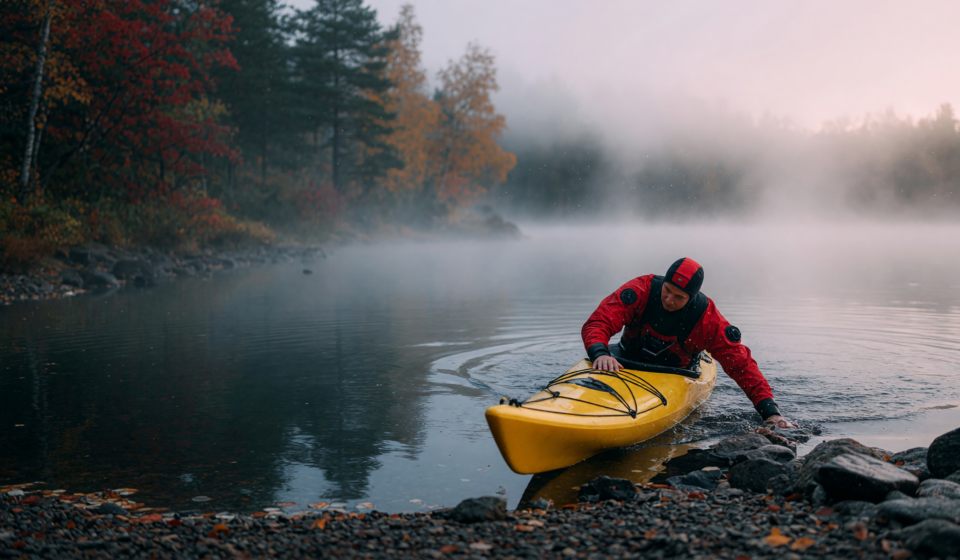
Drysuits vs Wetsuits for Fall Kayaking: Staying Warm and Safe
The sky is bright, the maples are turning, and the air on the launch ramp feels like a gift. Then you dip a hand in the water and remember what fall really is on the river: a warm day sitting on top of a cold, patient lake. That gap between the air you feel and the water you might fall into is exactly where paddlers get hurt every autumn, and it is exactly why the drysuit vs wetsuit question matters more in October than it does in July.
This guide walks through how each garment actually keeps you alive, not just comfortable. We will cover the difference between a drysuit and a wetsuit, when each one is the right call, why you dress for the water temperature and never the air, and how the rest of your kit, from your PFD to your layers, works with your suit. The goal is simple: if you go over, you want to come up warm, calm, and able to get yourself back in the boat.
Why Fall Water Is More Dangerous Than It Looks
In fall, the air warms up fast on a sunny afternoon, but large bodies of water hold onto summer’s heat for weeks and then let it go slowly. The result is a stretch of the season where a 70-degree afternoon can sit over water cold enough to hurt you within seconds of immersion. According to the National Center for Cold Water Safety, water below about 70°F (21°C) is cold enough to warrant thermal protection, and the 50 to 60°F (10 to 15°C) range is where an unprotected person tends to experience maximum-intensity cold shock.
Cold shock is the real threat, and it happens long before hypothermia. When you hit cold water unexpectedly, your body responds with an involuntary gasp, rapid breathing, and a spike in heart rate. If your face goes under during that first gasp, you can inhale water and drown in moments, even as a strong swimmer. Here is what makes fall so deceptive:
- The air lies: a comfortable deck temperature tells you nothing about how the water will treat your body.
- Cold shock is fast: the dangerous gasp-and-hyperventilate response peaks in the first minute, before you can think your way out of it.
- Strength fades: as cold reaches your muscles and nerves, your hands and arms stop cooperating, making self-rescue harder the longer you are in.
- Help is far: fall means fewer boats on the water and shorter daylight, so rescue can take longer than in summer.
Drysuit vs Wetsuit: How Each One Keeps You Warm
The two suits solve the same problem in completely different ways, and understanding the mechanism is the fastest route to the right choice. A wetsuit is made of neoprene, a foam rubber full of tiny gas bubbles. It lets a thin film of water seep in against your skin, your body warms that film, and the neoprene slows how fast that warmth escapes. The suit only works if it is snug, because a loose wetsuit flushes cold water through and steals the heat you just made.
A drysuit takes the opposite approach: it keeps water out entirely. Waterproof fabric plus watertight gaskets at the neck and wrists seal you off from the lake, and all of your insulation comes from the clothing you wear underneath. Because a drysuit does not rely on your body heat to warm any incoming water, it can keep you far more comfortable in genuinely cold conditions, and it lets you dial insulation up or down by changing your layers.
The core idea. A wetsuit slows heat loss by trapping a warmed layer of water against your skin. A drysuit stops heat loss by keeping the water off you entirely and letting your under-layers do the insulating. Neither works if it fits poorly or leaks.
👉 Shop paddling drysuit with latex neck and wrist gaskets on Amazon (Ad — as an Amazon Associate, we earn from qualifying purchases.)
When a Wetsuit Is the Right Call
A wetsuit shines in the shoulder season when the water is cool but not brutally cold, and when you expect to be active and possibly getting splashed or rolling anyway. For many paddlers, early fall on water that is still holding some summer warmth is comfortable wetsuit territory. Think of it as protection that buys you time and function, not indefinite survival.
- Best in milder cold: a well-fitted wetsuit is a reasonable choice as water cools through the upper range where protection first becomes necessary.
- Fit is everything: it must be thick enough to insulate and snug enough that cold water is not constantly flushing through.
- Coverage matters: a sleeveless “farmer john” leaves arms exposed, while a full suit protects more of the body for colder outings.
- Budget-friendly entry: wetsuits generally cost less than drysuits, which makes them a common starting point for new cold-water paddlers.
👉 Shop full-coverage paddling wetsuit for cool-water kayaking on Amazon (Ad — as an Amazon Associate, we earn from qualifying purchases.)
When You Really Want a Drysuit
As the season deepens and the water drops into the range where cold shock hits hardest, a drysuit stops being a luxury and starts being the sensible tool. The lower the water temperature and the farther you are from shore or help, the more a drysuit earns its keep. Its biggest advantage is that it keeps you dry and comfortable enough to think and act during those critical first minutes in the water.
- Genuinely cold water: when water sits in or below the maximum cold-shock range, a drysuit with proper layers gives you a much larger margin.
- Long or exposed trips: big open crossings, remote water, and thin fall crowds all raise the cost of a long swim.
- Adjustable warmth: you can add or shed base layers underneath to match the day, something a fixed-thickness wetsuit cannot do.
- Stays dry on deck: between swims you are not sitting in a cold, wet suit, which helps you stay warm across a full day.
Dress for the Water, Never the Air
You may have heard the old “120 rule,” which says that if the air temperature plus the water temperature adds up to more than 120, you can skip thermal protection. The National Center for Cold Water Safety is blunt about this: there is no scientific evidence behind the formula, and it can get you killed. Their example is a 75°F air temperature over 53°F water, which totals more than 120 yet describes water that is immediately dangerous.
The only number that matters once you are in the water is the water temperature. The air can be 80 or 90 degrees, but if the water is cold, you need to be dressed for immersion. That is the single most important mental shift for fall paddling. Ask yourself one question before every launch:
- Check the water, not the forecast: look up the current water temperature for your specific launch, not just the day’s high.
- Assume you will swim: dress as if you are going in, because capsizes are never scheduled.
- Match protection to cold: the colder the water, the more thermal protection you need, moving from wetsuit toward drysuit as temperatures fall.
- Respect the trend: water keeps cooling through fall, so the suit that was fine last weekend may not be enough this one.
Layers, Gaskets, and Getting the Fit Right
A suit is only as good as how you wear it. With a drysuit, the waterproof shell does not insulate on its own; your base and mid layers do all the warming, so a synthetic or wool layering system underneath is essential. Cotton is a poor choice here because it holds water and pulls heat away. Check your gaskets, too: latex seals at the neck and wrists keep water out, and a torn or perished gasket turns a drysuit into an expensive raincoat.
- No leaks: a drysuit only protects you if it is intact, so inspect seams and gaskets before the season and before big trips.
- Do not over-burp: squeezing out too much air removes helpful insulation and buoyancy, so burp the suit sensibly.
- Snug wetsuit, warm drysuit: a wetsuit must fit close, while a drysuit needs enough room for the layers that keep you warm.
- Protect the extremities: cold hands and feet fail first, so plan for gloves or pogies and appropriate footwear.
👉 Shop synthetic or merino base layers for drysuit paddling on Amazon (Ad — as an Amazon Associate, we earn from qualifying purchases.)
The Gear That Works With Your Suit
No suit replaces a life jacket. The U.S. Coast Guard requires a Coast Guard-approved wearable PFD for every person aboard a vessel, and a kayak is a vessel. In cold water that requirement is not just legal box-checking; a PFD keeps your airway above the surface during the gasp reflex, when you have the least control over your own breathing. Wear it, do not just carry it.
- PFD, always worn: a Coast Guard-approved life jacket is your first line of defense against cold-shock drowning.
- Head and hands: a neoprene hood or skull cap and insulating gloves cut heat loss where it is fastest.
- A way to call for help: a whistle plus a waterproofed phone or radio matters more as fall crowds thin out.
- A dry change: pack warm, dry clothing in a dry bag so you can rewarm quickly after any swim.
Test Your Gear Before You Need It
The National Center for Cold Water Safety’s golden rules include field-testing and swim-testing your gear, and both are worth building into your fall routine. Wearing a drysuit in your living room proves nothing; wearing it in controlled, shallow water near shore, with a buddy present, tells you whether it actually seals, whether your layers are warm enough, and whether you can swim and re-enter your boat while wearing everything.
- Field test: confirm your suit keeps water out and your layers keep you warm in the real conditions you will paddle.
- Swim test: practice swimming and self-rescue in full gear so nothing surprises you on a bad day.
- Practice with a partner: keep a buddy and a safe, shallow spot for any testing, and never test alone.
- Plan for the worst: know your route, your exits, and your rewarming plan before you launch.
The Bottom Line
Fall kayaking offers some of the best paddling of the year, but only for people who respect the water instead of the weather. A wetsuit is a solid choice while the water is merely cool and you expect to stay active; a drysuit is the tool once the water turns genuinely cold, the trips get longer, or the shore gets farther away. Whichever you choose, dress for the temperature of the water you might fall into, wear a Coast Guard-approved PFD every single time, and test your setup before the day it counts. Get those decisions right, and cold water stops being a threat and goes back to being a beautiful place to spend an autumn afternoon.
Disclaimer: This article is provided for general educational purposes only and is not a substitute for professional instruction, a formal safety course, or the guidance of local authorities. Water conditions, regulations, and personal fitness vary; always follow current U.S. Coast Guard requirements, take a certified paddling or cold-water safety course, and use your own judgment before heading out.
Sources: National Center for Cold Water Safety (coldwatersafety.org) — Golden Rules, cold water dangers, and the “air plus water temperature” myth; U.S. Coast Guard (uscgboating.org) — wearable PFD requirements; National Weather Service and American Canoe Association — general cold water immersion and paddling safety guidance.


